Blogs » Politics » Uncertainty Surrounds Newspaper Staff Shuffles
Blogs » Politics » Uncertainty Surrounds Newspaper Staff Shuffles |

- Uncertainty Surrounds Newspaper Staff Shuffles
- Photo: Zheng Xuewu, Newspapers, by Tricia Wang
- Coverup? Huawei Should Send Its PR Bill to ZTE
- Patrick Chovanec: Am I a China Bear?
- The Olympics: Just Games?
- It’s party time for Olympic athletes
- Middle School Students Beaten & Kicked by Hainan Teacher
- As China Talks of Change, Fear Rises on Risks
- Read all about it!
- Man hijacks woman in a bid to meet public security bureau chief
- Lei Jun: “China’s Steve Jobs”
- China’s Premier Promises Job Creation Efforts
- The Chinese Media Reciprocity Act
- Word of the Week: WTF?!
- Shanghai Food Heaven
- Chinese netizens wrapped in mixed feelings when Philippine President thanks China
- Woeser: CCTV’s Explanation for Self-Immolations
- The Daily Twit – 7/18/12: SEC vs. VIEs, Data Privacy Confusion, and More Talk on Credit Cards
- 25 Years After Taiwan Embraced Democracy, Netizens Wonder When It Will Be the Mainland’s Turn
- In China, Wait Leads to Standoff With Officials
| Uncertainty Surrounds Newspaper Staff Shuffles Posted: 18 Jul 2012 11:36 PM PDT Senior staff at two major newspapers have been transferred or suspended this week, prompting widespread but unconfirmed speculation about political motivations. From Louise Ho at the South China Morning Post:
Tania Branigan's report at The Guardian brought together a range of perspectives on the shakeups:
At China Media Project, Bandurski stressed the uncertainty surrounding the moves. Two of the articles widely cited as triggers the personnel changes, he pointed out, are still freely available online.
Whatever the explanation, warned Madeline Earp at the Committee to Protect Journalists, the moves threaten to further chill China's already wintry media climate:
© Samuel Wade for China Digital Times (CDT), 2012. | Permalink | No comment | Add to del.icio.us | |||||||||||||||
| Photo: Zheng Xuewu, Newspapers, by Tricia Wang Posted: 18 Jul 2012 11:40 PM PDT  Zheng Xuewu, Newspapers © Samuel Wade for China Digital Times (CDT), 2012. | Permalink | No comment | Add to del.icio.us | |||||||||||||||
| Coverup? Huawei Should Send Its PR Bill to ZTE Posted: 18 Jul 2012 11:35 PM PDT I've never been much for conspiracy theories. Not that I don't like a touch of the fantastic in my daily life (I live in China, after all). But when you think about the sheer logistics involved in most of the major conspiracy theories things start to break down pretty quickly. Consider that old favorite of the tinfoil hat brigade, that NASA faked the American moon landings, and think about what it would have required. It's not just the fakery of the photographs and video, but also that everyone who worked on all the aspects of the fakery, from the astronauts to the guys who would have had to doctor the photos and fake the moon rocks and telemetry (depending upon whether you think mission control was in on it or not) would have had to keep their mouths shut. For going on 45 years. For six successful lunar landings involving eighteen astronauts, twelve of whom have allegedly walked on the moon. Not only does everyone who knows about the fraud have to keep his mouth shut, but everyone who has a public face has to keep his story aligned. Especially that attention-junkie Aldrin. It only takes one person to blow the lid off, intentionally or accidentally. Frankly, it's just easier to go to the goddamned moon. I'm not particularly interested in getting into a pissing match with conspiracy theorists (like thermonuclear war, it's not "winnable" in the conventional sense of the word), so much as I am in setting up a problem. Coverups pose similar problems to conspiracies in that, like a big pile of sweaty dynamite, they are unstable by nature and easily detonated, sometimes by the tiniest of disturbances. That's why they don't tend to make good PR strategy. Of course, by definition no one knows when a coverup succeeds. Small ones involving one or two people? Probably a fair number. Big ones involving lots of people and big stakes? Not so many, I'd guess. "Three may keep a secret if two of them are dead," wrote Benjamin Franklin, perhaps optimistically. In most cases, the participants aren't Navy Seals or the CIA or other kinds of people who are indoctrinated and trained into cultures of secrecy (and yet still sometimes blow it). We're talking about just folks who are easily pressured by law enforcement, or who just get drunk on lychee martinis at Centro and shoot off their mouths. Sooner or later someone is going to slip up and the dynamite is going to blow. Then everyone in serious trouble because, as the old truism goes, the coverup is worse than the crime. Technically, it's more accurate to say that the coverup significantly aggravates the crime. Coverups turn mistakes into crimes and crimes into enormities. Think of the devastation inflicted on Penn State by the recently published Freeh inquiry, which was most damning for revealing the efforts taken to protect the institution over the victims. Or think of your own toddler, if you have one. If he uses a sharpie to draw all over the wallpaper, you're angry. If he lies about it, well, then you're disappointed. Anger is over in minutes. Disappointment leads to years of therapy and careers in bitter standup comedy. A big pile of sweaty dynamite might be blowing up in the face of Chinese telecoms equipment company ZTE right now. The fuse was lit by a Reuters report back in March (blocked in China), which showed how ZTE was acting as a middleman for relaying restricted American technology to Iran for use in a national Internet monitoring system. The explosion may have started last week when the aptly named website The Smoking Gun reported that the FBI has launched a criminal investigation into the sale. The FBI has not confirmed the investigation, but The Smoking Gun has posted an affidavit that makes fun reading because it includes grubby details of the alleged covering-up. Much of it has the desperate, furtive feel of the third reel of an Abel Ferrara film (or, apropros of the lunar landing discussion above, a Peter Hyams film). You can feel the options narrowing as they talk through them. I don't know how this situation will turn out, but I do know this: As bad as ZTE looked for shipping US surveillance gear to Iran, they look worse for the discussion of the coverup. Two other thoughts about this case. First, the FBI case is apparently based on the deposition of a young, American lawyer who was in ZTE's employ. I find myself reminded of something I heard from a relative who was once highly placed in the empire of a wealthy Hong Konger: White people don't handle the money. One wonders how much trust ZTE will invest in its white people after this. Second, the organization that should be most annoyed about this alleged coverup isn't the US government, the FBI or Internet-freedom activists; it's ZTE's Chinese competitor and Shenzhen neighbor, Huawei. Huawei has been busting its ass through an extensive lobbying and PR campaign to impress US politicians and regulators with its trustworthiness and thus extend its limited access to the huge American market. So far it has met with conspicuously limited success not least because US politicians stubbornly refuse to trust it due to its, well, Chineseness. Huawei and ZTE are different companies, and illegal shipments to Iran aren't spy-friendly backdoors in routers, but it will be very easy for American politicians and lobbyists to conflate the two Chinese companies and use this situation against Huawei as well. After all, they're both giant, state-linked Chinese telecoms equipment companies. From an American political point of view, both carry all the reputation baggage that comes with the pedigree. They're suspected –sometimes with a dose of hysteria– of being instruments of Chinese policy and possibly vectors for cyberwar attacks. If one is caught with an uncapped sharpie…well, the argument will be, you do the math. Given the effort its expended over the last few years and the collateral damage it is likely to sustain if the investigation of ZTE's alleged coverup gathers steam, perhaps Huawei should send its PR and Lobbying bill for the last few years to ZTE. And as for the rest of us? I'm sure we're all very disappointed. 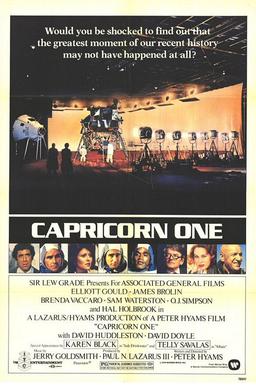 Not shocked. Just disappointed. | |||||||||||||||
| Patrick Chovanec: Am I a China Bear? Posted: 18 Jul 2012 10:31 PM PDT Tsinghua University economics professor Patrick Chovanec introduces a series of posts examining current "conventional wisdom" on China's economy with an explanation of his own perspective.
Chovanec tweets on Chinese economics and other news as @prchovanec. © Samuel Wade for China Digital Times (CDT), 2012. | Permalink | No comment | Add to del.icio.us | |||||||||||||||
| Posted: 18 Jul 2012 10:22 PM PDT For the Chinese, the Olympics have always been something more than just games: the longstanding medal-oriented ideology has linked sports achievements to national glory. As the 2012 London Olympics loom, although the national team is smaller than in 2008, general attention towards the games is still quite high. From Neil Connor at AFP:
Some have chafed at the medal-oriented policy, however. From Yueran Zhang at Tea Leaf Nation:
The gulf between the conditions of China's Olympians and the rest of its people is illustrated by the athletes' fiercely controlled diet. From Yang Wang at Caixin:
Record-setting hurdler Liu Xiang, meanwhile, has again landed in controversy. After he quit the Diamond League London Grand Prix last week claiming a back injury, both official media and online forums are hotly debating Liu's Olympic prospects. Some linked this to his previous drop-out in 2008, and shouted out their disappointment. From Lilian Lin at Reuters:
Read more about the Olympics via CDT. © Mengyu Dong for China Digital Times (CDT), 2012. | Permalink | No comment | Add to del.icio.us | |||||||||||||||
| It’s party time for Olympic athletes Posted: 18 Jul 2012 07:46 PM PDT
"SEX In The City" move over. Here comes "Sex In The Village." Make that athletes village. As in Olympics. Tales of shenanigans at the living quarters for 10,000 super-fit young men and women have always abounded, and London doesn't look as if it will be any different. US women's soccer star Hope Solo recently dished about serious partying at the Beijing Games, and some newly arrived athletes say they can hardly wait for the fun to begin. "The Olympics is the height of your career, so you might do some things you don't usually do," British beach volleyball player Shauna Mullin said with a giggle yesterday. Most, like Mullin, will restrain from going too far, aware they're in the international spotlight. Still, there's no need to be prudish, according to the man overseeing the health of the Brazilian team. "(Sex) is common at the Olympics. It's necessary. It's natural," Dr. Joao Olyntho Machado Neto said. "If you are going to be healthy people, why not make sex? … Brazil is very tolerant with sex as a country. We don't have Victorian minds and we're not religious." Ivory Coast swimmer Kouassi Brou was one of the youngest competitors in Beijing at 16, but he's grown up now. And ready for some Olympic love. "In 2008 I was so young and so shy, so I didn't interact with the women," the 20-year-old Brou said. "But now I'm a big man. So I can try. I will try." And he's clear about his ambitions. "If they are beautiful, it's OK," he said. Thousands of free condoms will be available. Organizers have heard enough about village antics from previous games to know there will be heavy demand by athletes for contraception. Solo recalled seeing competitors having sex out in the open in Beijing. "On the grass, between buildings, people are getting down and dirty," the 2008 gold medalist told ESPN The Magazine recently. Still, her revelations startled some athletes interviewed in the athletes village yesterday. "It's not something I've seen at all. … Maybe I wasn't up on the right nights," Australian canoeist Warwick Draper said. "It's not something I think you'd expect to see in the village." Mullin knows how she would react to anything racy: "I'm pretty sure if I see it I'll end up laughing." Wild parties in athletes villages are not new. Many of them live in a world where every move is followed by the media and they're delighted to unwind in the privacy of the village, where the outside world is excluded. Ask fencer Kanae Ikehata about bed hopping between the apartment buildings, and her blushing cheeks turn even more red. "I am Japanese," she said, suggesting her compatriots' behavior is more elegant than others. "I'll only look," she added while shopping for Olympic merchandise. But maybe the amorous couples Solo spotted outdoors in Beijing had the right idea. Fitting just one person into the beds provided for Olympians in London is proving to be a problem in itself. "As an athlete you have to relax, get a little bit of space … but here it is tight and the beds are too small," said Sierra Leone sprinter Ibrahim Turay. "It is a bit difficult for me to lie down." There's also not much privacy. "It's pretty tight for us. I'm sharing one room with my coach and there are four rooms in one apartment, with one toilet, so we have to figure out how to use the toilet," Turay said. There won't be much party time for Turay. His events go nearly until the end. The closing ceremony is Aug. 12. He hopes others can keep the sound levels down. "I just have to keep myself away from the crowd, the noisy distractions," he said. Source: Shanghai Daily
| |||||||||||||||
| Middle School Students Beaten & Kicked by Hainan Teacher Posted: 18 Jul 2012 06:39 PM PDT
From Youku: Teacher caught violently punching and kicking studentsSeveral days ago, at an experimental school in Hainan, the Ideological and Political Education director and junior high head teacher took turns beating students. Comments from Youku: 加油1949:
suklor:
菩提先生:
逍遥壹梦:
专治铅笔:
lake剖析你:
ZCLZLZ: (responding to above)
648691174:
xxnx18:
路凯森:
阴道丶小丸子:
潇洒哥哦:
liusiyu88:
yyh911:
chfqcy: (responding to above)
Ta_水龙头:
伯莱卡: (responding to Ta_水龙头)
瓕龙: (responding to Ta_水龙头)
戒烟的烟813925:
练拳14年:
练拳14年:
13878878011:
ETrac:
13878878011: (responding to above)
ETrac: (responding to above)
13878878011: (responding to above)
ETrac: (responding to above)
13878878011: (responding to above)
ETrac: (responding to above)
| |||||||||||||||
| As China Talks of Change, Fear Rises on Risks Posted: 18 Jul 2012 09:56 PM PDT Some "princeling" descendants of China's founding fathers have been meeting to discuss political reform. They are constrained, however, by lack of consensus, webs of overlapping interests, uncertainty ahead of this year's leadership transition and the cautionary example of Bo Xilai's fall. From Michael Wines at The New York Times:
Read more about princelings and political reform in China via CDT, particularly John Garnaut's China's Princelings Break Their Silence from October last year (pointed out on Twitter by Adam Minter). © Mengyu Dong for China Digital Times (CDT), 2012. | Permalink | No comment | Add to del.icio.us | |||||||||||||||
| Posted: 18 Jul 2012 09:17 PM PDT The front page of China Daily today: One huge Louis Vuitton ad. A Reuters story on the new store has some good background on the opening: The French luxury brand, a unit of LVMH, is set to open its largest China store in Shanghai on Saturday, complete with a gilded spiral staircase and an invitation-only private floor where big spenders can get their hair done while dreaming up designs for custom bags. UPDATE: Very top of the page didn't make that photo. For the record, it's here: | |||||||||||||||
| Man hijacks woman in a bid to meet public security bureau chief Posted: 18 Jul 2012 12:19 PM PDT
At around 13:30 p.m., July 18, a man seized a woman as a hostage, and put her down on the ground by using a shard of glass, in front of a passenger station in Cangzhou city, Hebei province. The topless man, 25 years old, chased after the woman when finding her stepping out of the passenger station, according to eyewitnesses. The woman was then caught and wrestled down to the ground on a street. By sitting on top of the victim, the offender holding a glass shard shouted to the people, "don't come close," and "I want to meet the head of the public security bureau." The victim was struggling on the ground with blood all over her hands and face, while more and more passers by stopped and watched. On receiving the report, the local police arrived later. They controlled the traffic, and started to talk with the offender. But the efforts failed, as the man insisted to ask for meeting with the bureau chief first. But ultimately, the offender was still subdued as the officers seized the chance when talking with him. The hostage was saved too and rushed to the hospital for treatments. The local police later said in an interview that the offender was mentally unstable. "Possible because he was tired of long journey, and the weather was hot, the man had an illusion that some one wanted to kill him," explained an officer upon why the offender took the victim as his hostage and wanted to meet the leader. | |||||||||||||||
| Posted: 18 Jul 2012 04:41 PM PDT Lei Jun (雷军), founder and major shareholder of Xiaomi Tech (小米科技) [zh], has just joined the ranks of Chinese billionaires. Now worth an estimated $4 billion, the company was founded in 2010, and released the Xiaomi Phone - a major Chinese contendor to the iPhone – in 2011. The phone's success in the mainland has led some to label Xiaomi "China's Apple success story", and to see Lei Jun as a Chinese version of Apple co-founder Steve Jobs. Forbes' Ryan Mac reports on similarities between the two tech gurus:
A longer article in Forbes further details Xiaomi's story and Lei's past, highlighting Lei's encouragement of comparisons between himself and Apple's late retired-CEO, and suggestions that his reputation might one-day outgrow those comparisons:
Also see suggestions for the next generation of Xiaomi phone, and a report on the possible launch of a Xiaomi phone in Taiwan later this year, from Tech In Asia. © josh rudolph for China Digital Times (CDT), 2012. | Permalink | No comment | Add to del.icio.us | |||||||||||||||
| China’s Premier Promises Job Creation Efforts Posted: 18 Jul 2012 04:17 PM PDT As China's economic growth dropped to a three-year low of 7.6%, Premier Wen Jiabao promised on Tuesday to launch new plans to prop up the job market. From Joe McDonald at the Associated Press:
Read more about China's economic stimulus plans via CDT. © Mengyu Dong for China Digital Times (CDT), 2012. | Permalink | No comment | Add to del.icio.us | |||||||||||||||
| The Chinese Media Reciprocity Act Posted: 18 Jul 2012 01:47 PM PDT In September of last year, California Congressman Dana Rohrabacher (R) introduced H.R. 2899 – the Chinese Media Reciprocity Act of 2011, now being debated in the U.S. House of Representatives. If the bill were to be passed, it would amend the Immigration and Nationality Act of 1965, allowing the U.S. government to revoke and limit visas issued to journalists working for China's state media to match the number of visas issued to U.S. government-employed reporters in China. A press release from Rohrabacher's office reports his pitch of the bill:
While Rohrabacker's rhetoric effectively evokes thawed Cold War tension during a time of political and economic anxiety, it fails to note an important difference between the media landscapes of China and the U.S. – the role of state-owned media. In the first post of a three-part series on H.R. 2899, China Law and Policy explains this difference, and reports other major problems with this bill:
The Committee to Protect Journalists also voiced similar concern with the proposed policy after initial discussion began in the House of Representatives last month:
Part 2 of China Law and Policy's series focuses on how the proposed bill is an ineffective policy mechanism to deal with the broader issue: visa restrictions facing foreign journalists in China, regardless of whether their paycheck comes from the government or the market:
Stay tuned for part 3 of China Law and Policy's series. For more on journalists in China and the regulations they face, see prior CDT coverage. © josh rudolph for China Digital Times (CDT), 2012. | Permalink | One comment | Add to del.icio.us | |||||||||||||||
| Posted: 18 Jul 2012 12:00 PM PDT Editor's Note: The Word of the Week comes from China Digital Space's Grass-Mud Horse Lexicon, a glossary of terms created by Chinese netizens and frequently encountered in online political discussions. These are the words of China's online "resistance discourse," used to mock and subvert the official language around censorship and political correctness. If you are interested in participating in this project by submitting and/or translating terms, please contact the CDT editors at CDT [at] chinadigitaltimes [dot] net. Literally "his mother's," ta ma de is a common swearword. Like "f**k", the phrase has a sexual connotation, though it is less harsh than its English counterpart and has a broader range of uses. Depending on the context, it can be translated as almost any English swearword, though it often appears as WTF. Lu Xun, the father of modern Chinese literature, once honored the phrase as China's "national swearword." A very notable use of the phrase appeared in the July 26 2011 edition of Hong Kong's Apple Daily shortly after the Wenzhou train accident. The front page headline read, "Clearing the Tracks, Not Saving Lives; WTF!"" The People's Daily headline on the same day was "The Party's Sympathy Is Even Greater Than the Height of Lofty Mountains." Several days later, the Southern Metropolis Daily defied the Propaganda Department's ban on critical stories of the train wreck and published an article entitled "What Friggin' Miracle?" It began:
The article criticized the Propaganda Department's approach of highlighting various "miracle" stories from the crash. One such "miracle" involved a two-and-a-half-year-old girl named Yiyi, who was the last survivor pulled from the train wreckage 21 hours after the crash. Although both her parents were killed, the state-controlled media gushed over her survival in what many believed to be a cynical attempt to put a positive spin on the tragedy and deflect criticism from the Ministry of Railways. In a press conference, Ministry of Railways spokesperson Wang Yongping was asked how a girl could be found alive while disassembling the train cars, when rescue attempts were already finished:
Wang generated more anger than solace at the conference. His trademark statement from that day rose to Chinternet memedom: "Whether you believe it or not, it's up to you, but I do anyway." He was later dismissed from his post. George Ding opined on the exchange:
The Economic Observer also defied the ban on negative coverage of the crash. © Anne.Henochowicz for China Digital Times (CDT), 2012. | Permalink | No comment | Add to del.icio.us | |||||||||||||||
| Posted: 18 Jul 2012 06:24 AM PDT I love Chinese food! Today's meal will be hard to top anywhere else in Shanghai. Next to the Marriott Hotel near 人民广场 (People's Square) is a new mall about to open. However, the restaurant itself, on the 4th floor, is already open for business. I forgot to write down it's name. The food was spectacular. Their pictures below.  Dried mushroom with squid.  Yellow croaker fish.  Steamed xiaolong bao.  A type of vegetable similar to pea sprout.  Part of decor. Didn't try eating this one. | |||||||||||||||
| Chinese netizens wrapped in mixed feelings when Philippine President thanks China Posted: 18 Jul 2012 01:16 AM PDT
Chinese netizens are left in mixed feelings on the news that Philippine President Benigno Aquino thanked China on Tuesday for its help to finish a major Philippine water supply project, amid tensions between the two countries over Huangyan Island in the South China Sea. It was reported, China fully backed the $123-million water project, aiming to improve water delivery to 21 million residents of Manila and surrounding provinces. On July 17, Aquino inaugurated the launching ceremony of the project, and expressed his gratitude to China for its financial and technical support, when Chinese Ambassador to Manila was present at the ceremony too. "We are thankful for the funds provided by China so we could set up this important project. It is through firm relations with our neighbouring countries that we can speedily solve our problems," Aquino said in a speech. But ironically, the tension between the Philippines and its neighbor China remains. It began after maritime forces from both countries had a standoff over the Huangyan Island in early April, and had ever been intensified many times. On July 4, Philippine presidential spokesman just warned Chinese officials, in Chinese language, to be careful about what they say over the current conflict in the South China Sea. On July 7, Philippine President thanked China. From the comments left on one China's major web portal Netease, most of Chinese netizens showed their disappointment on Chinese government offering the financial assistance to the Philippines which "bites us back as a return," when the government is still inadequate to reduce the poverty in many areas of its own nation however. | |||||||||||||||
| Woeser: CCTV’s Explanation for Self-Immolations Posted: 18 Jul 2012 08:37 AM PDT On her blog, Woeser writes about a documentary produced by CCTV about the self-immolations by Tibetans protesting Beijing's policies in Tibet. While the documentary, which presents the official government line on the protests, was ostensibly produced for a domestic audience, Woeser demonstrates that it was in fact clearly intended for an international audience as part of Beijing's external propaganda efforts. High Peaks Pure Earth translates Woeser's post:
Read more about recent self-immolations, including the most recent by an 18-year-old monk in Sichuan, and about China's external propaganda efforts, via CDT. © Sophie Beach for China Digital Times (CDT), 2012. | Permalink | No comment | Add to del.icio.us | |||||||||||||||
| The Daily Twit – 7/18/12: SEC vs. VIEs, Data Privacy Confusion, and More Talk on Credit Cards Posted: 18 Jul 2012 07:49 AM PDT Big story for China investors was the SEC investigation of New Oriental, which has something to do with the education company's VIE structure. Lots of speculation on this. I weighed in with this post: "SEC Investigates New Oriental VIE Structure. Let the Chatter Begin." Also be sure to check out the China Accounting Blog post "SEC v EDU: the end of VIEs?" If the VIE news wasn't enough to get you excited: Jack Perkowski: China's Second Half Looks Up — I've been linking to so many doom and gloom folks on China's economy that I feel slightly guilty, so here's what the other side is saying. Reuters: Visa, MC still face hurdles in China after WTO ruling — In light of the WTO panel decision, what happens now? In reality, probably an appeal and a lengthy negotiation period after that. Foreign Policy: The Future of Manufacturing Is in America, Not China — What's the future of global manufacturing? Not China, says Vivek Wadhwa. Some good points, but the article seems to rely too much on cost issues. That's not the only reason manufacturing is sited in a given place. Global Times: A push to protect personal data — The government wants companies to get onboard with better data privacy practices and has even put out some guidelines to that effect. But if they're so concerned about this problem, why no data privacy law, even though us lawyer types have been clamoring for one for at least 8 years? Reuters: Tough Chinese data privacy laws impede document collection in FCPA investigations — Great article about restrictions on data in China are making life difficult for foreign companies trying to comply with U.S. government investigations. Comes across as slightly paranoid, but it's a good introduction to an important topic. New York Times: Changing of the Guard: As China Talks of Change, Fear Rises on Risks — Princelings, political reform, the changing of the guard. This article's got it all. China Daily: First-class medical care for the wealthy — This article on private medical facilities and their wealthy patients pissed me off, and I responded with this: China Health Care and the Income Gap. Caixin: Wealth Of Nations: The Modern Illusions Of Economic Development — The common terms we use when talking about development leave a lot to be desired, particularly when talking about rich-but-still-poor China. China Daily Show: China: 'Everything wrong with this place will be fixed in about three years' — For your amusement. As usual, it's funny 'cause it's mostly true. © Stan for China Hearsay, 2012. | Permalink | No comment | Add to del.icio.us | |||||||||||||||
| 25 Years After Taiwan Embraced Democracy, Netizens Wonder When It Will Be the Mainland’s Turn Posted: 17 Jul 2012 10:41 PM PDT  Announcements of End of Martial Law in Taiwan on July 14, 1987 TAIPEI, Taiwan — President Chiang Ching-kuo today decreed the end of martial law imposed by his Nationalist Party 38 years ago when it fled to this island after the communists took over mainland China. (LA Times, July 14, 1987) 25 years ago, the Republic of China government on Taiwan formally announced that it was ending martial law. As @谢宏钰 commented on Sina Weibo, China's Twitter: On that day, "this island embarked on a different path." [1] A brief history The current government on Taiwan island, the Republic of China, was originally founded in 1912 on the Chinese mainland and was later consolidated by the Chinese Nationalist Party, or the KMT, led by Chiang Kai-shek. After a bloody four-year civil war with the Chinese Communist Party, the Nationalist government fled to Taiwan in 1949. The same year, martial law was declared in Taiwan.  Protest against martial law held on May 19, 1986 in Taipei Rights to free speech and free assembly vanished; newspapers were censored. Political protesting and organization were banned. A secret police organization called the Taiwan Garrison Command began tracking and arresting those suspected of sedition. The ensuing 38 years of martial law became known as the "White Terror" in Taiwan; Communist sympathizers, Taiwan independence supporters, leftist reformers, disloyal military officers — and anyone who was suspected of being any of the above — were arrested and often incarcerated or executed without due process of law. Life after military rule Everything changed, including the details. @郢爰楚貝 from Taiwan recalls, "In elementary school I could read the newspaper in the mornings, but one day the paperboy couldn't slip the paper through the door anymore—it was too thick, about twice the volume. That was about a year after martial law ended, when newspapers were no longer censored." [2] For the vast majority of the people living through that period, everyday life may have seemed normal, but even little details like newspapers becoming uncensored serve as persistent reminders that, yes, we were deceived.  March for farmers' rights in 1988, after the end of martial law in Taiwan Yang Zhao (@作家楊照), a long-time columnist and contributor to The Journalist magazine in Taiwan, wrote an op-ed called "Since The End of Martial Law" describing what he believes has changed in Taiwan: Before they allowed for opposition political parties, many predicted that once the people could form parties, chaos would erupt in Taiwan. So many different opinions; how can anyone ever be in peace? 25 years later, even the 'Taiwan Communist Party' can legally exist, and society is more stable due to a maturing two-party system. Before they allowed free publication of newspapers, many also predicted that unregulated speech would demoralize the populace…but now after we have heard all sorts of incendiary and sensational speech, most people take them for nothing more than entertainment. Lifting martial law, to Yang, "was the beginning of a monumental shift." Et tu, China?  President Chiang Ching-kuo met with Katherine Graham of Washington Post in October 1986 and informed her that martial law would be lifted. Ma Ying-jeou served as the interpreter. Will a monumental shift take place in the People's Republic of China some day? To even begin thinking about this question is a monumental exercise, but reactions on Weibo provide some clues. For the most part, those who mentioned the 25th anniversary let the date speak for itself: "July 15, 25th anniversary of lifting martial law." Some of them looked to Chiang Ching-kuo, son of Chiang Kai-shek and Taiwan's president in 1987, as a model and inspiration. As @江边酿淳 comments, "Chiang Ching-kuo opened a new era of democracy in China." @章立凡 relays the story of senior KMT cadres questioning Chiang, saying "we will lose power if you lift martial law." Chiang replied simply, "no party can be in power forever." [3] Others remind us that Chiang Ching-kuo isn't the only one who deserves credit for the transformation. @shino3456 writes, "Taiwan's democracy was won by the Taiwanese people. How many intellectuals and ordinary people, living under one party rule, the White Terror and the 228 Incident (a revolt and massacre on Taiwan in 1947), hoped for something new?" [4] @EnjoyZack says, "Behind Taiwan's democratization there was a rise of civil society, organization of opposition parties, private property ownership, local self-rule, and international pressures as well as Chiang Ching-kuo's courage and determination." [5]  Protesters against martial law confronted police in Taipei Taiwan in 1987 is certainly very different from China in 2012. Taiwan lost its UN seat in the 1970s, and the United States ending its recognition of Taiwan in 1979 dealt a fatal blow to Taiwan's international status. Domestically, opposition forces from all directions such as environmental activists, labor rights activists, women's rights activists, independence supporters and social democrats were converging into a formidable power. The KMT had arrested publishers of a prominent anti-KMT magazine in Kaohsiung. They were then swiftly tried in military court, drawing pressure from the United States to democratize and institute civilian rule of law. China in 2012 has much more international weight than did Taiwan when it stood on democracy's threshold. China has taken a defiant stance against American calls for human rights and political reforms. Social opposition may not have matured and converged into a critical mass (and the Communist government actively makes sure this does not happen). Civil society has only begun to take shape, and the future of various social institutions is uncertain. Government and Communist Party practices are becoming more entrenched and systematic. It's quite possible that China's form of government is not going anywhere soon.  Protest against martial law held on May 19, 1986 in Kaohsiung But as @tanzhenfeng points out, in Taiwan "a dictator ended a dictatorship." @带路dang二世 wonders, "In another 15 years, can we also lift our martial law?" [6] @chongmingxie chimed in, "25 years of reforms for a democratic Taiwan; even if China starts today I'll be old in 25 years." [7] For many alive today, democracy in China still seems a distant dream. For some, hope springs eternal. @弱者的躯壳 reposted sections of a poem entitled "Taiwan's Democracy": The people don't want to stay in the night (July 15, 2012) [8] Footnotes (? returns to text)
| |||||||||||||||
| In China, Wait Leads to Standoff With Officials Posted: 18 Jul 2012 06:42 AM PDT The New York Times reports on the stand-off between locals and a group of visiting officials to Mt. Baekdu who caused severe delays for visitors to the local tourist attraction. CDT earlier translated weibo responses to the incident. From the New York Times report:
See also a list of "sensitive words" banned from Sina weibo search relating to the Mt. Baekdo incident. © Sophie Beach for China Digital Times (CDT), 2012. | Permalink | No comment | Add to del.icio.us | |||||||||||||||


Comments