Blogs » Society » Evidence That Diaoyu Islands Really Do Belong To China, On Nicholas Kristof’s NY Times Blog
Blogs » Society » Evidence That Diaoyu Islands Really Do Belong To China, On Nicholas Kristof’s NY Times Blog |

- Evidence That Diaoyu Islands Really Do Belong To China, On Nicholas Kristof’s NY Times Blog
- Professor Han Deqiang, Founder Of Maoist Organization Utopia, Accused Of Slapping Old Man For Besmirching The Dead Chairman
- Health Matters: The Dangers of Heavy Metals
- Here’s One Netizen’s Reaction To McDonald’s Surreal Plan To Serve McNoodles
- Watch: Japanese nationalists rally in Tokyo over island dispute
- In Pictures: 9/18 Anti-Japan protests in Shanghai
- “Ai Weiwei–Without Fear Or Favor’: BBC
- Photo of the Day: Under the Overpass
- Today's Links: Wang Lijun, Leon Panetta and beggars at a temple fair
- Homemade Helicopter Is Neat
- Disputed Territories: Hamlet And Diaoyoutai
- The Saddest “Super Models”: Another Pageant In China
- Dish of the Day: Cong you rou si ban mian (pork and scallion noodles) @ Lao Difang
- 6,000 Flextronics employees strike in Shanghai's Jiading District
- "Ni hao. You hear me?": Snoop Dogg finally joins Weibo
- Mid-Week Diaoyu Links: Tuesday’s Beijing “protest,” the risk of boycotting goods, and those poor innocent cars
- Jiangsu man invents ‘single player fitness and entertainment shuttlecock’
- Watch: Car carrying US Ambassador Gary Locke surrounded by anti-American protestors
- Wang Fingers His Former Boss, Bo
- Japan’s no-nuclear policy could prove “hollow promise”
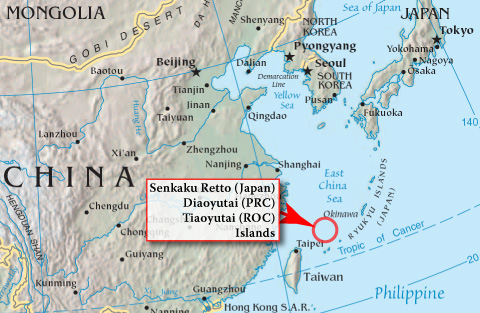
| Evidence That Diaoyu Islands Really Do Belong To China, On Nicholas Kristof’s NY Times Blog Posted: 19 Sep 2012 09:09 PM PDT There's no superlative I can offer for Nicholas Kristof that you haven't already heard, so let's just jump to this latest post on his NY Times blog, On the Ground, written by Han-Yi Shaw. Kristof offers a brief introduction to start:
And now, two excerpts from Shaw's piece:
And:
Obviously it deserves a full reading. Go check it out. And of course, we welcome all discussion. |
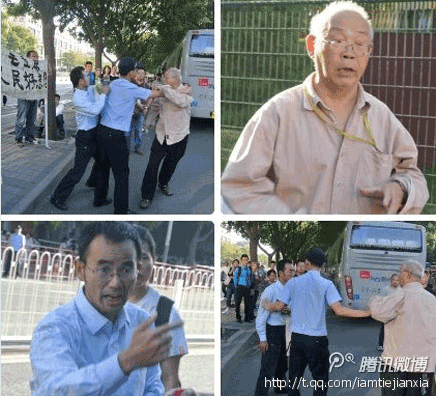
| Posted: 19 Sep 2012 08:38 PM PDT Remember last week's senseless beating of an old man in Zhengzhou, Henan province just because he dared to criticize Mao Zedong? A similar case sprung up recently in Beijing, featuring a significantly higher-profiled Maoist. As exposed by @1798旅行者, the incident began Tuesday when an old man out for a walk took issue with the slogan, "Chairman Mao, we miss you." He pointed out that it was unreasonable to pin desires for national dignity on Mao. A younger man who heard this strode up to the elder and slapped him twice across the face, accusing him of insulting Chairman Mao. Both began calling the other a traitor. The next morning, netizens identified the younger man as Beijing University of Aeronautics and Astronautics professor Han Deqiang, a well known economist and better-known founder of Utopia, a Maoist organization whose website remains shut down since April (read about it here). (UPDATE, 11:52 am: Joel Martinsen in the comments has pointed out that Utopia is not only back up, but features Han's self-written defense of his actions in an article titled, "Why did I strike this traitor?")Judging by Han's previous work, including a public lecture titled, "Save China by resisting the US: start preparing for war" — prompting comments such as, "China's real No. 1 enemy is itself" — he would exactly be the type to shoot first and ask later, even if the target is an elderly man. This post on Sina Weibo, published yesterday at 11:02 am, already has nearly 49,000 forwards and more than 23,000 comments. I've looked at a couple of pages and seen enough trash to make me support nuking comment sections. There's all the predictable name-calling, with some saying traitors deserve to be killed on the spot. There are those who call Han a wolf in sheep's clothing, while others voicing their support of him and his actions. @青哥儿 points out that, "Han dog only picks the weakest to fight, let's see him try to fight a young person." Yes, can we set a place and time to see Han get his ass kicked? Alas, we understand how the powder keg of emotion, collective and individual, could have erupted in violence, forcing Han's hand to strike an elderly man. On one side you had the anti-Japan protests, which brought together society's more irrational elements and fooled individuals into believing that violence is condonable when the target is Japanese. On the other side you have a scholar inculcated with Maoist thought, which dictates slapping around even suspected roadie rightists is one's patriotic duty. Also, Han is a dipshit. Let's not forget that. There's your trump, outweighing Maoism or neoconservatism or nationalism or anything else. To slap a stranger for expressing an opinion, you just have to be a real piece of shit. So, yeah. We eagerly await this "public intellectual's" comeuppance. |
| Health Matters: The Dangers of Heavy Metals Posted: 19 Sep 2012 07:49 PM PDT |
| Here’s One Netizen’s Reaction To McDonald’s Surreal Plan To Serve McNoodles Posted: 19 Sep 2012 07:00 PM PDT We've survived the black and white burger. We've done beef and mash. We'll happily tolerate every chicken and/or beef concoction McDonald's throws at us. But this?
Hmm. Bring it on! We fear for Ronald's well being though. If he's not rolling in his clown grave, he's indeed belching a silent scream. Five-euro fast-food noodles from McDonald's? Yeah. That'll be the day… |
| Watch: Japanese nationalists rally in Tokyo over island dispute Posted: 19 Sep 2012 07:00 PM PDT Right-wing activists hold a rally in Tokyo to protest against China's activities near several disputed islands in the East China Sea. [No Comment TV] [ more › ]        |
| In Pictures: 9/18 Anti-Japan protests in Shanghai Posted: 19 Sep 2012 05:55 PM PDT                                |
| “Ai Weiwei–Without Fear Or Favor’: BBC Posted: 19 Sep 2012 04:23 PM PDT The BBC released 'Ai Weiwei–Without Fear Or Favor' in 2010, I just got around to watching it. It's terrific. As CHINA Debate readers know, I am a huge fan of Mr. Ai's art. But I respect him many more times over for his courage in confronting the Chinese establishment; he is one of my few heroes. If you haven't seen the documentary or want to see it again, here you go: |
| Photo of the Day: Under the Overpass Posted: 19 Sep 2012 04:30 PM PDT  Want to see your picture here? Share your photos with us on Instagram and Flickr using the tag #shanghaiist! [ more › ] Want to see your picture here? Share your photos with us on Instagram and Flickr using the tag #shanghaiist! [ more › ]  |
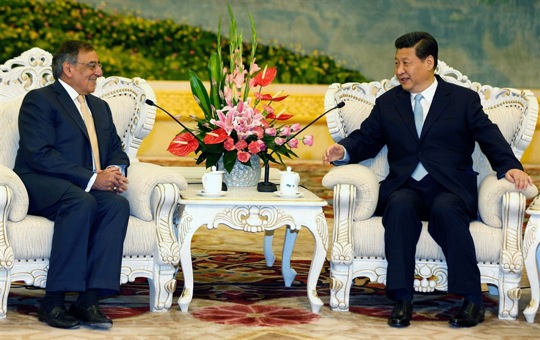
| Today's Links: Wang Lijun, Leon Panetta and beggars at a temple fair Posted: 19 Sep 2012 03:18 PM PDT |
| Posted: 19 Sep 2012 03:00 PM PDT A man in Zhuhai, Guangdong province has supposedly made his own helicopter. (I say supposedly because one never knows about these things.) Here he is testing it out. Scant information is available on the guy, so if you're able to enlighten us on how helicopters work, please do let us know. One last thing: Is that a ceiling fan? Youku video for those in China after the jump. |
| Disputed Territories: Hamlet And Diaoyoutai Posted: 18 Sep 2012 06:55 AM PDT I have seen many photos of the Chinese protests against recent Japanese actions regarding the islands (the best I've found were referred to on China Geeks) and read numerous reports of the incidents and violence. As a lawyer, I have made a brief study of the respective and conclude that Japan has the legal rights to the chain; as a supporter of China and especially Taiwan, I say to Japan 'don't tread on me.' Still, until I viewed a series of photos in The Atlantic, I somehow had not seen, or don't recall having seen, pictures of the Daioyu Islands. WhenI saw Diaoyu Dao, the largest weighing in at 4.3 square kilometers… …I thought of an exchange in Hamlet. To set the scene, Fortinbras of Norway sends one of his captains to secure from Hamlet permission for the Norwegian army to cross Denmark on its way to war with Poland: HAMLET: Goes it against the main of Poland, sir, Or for some frontier? Captain: Truly to speak, and with no addition, We go to gain a little patch of ground That hath in it no profit but the name.To pay five ducats, five, I would not farm it; Nor will it yield to Norway or the Pole A ranker rate, should it be sold in fee. HAMLET: Why, then the Polack never will defend it. Captain: Yes, it is already garrison'd. HAMLET: Two thousand souls and twenty thousand ducats Will not debate the question of this straw: This is the imposthume of much wealth and peace, That inward breaks, and shows no cause without Why the man dies. I humbly thank you, sir. Captain: God be wi' you, sir. Exit The Chinese are equally poetic, here's an example: Even if China becomes nothing but tombstones, we must exterminate the Japanese; even if we have to destroy our own country, we must take back the Diaoyu Islands. So, says the sign here: HAMLET: Goes it against the main of Poland, sir, Or for some frontier? Captain: Truly to speak, and with no addition, We go to gain a little patch of ground That hath in it no profit but the name.To pay five ducats, five, I would not farm it; Nor will it yield to Norway or the Pole A ranker rate, should it be sold in fee. HAMLET: Why, then the Polack never will defend it. Captain: Yes, it is already garrison'd. HAMLET: Two thousand souls and twenty thousand ducats Will not debate the question of this straw: This is the imposthume of much wealth and peace, That inward breaks, and shows no cause without Why the man dies. I humbly thank you, sir. Captain: God be wi' you, sir. Exit The Chinese are equally poetic: Even if China becomes nothing but tombstones, we must exterminate the Japanese; even if we have to destroy our own country, we must take back the Diaoyu Islands. So says the sign at this Audi dealership: Which shows once again that times and places may change, but people and human nature don't. May the Chinese end the violence in China and in the end be victorious in the Diaoyutai. |
| The Saddest “Super Models”: Another Pageant In China Posted: 19 Sep 2012 10:00 AM PDT We're going to let People's Daily do the heavy lifting on this one. Take it away, boys (assume [sic]'s):
We're not sure who won "The Best Camera-Shy," but that's one individual we'd like to meet. "Best vigor" is tempting as well, though we're not certain about what "vigor" refers to. (Tilling the fields? Ability to giggle?) Five more pictures after the jump from People's Daily's website. These women are all better than Miss World Yu Wenxia, by the way, aka the woman with one smile. (H/T Alicia) |
| Dish of the Day: Cong you rou si ban mian (pork and scallion noodles) @ Lao Difang Posted: 19 Sep 2012 09:18 AM PDT  For those wondering what defines a great bowl of noodles, let the scallion and pork noodles be your Merriam-Webster example. For one, despite being as thin as angel hair pasta they still pack a slight chew, marking quality. And second, the scallion oil manages to be deliciously unctuous and yet also clean-tasting so you don't feel it pooling in your stomach like molten lead. [ more › ] For those wondering what defines a great bowl of noodles, let the scallion and pork noodles be your Merriam-Webster example. For one, despite being as thin as angel hair pasta they still pack a slight chew, marking quality. And second, the scallion oil manages to be deliciously unctuous and yet also clean-tasting so you don't feel it pooling in your stomach like molten lead. [ more › ]  |
| 6,000 Flextronics employees strike in Shanghai's Jiading District Posted: 19 Sep 2012 08:18 AM PDT  6,000 employees of the Singaporean electronics powerhouse Flextronics walked out of the company's plant in Shanghai's Jiading district Monday to protest plans to move the factory to Suzhou. [ more › ] 6,000 employees of the Singaporean electronics powerhouse Flextronics walked out of the company's plant in Shanghai's Jiading district Monday to protest plans to move the factory to Suzhou. [ more › ]  |
| "Ni hao. You hear me?": Snoop Dogg finally joins Weibo Posted: 19 Sep 2012 07:36 AM PDT  From Straight Outta Compton, Snoop Dogg finally jumped on the bandwagon and joined Sina Weibo earlier today. From here on out, it shall be referred to as his "Weibizzle." [ more › ] From Straight Outta Compton, Snoop Dogg finally jumped on the bandwagon and joined Sina Weibo earlier today. From here on out, it shall be referred to as his "Weibizzle." [ more › ]  |
| Posted: 19 Sep 2012 07:39 AM PDT
As nationalistic fervor cools across the country, here's one last compilation of Diaoyu-, Mukden-, and Japan-related links. Tuesday's protest in Beijing: "Police equaled or outnumbered protesters, and they had been issued megaphones to whisk people along when they lingered. About halfway down the protest route, I heard the recorded voice of a woman, and initially thought it was a recording from the protesters. It took me a second to realize it was coming from the police station, and the message was not directed to the Japanese at all. In Chinese, it said: // 'Since Japan has violated our national sovereignty, it is natural that we express our feelings. We share the same feeling with you. The government's stance is clear: the government will not tolerate the violation of our national sovereignty. We should support our government, express our patriotic sentiments in a legal, orderly, and rational fashion. We should obey the laws and regulations, and not adopt extreme behavior, or disturb the social order. Please coördinate yourselves with our work, and obey the instructions of the police. Please do not linger here after you express yourself. Thank you everyone.'" [Evan Osnos, The New Yorker] Channeling dissent, to an extent. "So now there are people who really do want to march, chant and throw plastic bottles at Japan's embassy. And the authorities—either because they are afraid of angering people by denying them the opportunity or because they like the idea—are allowing it, up to a point. Since it would be riskier to let protesters march long distances across Beijing and pick up steam as they went, it makes a good deal of sense to provide the masses with buses. And since they are loth to pass up any opportunity to guide public opinion, they are probably also handing out flags and signs with approved messages." [Analects] Boycotting goods can backfire, namely in that one is unable to obtain those goods. "Yet despite China's growing clout in international economics, the boycott/consumer action sword can cut both ways. Whilst Japan is the current target of action in the mainland and Hong Kong, companies from all nations are being made more aware of the particularities of political risk in China – and will also remember the recent experiences of Carrefour and MacDonald's. Investment decisions are affected by risk, and a company's costs are increased if insurance premiums rise. Even shutting down facilities for a week or two is damaging to a corporation." [The Diplomat] A Chinese student in Japan weighs in. "What do we make of the hundred thousand Okinawans confronting American military bases in large-scale demonstrations? // At our university, I have already come across quite a few Japanese students who have been to China. Once they know I'm from China, they all 'show off' and use Chinese to give a self-introduction, and then in stilted tones say China's food is delicious, and so spicy! They do this in a very friendly way… // Saying this, I just want to remind my comrades: Beating up ordinary Japanese back in China just closes the last door to exchange among our people." [Tea Leaf Nation] Yes, our ability to be stupid is embedded in our DNA. "What is nationalism, after all, but tribalism writ large? We human beings, despite leaving the hunter-gatherer lifestyle and congregating into political entities with millions of others, have found it quite difficult to shed our old monkey ways." [Stan Abrams, China Hearsay] Well that's one way of ensuring the safety of Japanese cars. "Cable from the Hunan Huaihua Municipal Party Committee: Japanese Cars Banned from Road September 17-19: The Huaihua Municipal Party Committee gives notice in the cable below that all brands of Japanese cars are barred from driving on the road from September 17 through 19." [China Digital Times] Shed a tear for poor tourism companies. "Travel companies say they are seeing slowing business between China and Japan as the two countries ratchet up the rhetoric in a territorial dispute over a group of East China Sea islands. That has led to occasionally violent protests in China with a definite anti-Japanese tone." [WSJ] Chinese stone flute interlude: Finally… Protest in Guangzhou. [The Nanfang] Advocating nonviolent protest. [Antiviolence.zhiliao.cc] Gary Locke's car is damaged by protesters. [AP] Half-imagining a US-China conflict. [The Diplomat] "Thousands take to the streets to express nuanced views on complex issue." [China Daily Show] Finally, finally…
|
| Jiangsu man invents ‘single player fitness and entertainment shuttlecock’ Posted: 19 Sep 2012 06:57 AM PDT by Barry van Wyk on September 19, 2012  Have you ever had the problem of wanting to play badminton but no opponent was available? The front page of the Huaihai Evening News (淮海晚报) from Jiangsu province today reports that Wu Hongzhong (吴宏中) from Huai'an (淮安) has just obtained a patent for a type of single player fitness and entertainment shuttlecock (一种单人健身娱乐羽毛球), meaning that where there is a wall, there can now be badminton.  The 'single player fitness and entertainment shuttlecock' 单人健身娱乐羽毛球 On first impressions the single player fitness and entertainment shuttlecock looks like any other shuttlecock, but its head is mostly made out of the material used in a rubber ball, giving the shuttlecock a whole lot of extra bounce. The inventor himself gave the journalist a demonstration, softly hitting the new shuttlecock against a wall. The journalist remarked that it very much resembled a ping pong ball with rapid rebounds and strokes, so that one player, the journalist concluded, can play with unbridled joy (不亦乐乎). Inventor Wu explains that he came to the idea for this invention one day when he was unable to find a partner to play badminton with, his favorite hobby. So he sat thinking, what to do?, when he struck on the idea of using the more flexible material of a rubber ball in the head of the shuttlecock. This greatly increased the flexibility of the shuttlecock, and changed its trajectory as well, making it suitable for single players to enjoy it for both 'fitness and fun,' hence the name. Wu first perfected his invention in May last year, and has since enjoyed many hours of single player badminton. But because many people did not really take his single player fitness and entertainment shuttlecock very seriously, Wu decided to apply for a patent at China's Intellectual Property Office. It took nearly half a year, during which Wu almost gave up because it took so long, but he finally got his patent approved on 22 August this year. So what's next for Wu? Perhaps he could take his single player fitness and entertainment shuttlecock overseas? No, Wu is keeping his feet firmly on the ground, acknowledging that his invention is really very simple and anyone can do it. People should just use their brains, he says, think a bit more, have the courage to try something new, and you too could get your own patent. Links and sources  |
| Watch: Car carrying US Ambassador Gary Locke surrounded by anti-American protestors Posted: 19 Sep 2012 07:12 AM PDT During Tuesday's anti-Japan protests to mark the 81st anniversary of the invasion of Japan into China, a small group of about 50 protestors in Beijing decided to make a detour to the US Embassy. There they shouted anti-American slogans ("打倒美帝!Down with American Imperialism!") and later surrounded a car carrying the US Ambassador to China Gary Locke, hurling bottles at it. The car sustained minor damage and the ambassador remained unharmed. In a similar incident late August, a man ripped off the Japanese flag from a car carrying the former Japanese ambassador to China, Uichiro Niwa. [ more › ]  |
| Wang Fingers His Former Boss, Bo Posted: 19 Sep 2012 05:53 AM PDT The trial of ex-Chongqing police chief Wang Lijun has implicated for the first time the city's disgraced Party boss Bo Xilai in the murder of British businessman Neil Heywood. Bo was not mentioned by name. Wang spoke of the "Chongqing … Continue reading →  |
| Japan’s no-nuclear policy could prove “hollow promise” Posted: 19 Sep 2012 03:23 AM PDT The decision to scrap all Japanese nuclear plants over the next 30 years is a short-term political move that leaves plenty of room for u-turns. After months of turmoil, on September 14 the Democratic Party of Japan (DPJ) announced a new energy policy. As Japan's Asahi newspaper correctly argues, the policy is chock full of contradictions and escape clauses. Even so, the policy will almost certainly – perhaps in the course of this month – be adopted as is by the cabinet and frame the new "energy basic plan" put out by the Ministry of Economy, Trade and Industry (METI). |










| You are subscribed to email updates from Update » Blogs » Society To stop receiving these emails, you may unsubscribe now. | Email delivery powered by Google |
| Google Inc., 20 West Kinzie, Chicago IL USA 60610 | |

Comments