Blogs » Society » ‘How Global Companies Take Aim at China’: Interview With John A. Quelch
Blogs » Society » ‘How Global Companies Take Aim at China’: Interview With John A. Quelch |

- ‘How Global Companies Take Aim at China’: Interview With John A. Quelch
- FCPA Issues In China. A Guest Post By Professor Daniel Chow.
- The Atlantic’s Really Big Pictures Of 21st-Century China
- Photos: Shanghai International Film Fest red carpet
- Watch: Man rescued from flood waters in Hunan
- Inspired By Victoria’s Secret And Lady Gaga, Modeling Contestants Own The Catwalk In Hubei
- Africans In Guangzhou Protest After Nigerian Dies In Police Custody
- Monkey Messes With Monk On Mt. Emei
- What does China want from Rio?
- Beijing’s $43B Big Stick
- Model Workers 2012
- Three taikonauts smile and wave
- Dish of the Day: Xiaolongxia @ Duan's Crayfish
- The green economy at 40
- Eradicating ecocide at Rio
- Didier Drogba To Shanghai Is Official… As Soon As Drogba Decides It Is
- Top Ten Search List (June 19)
- Astronauts’ special food supply angers Chinese netizens
- Watch: The world's tallest man Sultan Kosem is big in Hong Kong
- Presented By:
| ‘How Global Companies Take Aim at China’: Interview With John A. Quelch Posted: 19 Jun 2012 08:52 PM PDT  John A. Quelch I haven't read 'All Business Is Local: Why Place Matters More Than Ever in a Global, Virtual World' by John A. Quelch. But, I intend to based on an interview he had with David Barboza, 'How Global Companies Take Aim at China.' Here's my favorite of the Q & As: Q: Several executives working at American consumer brands have said their China operations are less profitable than the United States or European operations. Why is that? Is it that they don't yet have scale in China or is there some other reason? A: There are two explanations: the price competition from local brands of increasingly better quality with lower cost structures than the global brands plus the need to develop brand presence in less prosperous regions that are more price-sensitive. It's also good practice for them not to brag about their China profits. That may attract the attention of local rivals and their friends in government. The others are varied and incisive. Mr. Quelch left Harvard Business School to become dean of the China Europe International Business School in Shanghai. HBS's loss. Let me know what you think of the rest of the interview and the book. |
| FCPA Issues In China. A Guest Post By Professor Daniel Chow. Posted: 19 Jun 2012 08:25 PM PDT The following is a guest post by Daniel Chow, a Professor of International Law at Ohio State University. Professor Chow wrote an excellent and in-depth law review article on the FCPA in China and we thought a shorter version would be incredibly helpful for our readers. Fortunately, Professor Chow agreed and the following is that shorter version. By: Daniel Chow As China continues its ascent as a global economic power, issues involving China under the Foreign Corrupt Practices Act, (FCPA) have emerged as major business problems for multinational companies (MNCs). In a recent Wisconsin Law Review article, "China under the Foreign Corrupt Practices Act," I discuss several major issues under the FCPA that concern MNCs doing business in China. I summarize the findings here. Those who wish a more in-depth look should consult the article, which offers many more examples than there is room to discuss here. The FCPA prohibits the giving of anything of value, e.g. the payment of bribes, to foreign officials for the purpose of obtaining or retaining business. The U.S. Department of Justice (DOJ) has adopted aggressive interpretations of the statute that apply with particular force to China. There are three significant issues: (1) the meaning of "foreign official"; (2) the meaning of "anything of value"; and (3) the use of third parties that make pass through payments to Chinese officials. The most significant issue under the FCPA is the expansive definition of "foreign official." The DOJ defines this term broadly as any officer or employee of a foreign government or instrumentality thereof. The most important consequence of this definition is that state-owned enterprises (SOEs) are considered to be instrumentalities of the PRC government so that any employee of an SOE, from senior managers to low level clerical employees, can qualify as a foreign official. For example, suppose that a U.S.-based MNC establishes a joint venture or wholly foreign-owned enterprise (WFOE) in China. The WFOE is engaged in the manufacture of chemicals that are commonly used in all kinds of consumer daily-use products such as laundry detergent and household cleansers. A sales agent in the WFOE makes a secret kickback or payment to a purchasing agent of a potential customer, an SOE engaged in the production of laundry detergent. The sales agent in the WFOE makes the kickback to the personal bank account of the purchasing agent to induce the agent to place a purchase order with the WFOE. Even though the purchasing agent is a low level employee of the SOE, the DOJ might consider him to be a foreign official and the payment of the kickback by the WFOE to the purchasing agent to be a bribe for the purpose of obtaining business. The DOJ may attribute the actions of the WFOE as those of an agent to the MNC and might bring an FCPA enforcement action against both the WFOE and the MNC. A second issue that arises concerns the DOJ's interpretation of "anything of value." Most people would expect giving a suitcase or envelope of cash to be a violation of the FCPA, but the DOJ's expansive definition of anything of value extends to the payment of tuition for educational opportunities for Chinese officials, payment of tuition for an MBA degree, providing a paid internship for the daughter of a Chinese official, and payment for sightseeing trips for Chinese officials for places such as Disneyworld, the Grand Canyon and Las Vegas. In China, officials often expect and demand non-monetary benefits. For example, an MNC wishes to obtain a government certification that a counterfeit product is of low quality and potentially harmful to consumers. A government official states that before the certificate can be issued it is necessary for the government to receive a report done by a company analyzing the quality of the counterfeit and refers the MNC to a company owned by a relative to perform the service. The MNC knows that if it hires the relative, the certificate will issue quickly but if it does not, then there will be long delays. If the MNC goes ahead and hires the relative, this arrangement might be viewed by the DOJ as providing something of value to the official even though the official does not receive any immediate monetary benefits. A third issue that arises concerns the use of intermediaries that make pass through payments to foreign officials. The FCPA proscribes the giving of anything of value to a third party with knowledge or reason to know that the third party will pass the payment through to a government official. Many MNCs hire third parties, such as consultants and law firms, which might make pass through payments. For example, in the area of intellectual property enforcement, MNCs will hire private investigation companies to track down counterfeiters. Many of these private investigation companies will make payments to PRC officials for the purpose of inducing them to bring an enforcement action or to bring criminal prosecutions. These payments are then charged to MNCs as "miscellaneous expenses." Many MNCs take the position that they do not need to know all of the details of the enforcement action so long as the counterfeiter is caught and the goods are seized. The DOJ might take a dim view of this attitude treating it as a "head in the sand" excuse and find that a pass through payment was made with knowledge imputed to the MNC. This example is in the context of enforcement against counterfeiting but the use of third party contractors in many contexts is common in China and many of the third parties make payments to officials to obtain some business result for the MNC client. The three examples discussed above arise with great frequency in China. For example, most people in China view kickbacks as a common way of doing business. The kickback scheme described above, and many different variations, occurs countless times every day in China. The two examples also describe common situations. Given the frequency with which these scenarios arise in China, MNCs need to deal with FCPA risks now by immediately implementing an effective on the ground FCPA compliance program in China. To be clear, the purpose of the program is not to teach the FCPA to employees; most employees in China business entities owned by MNCs would admit, if they were being honest, that they do not really care about the FCPA or that their conduct might cause the MNC to be in violation of the FCPA; what they do care about is being fired. A compliance program must clearly set forth what is acceptable behavior, what is not, with many examples, and the consequences for failing to observe the rules, including termination. Then the rules must be strictly enforced. China's rise as a global economic power and its culture, which tolerates many forms of corruption in business, indicate that many more FCPA cases involving China will rise in the future. MNCs need to take forceful measures now to avoid problems that may later arise.
        |
| The Atlantic’s Really Big Pictures Of 21st-Century China Posted: 19 Jun 2012 08:19 PM PDT The Atlantic is at it again with its photo slideshow of China, 47 stunning color images that have appeared at some point this year. Here they are, with seven samples after the jump. (H/T Alicia) |
| Photos: Shanghai International Film Fest red carpet Posted: 19 Jun 2012 05:00 PM PDT Stars from around the world headed over to the Shanghai Grand Theater on Saturday for the opening of the 15th Annual Shanghai International Film Festival (SIFF). [ more › ]                      |
| Watch: Man rescued from flood waters in Hunan Posted: 19 Jun 2012 03:11 PM PDT Via NoCommentTV: A man was saved from fast flowing flood water in China, after holding onto a tree for hours. Heavy rainfall lashed dozens of villages and towns in Hunan Province last weekend, triggering floods and mudslides that wreaked havoc on local residents. [ more › ]  |
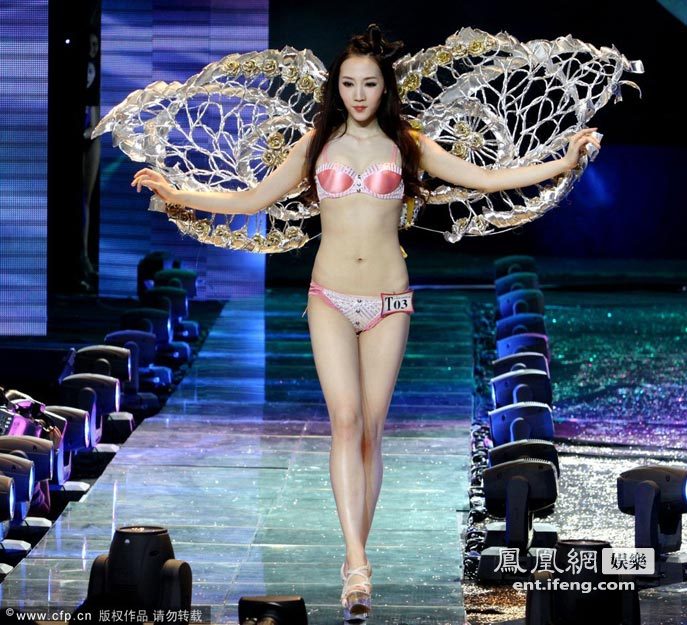
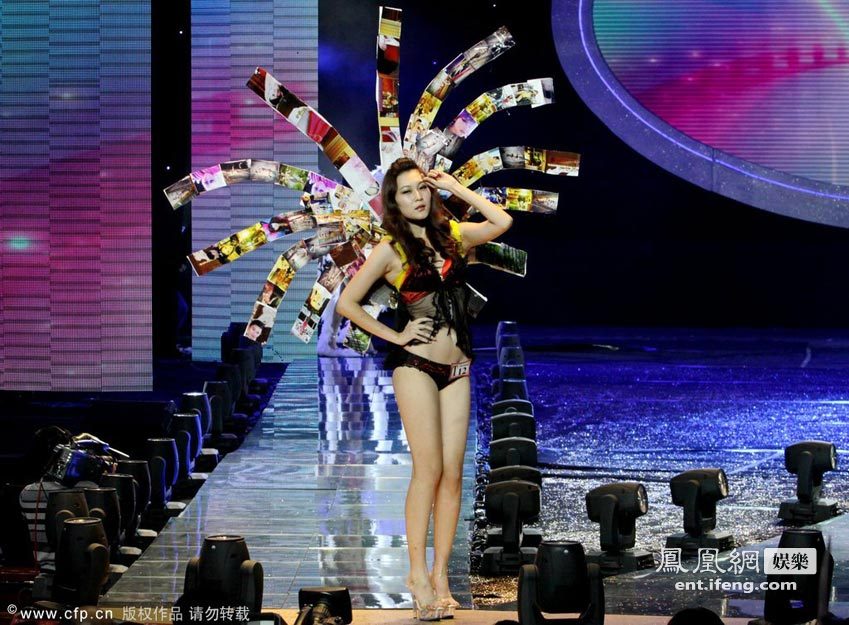
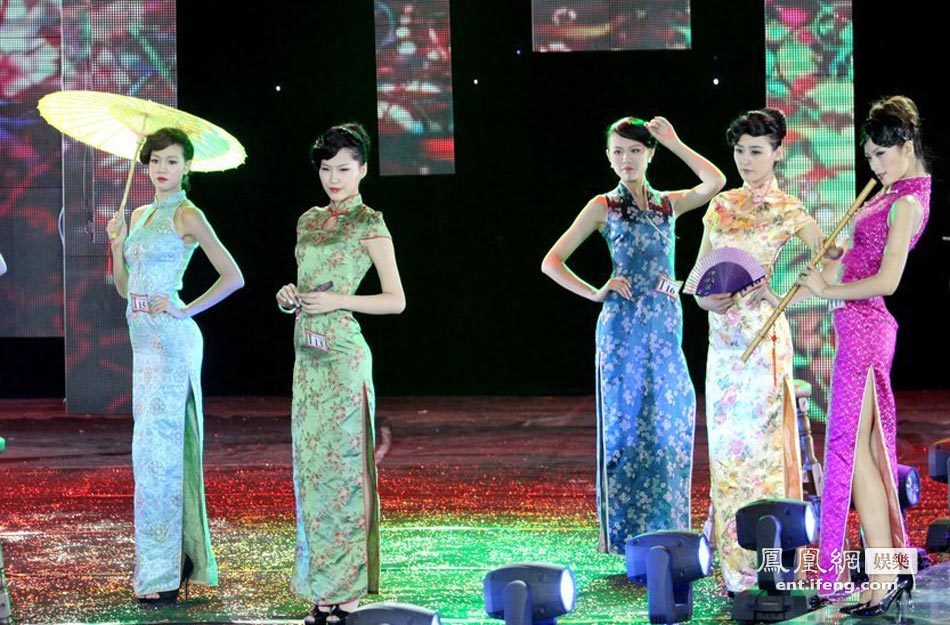
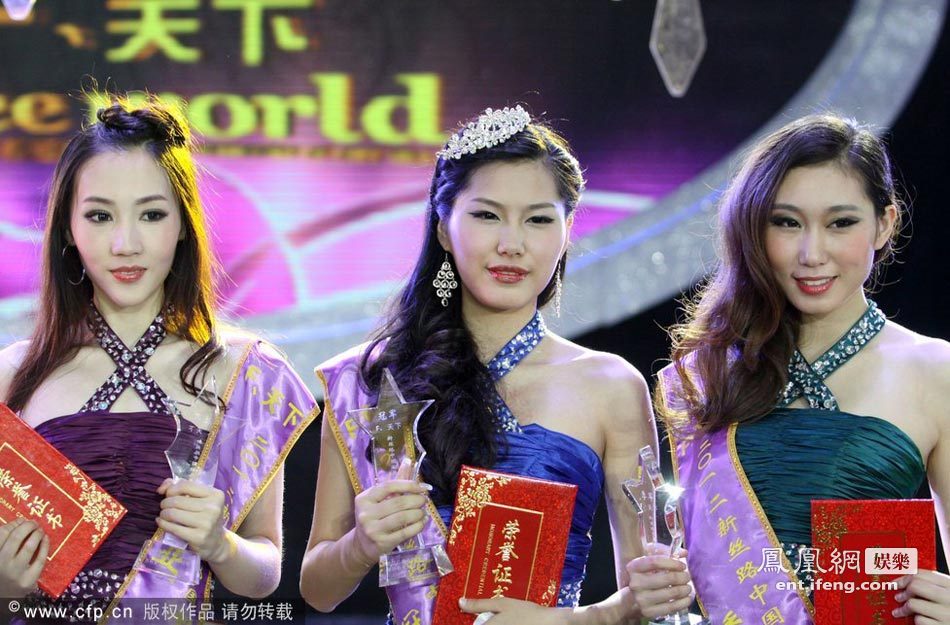
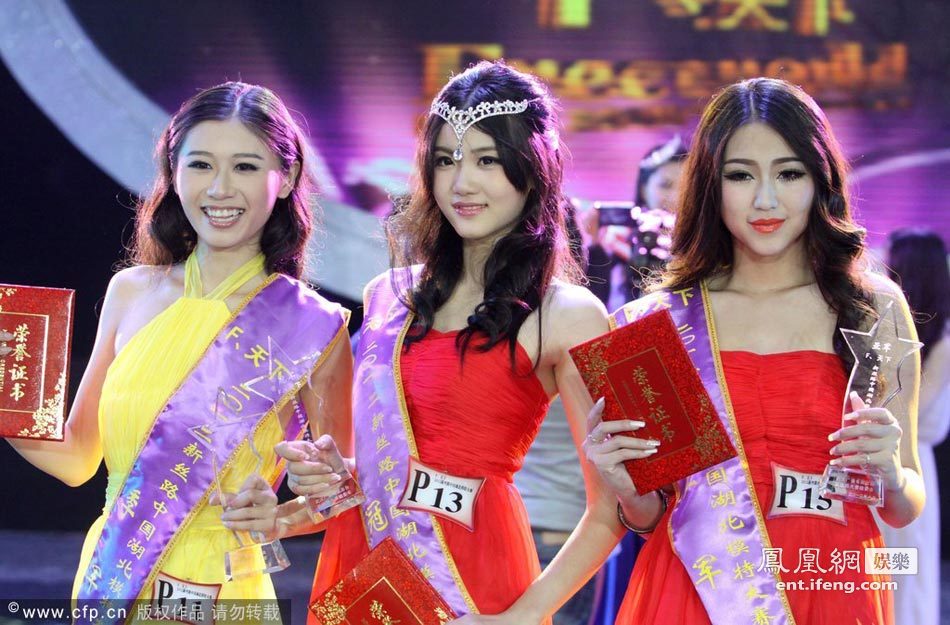
| Inspired By Victoria’s Secret And Lady Gaga, Modeling Contestants Own The Catwalk In Hubei Posted: 19 Jun 2012 11:31 AM PDT On Sunday, the finals of the New Silk Road China Model Contest in Hubei included a fashion show that combined Chinese and Western elements, with contestants dressed in qipao and as Barbie dolls, Victoria's Secret models and Lady Gaga. We could tell you that the T Group part of the competition was won by Hu Shiqi (we cannot, however, tell you what that means), or that the contest has been happening since 2009, but… would you care? You just want more photos, don't you? We can do that, too. After the jump, more images from ifeng.com. We've also embedded a couple videos for you. (H/T Alicia) If you're looking for even more photos of the contestants, check out the official New Silk Road China Model Contest website. Feel free to add all of them to your QQ Weibo, too (who uses QQ Weibo?).
|
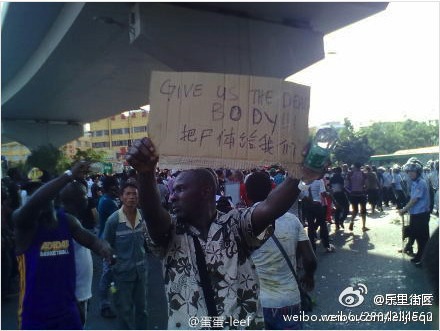
| Africans In Guangzhou Protest After Nigerian Dies In Police Custody Posted: 19 Jun 2012 10:11 AM PDT The Chinese blogosphere, specifically Weibo, is abuzz after an incident yesterday involving an African expat, believed to be Nigerian, in Guangzhou. Specifically, he died in police custody. According to Tea Leaf Nation:
Police replied, via Sina Weibo, of course, acknowledging the situation and asking for calm. The Nanfang, which broke this story on the English-language blogosphere, adds this detail: "Whatever happened, many in the African community in Guangzhou are upset about it. Crowds gathered around Gongyuan West Road this afternoon to protest, disrupting traffic near the Sanyuanli Police Station. The police called it a protest, but witnesses say the protesters had gone as far as setting fire to a police car." According to the Guardian's Tania Branigan:
We're not going to know the full truth until days later (or ever?), but it seems like netizens have taken the police's side on this issue, according to Tea Leaf Nation. "Online sentiments on Chinese social media were overwhelmingly in favor of the police, with many netizens resorting to xenophobic and racist taunts against the estimated 200,000 African migrants living in Guangzhou." The dirty little truth no one wants to talk about here is that there is mutual disdain between China and much of Africa, for reasons too complex to get into in this space. This incident will not help relations. Updates as they become available. (H/T Alicia, Jeremiah Jenne) |
| Monkey Messes With Monk On Mt. Emei Posted: 19 Jun 2012 04:00 PM PDT The monkeys on Mt. Emei near Chengdu are famous for their gregariousness. Never mind that behind those big, watery eyes is a scheming brain that tells its swift, prying fingers to reach into your pocket, grab that phone and chuck it off the ledge and into the river when it realizes it's not food (I do believe tourists are warned specifically to guard against this). The monkeys on Mt. Emei are gregarious, and they want your attention, damnit! Or food. Food is acceptable, too. This monk, who just wants to do his thing, does not have food. And this doyen of monkeys makes sure to let him know what happens to bipeds that don't tithe. Original, unedited Youku video for those in China after the jump. |
| What does China want from Rio? Posted: 19 Jun 2012 06:50 AM PDT Five figures from China's sustainable development field tell chinadialogue what they hope for from this week's Earth Summit. After days of fringe events, the Rio+20 talks are moving into their main phase. Nobody dares hold out too much hope for a major and binding outcome, but the summit is still under close scrutiny: global leaders gathered here could set the agenda for the next millennium. Li Lailai, senior researcher, Stockholm Environment Institute |
| Posted: 19 Jun 2012 07:44 AM PDT Beijing is making a fat down payment on taking a larger role on the international stage. The $43 billion China has pledged towards the replenishment of the International Monetary Fund's coffers is conditional on implementing outline reforms of the Fund's … Continue reading →  |
| Posted: 19 Jun 2012 10:20 AM PDT  Today we present the Danwei Model Worker Awards 2012, a list of the best specialist websites, blogs and online sources of information about China. The first Danwei Model Worker list came out in 2005. You can find links to all previous editions of this list at the bottom of this posting. This year, we thoroughly debated every website on the list. We've been stricter than in the past by excluding some sites that have not updated regularly, that have have strayed too far from their focus, written at too much or too little length, and those that have turned their blog into a mere feed of tweets. We've also reduced our list of people to follow on Twitter to just ten, plus a winner. We'll update this list over the next month if we discover any site we've omitted, so if you have suggestions for websites we've left out, please take to Facebook and Twitter, or email feedback -at- danwei dot com. ★★★★★
Some object to ChinaSmack's occasionally lurid headlines and use of graphic images. But we've selected ChinaSmack as Model Worker of the Year for 2012 because the site has consistently highlighted stories that excite Chinese Internet users, rather than subjects that conform to a journalistic conception of news. This is what blogs and niche media are for.
★
ART AND DESIGN 88-bar Artspace China ★ MEDIA AND THE INTERNET Blocked on Weibo China Daily Show China Digital Times China Hush China Media Project ESWN Ministry of Tofu Shanghaiist Tea Leaf Nation ★ CURRENT AFFAIRS AND COMMENTARY Beijing Cream China Rises China Geeks Inside-Out China Peking Duck Rectified Name Sinostand ★ HISTORY AND CULTURE Asia Society China Heritage Quarterly China Rhyming East Asian History Marco Polo Project ★ REGIONAL BLOGS AND LIFE IN CHINA 300 Shots at Greatness Liuzhou Laowai Shenzhen Noted Sinosplice The Nanfang ★ CHINA ABROAD China in Africa South Sea Conversations ★ BUSINESS AND LAW Buy Buy China China Economic Review China Hearsay China Law Blog Chinese Law Prof Blog Jerome Cohen's blog Silicon Hutong ★ ENVIRONMENTAL AND LABOUR ISSUES China Dialogue China Labour Bulletin ★ TECH Tech in Asia Technode Techrice ★★★★★
Black China Hand China Geeks Gady Epstein Imagethief Josh Chin M Taylor Fravel Malcolm Moore Relevant Organs Tania Branigan Victor Shih ★★★★★
AmCham China China History Podcast China Money McKinsey China Sinica ★★★★★
Charlie Custer for Link Asia USC China Institute Youtube Channel ★★★★★ CHINA SECTIONS AND BLOGS OF MAJOR NEWS MEDIA ★★★★★ PHOTOGRAPHY BLOGS ★★★★★ PREVIOUS MODEL WORKERS  |
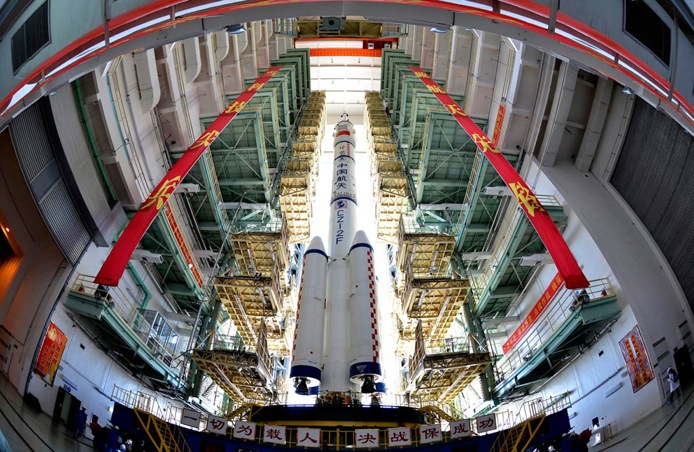
| Three taikonauts smile and wave Posted: 19 Jun 2012 07:43 AM PDT by Allison Carroll Goldman on June 19, 2012  The front page of the Southern Metropolis Daily today shows a picture of the three astronauts China has sent into space aboard the Shenzhou 9 space craft. The headline, ;Realized Dream Tiangong' refers to the Tiangong 1 Space Lab, and the fact that the Shenzhou 9 has now successfully docked with it. Chinese astronauts are often called 'taikonauts', (a combination of the Chinese word, 'taikong' (太空 space) and the Greek, 'naut' (traveler). The three taikonauts on this mission include: Liu Yang, Jing Haipeng and Liu Wang. Liu Yang is the first woman China has ever sent into space. Last week China announced two contenders for the job, and then kicked Liu's competitor Wang Yaping out of the running for the mission (see Danwei stpry linked below). The current Shenzhou 9 mission is China's fourth manned foray into space (the last was in 2008). It follows an unmanned mission last year, when the Shenzhou 8 docked successfully at the Tiangong Space Lab. Now, the three taikonauts aboard the Shenzhou 9 will attempt the country's first manned space docking. If successful, they will have accomplished an important prerequisite to setting up a national space state or space laboratory. The docking that has already been carried out was an automated procedure, meaning that computers controlled the whole process. In a few days, the crew will attempt a manual docking, meaning they will decouple the Shenzhou 9 from the Tiangong Lab, retreat to a defined distance and then command their ship to re-attach itself. The article is full of optimistic projections for the success of this manual docking, and includes many pictures of the taikonauts maneuvering around the gravity-free Tiangong Space Lab. Links and Sources |
| Dish of the Day: Xiaolongxia @ Duan's Crayfish Posted: 19 Jun 2012 07:20 AM PDT  We're a month into summer and we can't ignore the elephant in the room any longer. It's xiaolongxia (小龙虾) season! So if you haven't cracked open one of Shanghai's most coveted crustaceans (perhaps second only to hairy crab), the time is nigh. [ more › ] We're a month into summer and we can't ignore the elephant in the room any longer. It's xiaolongxia (小龙虾) season! So if you haven't cracked open one of Shanghai's most coveted crustaceans (perhaps second only to hairy crab), the time is nigh. [ more › ]  |
| Posted: 19 Jun 2012 02:15 AM PDT Sustainability concepts have evolved since the UN summit in Stockholm in 1972, but can they really meet the needs of a new century? As Rio opens, Manu V Mathai asks if the "green economy" has reached a mid-life crisis. The United Nations Conference on Sustainable Development that convenes this week has big shoes – and some holes – to fill. Its predecessors: the 1992 "Earth Summit" in Rio and the 1972 "Summit on the Human Environment" in Stockholm, Sweden, were crucial milestones in the global discourse on environment and economic development. It remains to be seen what Rio+20 will become. Through its deliberations, the conference suggested that in modernity's new-found powers was "a new liberation movement to free men from the threat of their thralldom to environmental perils of their own making." It acknowledged that modernity had created problems of an "unprecedented scale" and that it also had the power to save itself through its science and technology. This was the first articulation of what remains the essential idea of a "green economy." Caught in a "Catch-22" situation, the crucial escape hatch would be that under-developed countries could industrialise in more efficient and less destructive ways than the industrialised countries did during their industrial transformations – and this outcome would be contingent on the transfer of technology, know-how and availability from the developed world. It thus remained mired in the problems that ensue from an open-ended commitment to economic growth on a finite planet. Having made this commitment, it reiterated, albeit with more nuance than Stockholm, the need to integrate and manage the environmental externalities of economic growth through advances in scientific and technological knowledge and effective legislation. This was the essence of the green economy as it turned 20. But the same emphasis at Rio+20 reflects a discussion stuck with ideas that have already pulled their weight. They have taken us forward a great distance, but it is evident that the path ahead needs deeper introspection and imagination. As it stands now, Rio+20 does not demonstrate the boldness of its predecessors and fails to advance the discourse based on the urgent lessons of the past four decades. |
| Posted: 19 Jun 2012 02:15 AM PDT Rio+20 is a once-in-a-generation opportunity for world leaders to back an international law against the mass destruction of ecosystems, write Sarah Cunningham and Louise Kulbicki. Twenty years ago, world leaders met at the 1992 Rio Earth Summit and put in place goals and binding legal agreements to combat a number of social and environmental crises in an attempt to achieve a sustainable future. But this can be changed by creating an international law of ecocide, where mass damage and destruction can be prohibited. Thus it can be argued that to continue with existing industry that puts humanity at risk of loss of life is a breach of the human right to life – and continued use of fossil fuels can be termed as dangerous industrial activity. Where dangerous industrial activity puts humanity at risk of loss of life, governments, Higgins argues, already have a legal duty of care to act. |
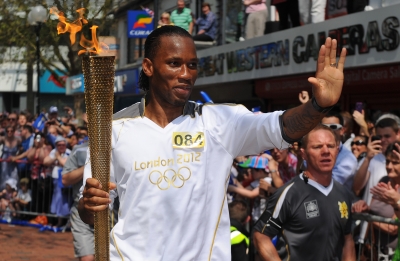
| Didier Drogba To Shanghai Is Official… As Soon As Drogba Decides It Is Posted: 19 Jun 2012 03:50 AM PDT Shanghai FC Shenhua has a problem with prima donnas, specifically one Nicolas Anelka, currently the highest paid player in the Chinese Super League. Last month, according to the Telegraph, he threatened to quit the team, whining, "If there is still no one to support me and (they) continue to play little tricks behind my back… then I will quickly decide whether or not to retire." A little earlier, according to Wild East Football, Anelka said at a press conference, "In my opinion, the most important area in football is the midfield, if Drogba comes, and no-one can pass to him, then that is no use." He spared no potshots for his current teammates: "They are too young and their experience is not enough. Our tactical problems need to be solved, these are the reasons why we are not scoring goals… I'm amazed by Chinese football, there is quite a gap with the European game, such things can only be improved through better training." Things aren't likely to get less dramatic now that Shenhua is expected to ink Drogba to a contract that will make him the new highest paid player in the CSL. (That won't make things awkward with Le Sulk, not at all.) But the signing process has been… frustrating. According to ESPN:
Well, that's good. Who knows? Let us all wait, like the boss himself — the man who will be paying this 34-year-old, on-the-decline player a reported 888,000 RMB per week. But… what are we waiting for, exactly?
This website. When the day comes, there better be sprinkles, flash explosions, and, like, twenty pop-up ads for free ice cream and mp3 downloads. Otherwise, Shanghai fans and management will have been held hostage to the whims of a star football player's personal website webmaster. |
| Posted: 19 Jun 2012 02:43 AM PDT
1. 港姐九丑榜 Gǎng jiě jiǔchǒubǎng – "Miss Hong Kong Nine Uglies List": Previously made fun of by director Eric Tsang for being a "pork chop," and ruthlessly criticized by the Hong Kong media and public for being the "least beautiful Miss Hong Kong ever," Miss Hong Kong 2007 Kayi Cheung apparently has a new look, but has spent so much money on her transformation into a skinnier version of herself that she is now being criticized again, this time for "going beneath" her Miss Hong Kong status and having to vie for cheap discount items amongst the masses. The discovery of Cheung's makeover comes amidst netizen discussion today about how the women in Hong Kong "are getting uglier," with the circulation of a "nine uglies" Miss Hong Kong list, which includes Cheung, and a "ten beauties" list, which includes 1988 winner and Hong Kong actress Michele Monique Reis. Here's the story in Chinese. 2. 3岁驾车肇事 3 suì jiàchē zhàoshì – On the morning of June 16th, a man in Jiangxi brought his three year-old son with him into town to buy some milk. Seems innocent enough, right? But wait, there's more. In a rush, he left his son in his cart, and the keys in the ignition. The toddler got behind the wheel and, as toddlers are want to do, began playing around, accidentally switching on the battery and driving for ten meters until finally running into and toppling over an electric bike. Here's the story in Chinese. 3. 我爸是交警 wǒ bà shì jiāojǐng – "My Dad is a Traffic Cop": the nepotistic-watchword-turned-meme-explosion known lovingly and loathing-ly as "My Dad is Li Gang" is back with avengence, Humen style, this time with a different Daddy. This past Sunday during pre-twilight hours, traffic police in Humen, Guangdong encountered a drunk driver who, hoping for leniency, announced: "My DAD is a traffic cop!" The inebriated's father indeed was and still is the leader of the traffic police department in some city in Anhui, but this did not work on the steely-willed Humen cops, who imposed a 2,000 RMB fine, deducted 12 points from his license, and suspended the D-list princeling from the open road for six months. Here's the story in Chinese. 4. 工资指导线gōngzī zhǐdǎo xiàn – "Wage Guidelines" - The Beijing Municipal Human Resources and Social Security Bureau recently released its "2012 Wage Guidelines for Enterprises," which includes a clause setting businesses' new minimum margin of wage increase at 4.5%. This stipulation and others have caused confusion and concern among netizens, as people try to understand the kind of "enterprise" to which the guidelines apply, whether or not this is compulsory, how it is meant to be implemented, and so on. Yesterday, the labor relations department of the Human Resources and Social Security Bureau responded to inquiries saying that the "wage guidelines are…recommendations for businesses' annual wage growth, in the government's attempt at macroeconomic control over the national income distribution" and that "based on the guidelines, enterprises and trade unions can negotiate the level of wage growth." According to the labor relations representative, the new guidelines will also apply to state-owned enterprises. Here's the story in Chinese. 5. 肉灵芝西安 ròulíngzhī Xī'ān – "Xi'an Fleshy Mushroom": On June 17th, a young female reporter on "Xi'an Up Close," an investigative journalism program in Xi'an, did a riveting feature story on a mysterious, never-before-seen magical mystery mushroom that was recently discovered dwelling in a well in Xi'an. It turned out to be an artificial vagina! The television station has apologized for the naïveté of their reporter. Here's the story in Chinese and Here's a follow-up in English. 6. 男子赤身被铐交警队外 nánzǐ chìshēn bèi kào jiāojǐngduì wài -"Man Handcuffed Naked at the Door of Traffic Police Department": After pictures of a shirtless man in Xinyang, Henan being handcuffed outside of the Xinyang Traffic Police Department began to circulate online last week, the police have issued a response, saying that the man, who had been hauled in for violating traffic regulations on his motorcycle, had attempted to escape questioning and needed to be held by force. In the photograph, one of the man's hands has been cuffed to a fence and he is not wearing his shirt, which hangs on the fence next to him. His face shows a grimace of pain. Here's the story in Chinese. 7. 危金峰 Wēi Jīnfēng – Wei Jinfeng, deputy director of the Guangdong Provincial Finance Bureau, is now under investigation, on suspicion of serious "violations of law," though no details have been released yet as to what kind of "violations" they might be. We can guess. So far, most articles spend one or two vague sentences on the breaking news, and then go on to list Wei's resume through to his last day in office on June 13th. One reporter remembers his "modest smile," and on paper he seems to be a real straight shooter who has held a wide range of government posts throughout his career. Here's the story in Chinese. 8. 袁立怀孕 Yuán Lì huáiyùn – Blaine Grunewald, husband of Chinese actress Yuan Li, recently announced on his Weibo that his wife is pregnant, proudly posting pictures of the ultrasound. Here's the story in Chinese. 9. 遮挡号牌扣12分 zhēdǎng hàopái kòu 12 fèn – "12-Point Deduction for Covering License Plate": Countless crazy drivers across the nation are cringing with the publication of new requirements for China's national driving test and the alteration of other related driving regulations, including a law that will increase the severity of penalties for breaking traffic laws, now deducting 12 points for the obscuration of one's license plate number and deducting up to 6 points for running a red light. Here's the story in Chinese. 10. 神九发射后遇神秘发光体 Shénjiǔ fāshè hòu yù shénmì fāguāng tǐ "Light-Emitting Object after Shenzhou Launch" – Microblogs are going crazy with speculation, as netizens have spotted two unaccounted-for points of light in infrared pictures from yesterday's Shenzhou 9 space launch. Are they birds? Are they planes? Are they UFO's? Are they stars? Are they a camera lens malfunction? No one knows the answer!!!! Here's the story in Chinese.        |
| Astronauts’ special food supply angers Chinese netizens Posted: 18 Jun 2012 02:27 PM PDT From Beijing News Just as China sends a manned spacecraft into orbit for its first docking mission, a news report about how Chinese astronauts depend on special food supply for nutrition and health has sparked widespread anger over the government's failure to improve food safety for the general public. Some even call on the authorities to apply the same stringent standards across the nation. The Shenzhou 9 (literally Divine Vessel 9) carrying three astronauts, including the country's first female astronaut, was launched on the early evening of June 16, local time. It successfully docked with the Tiangong 1 (literally Celestial Palace 1) space lab Monday afternoon, marking a major breakthrough in China's space ambitions. Liu Yang, China's first female astronaut, waves during a departure ceremony at Jiuquan Satellite Launch Center, Gansu province, before she enters Shenzhou 9 spacecraft. Shenzhou 9 spacecraft is to dock with the Tiangong 1 space lab module. Beijing News published a story about its reporter's visit to a special supply base that astronauts' food come from, in which it says that everything on their plate must be cherry-picked. The production base consists of many farms where beef and dairy cattle are raised. The livestock here grazes on naturally grown grass. Eggs come from wild birds and are absolutely cage-free. Dairy cows roam and graze freely on a farm at the special food supply production base. According to the report, cows that produce milk for astronauts have to be screened over and over again. A couple of 'high-spirited' cows with 'sleek, glossy hair' are selected from dozens and raised separately. They will not be fed with any medication in the next month so that all drug residue in their bodies will be completely expelled during this withdrawal period. Then milk produced by these cows have to pass muster with the quality control at the production base, the Launch Site Quarantine Inspection, and the Space Center Drug Inspection Administration to ensure its protein content, pH level meet standards before it can be passed onto the future space travellers. Dairy cows that are "high-spirited with sleek, glossy hair" are selected and raised separately from other ordinary cows. Pigs are raised in special pigsties where they can lie on the ground blanketed with sawdust basking in the sun and eat only corn and bran and nothing else. Even the corn and bran they feed on are grown organically at the production base, and thereby pollution from pesticide residue can be tackled at its source. Most pigs simply bask in the "This place is off-limits to any stranger, motor vehicle, or even bicycle," a worker at the base said to Beijing News. Fishes swim in the natural water where no motorboat is allowed. No artificial fish feed is ever needed for their growth. A sign next to a fish pond. All fishes have to be inspected over and over again before they are headed for the kitchen. The report has become a hot topic on the Internet. Chinese net users, while blown away by the privileges that space travellers enjoy, have been accusing the harsh realities of poisonous and toxic food that the general public is faced with. One user commented on Tencent.com, a Chinese internet portal, "The authorities always say they attach great importance to food safety for the public, and that all food meet standards after being put under inspection and are not harmful to health. Then why can't astronauts eat these food?" Another wrote, "Astronauts are human beings. So are ordinary citizens. When will we ordinary people be able to drink milk produced by reliable cows?" Sohu, another Chinese web portal, ran a commentary written by Luo Shuyi, in which the author wrote that the 'domestic milk' that astronauts drink is never the same as the 'domestic milk' that ordinary Chinese drink. What goes down astronauts' throat is the real 'safe, trustworthy milk' that is 'exclusively supplied'. Other web comments:
|
| Watch: The world's tallest man Sultan Kosem is big in Hong Kong Posted: 19 Jun 2012 12:39 AM PDT Via NoCommentTV: "The world's tallest man, Sultan Kosem, who measures 2.51m tall, turned up at a Guinness World Records event in Hong Kong. Kosen said he has stopped growing after undergoing several operations." [ more › ]  |
| Posted: 19 Jun 2012 12:39 AM PDT  |










| You are subscribed to email updates from Update » Blogs » Society To stop receiving these emails, you may unsubscribe now. | Email delivery powered by Google |
| Google Inc., 20 West Kinzie, Chicago IL USA 60610 | |

Comments