Blogs » Society » Above Dico’s In Henan, 20 Minutes Of Free Porn For All
Blogs » Society » Above Dico’s In Henan, 20 Minutes Of Free Porn For All |

- Above Dico’s In Henan, 20 Minutes Of Free Porn For All
- You’ll Not See Finer Pencil Drawings Than These From Paul Lung
- Finally final: Drogba confirms he's coming to Shanghai
- People Continue To Rescue Toddlers Stuck In High Places
- Watch: Pregnant panda undergoes ultrasound scan
- The Utopia Within: Happy Dragon Boat Festival!
- Prince Charles caught in the act of hurting the feelings of the Chinese people
- Natural Disaster Dislocation In China In 2011
- Video Of The Near-Riot In Guangzhou After Foreigner Died In Police Custody
- 20 years of China’s public voice
- Veritable NBA All-Stars Plus Yi Jianlian To Appear In A Chinese Movie
- 3-year-old falls out the window, gets head caught in rail before being rescued
- Aung San Suu Kyi caught in the act of hurting the feelings of the Chinese people
- Mid-Week Links: Protesting Africans update, Chinese superhero The Annihilator, lots of baijiu, and “5,000 Years”
- At Rio, a new contract for science?
- Watch: Police rescue suicidal man on window ledge in Ningbo
- Attention Mums and Dads: Shanghai Family Launches Their New Website
- Chinese State Media Gushes Over Piece Of Adhesive Hu Jintao Removes From His Shoe
- Africans protest in Guangzhou after Nigerian beaten to death
- Procrastinate Break: Hunger Games | Battle Royale | Django Unchained
| Above Dico’s In Henan, 20 Minutes Of Free Porn For All Posted: 20 Jun 2012 08:48 PM PDT Here's a fun way to troll an entire city. In a country that forbids pornography, why not hook your laptop to an outdoor big screen and stream porn during evening rush hour? That's exactly what one man did in Pingdingshan, Henan province on Tuesday, in what might be the greatest public prank China will see all year. Although… there is six months left. You've been called out, people. Try to top this. Do note, however, that there are consequences. As announced on Pingdingshan police's Weibo, the man who pulled this stunt received 15 days of detention. Totally worth it. Youku video for those in China after the jump, plus lightly censored photos and a one-minute Chinese news report on the incident. The newscast: At one point in this video, a woman tells the man who is filming, "Let's stop watching." He merely chuckles: (H/T Alicia) |
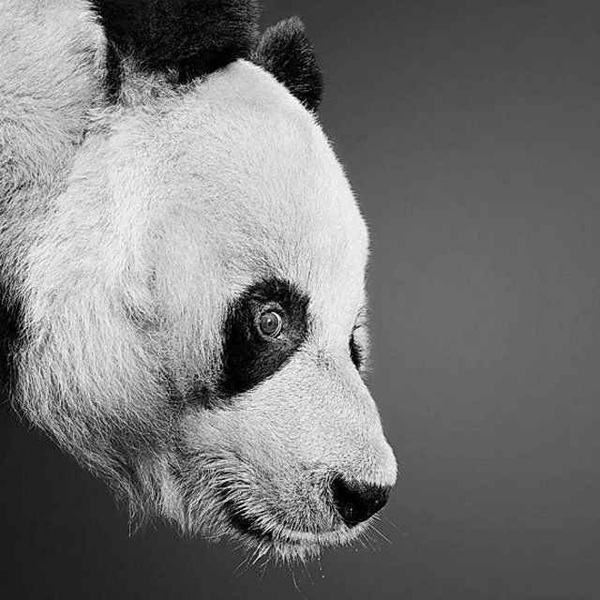
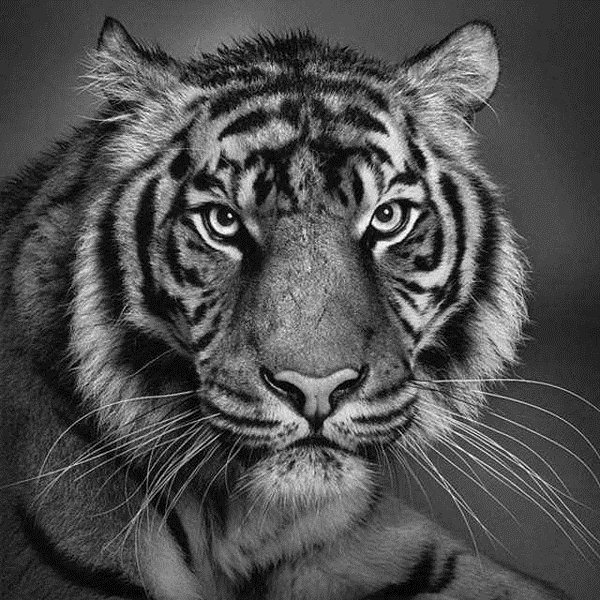
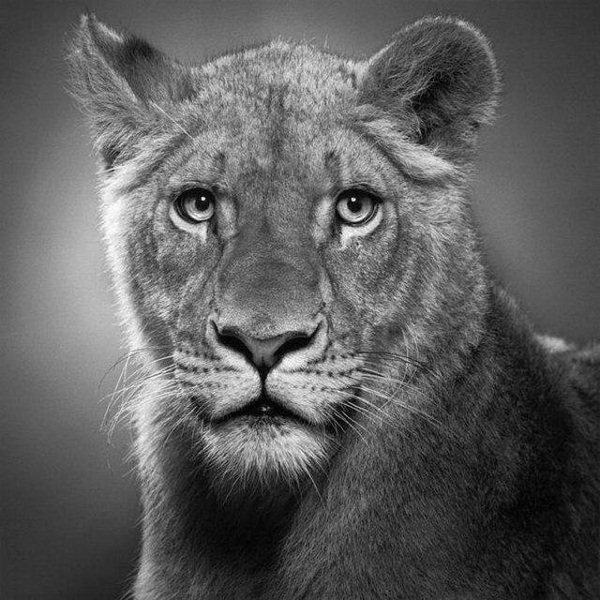
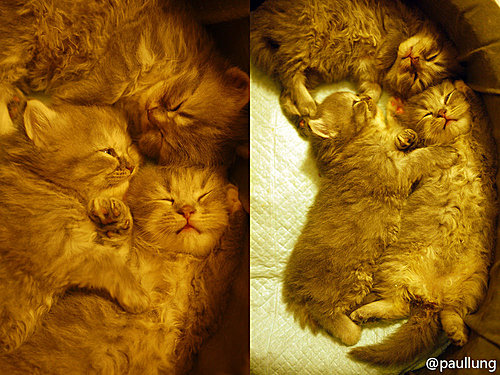
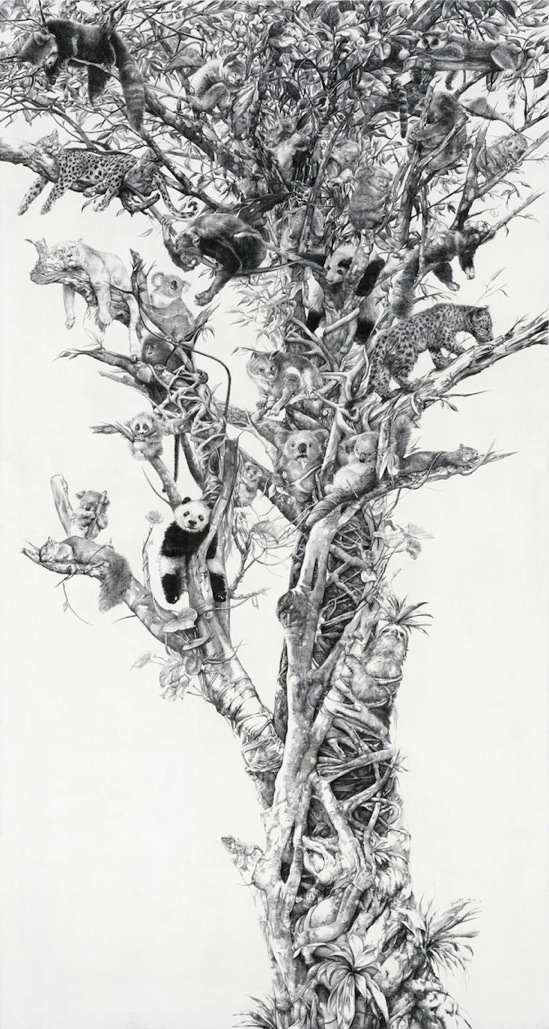
| You’ll Not See Finer Pencil Drawings Than These From Paul Lung Posted: 20 Jun 2012 08:10 PM PDT Paul Lung from Hong Kong is a self-described business design consultant, but judging by these pictures he drew — yes, drew, as in with a .5mm pencil — his talents are being misemployed. I don't know, maybe he's a freakin' spectacular business design consultant. I do know, however, that he's an absurdly awesome pencil artist, judging by the work on several of his websites (which you can access through his personal website). A few more pictures are after the jump; if you have Sina Weibo, you can follow him here. These are from Buzzfeed: Real-life models for the above picture: (H/T Alicia) |
| Finally final: Drogba confirms he's coming to Shanghai Posted: 20 Jun 2012 08:21 PM PDT  After months (and months) of speculation, Didier Drogba finally confirmed on his website yesterday that he'll be playing for Shenhua. He'll be joining former Chelsea teammate Nicolas Anelka here in Shanghai early next month. [ more › ] After months (and months) of speculation, Didier Drogba finally confirmed on his website yesterday that he'll be playing for Shenhua. He'll be joining former Chelsea teammate Nicolas Anelka here in Shanghai early next month. [ more › ]        |
| People Continue To Rescue Toddlers Stuck In High Places Posted: 20 Jun 2012 06:50 PM PDT Adults continue to be unable to resist doing noble things for young children in need. Danwei noted yesterday a story that made the front page of Today Morning News: on Monday evening, a man surnamed Liu heard the cries of a young boy outside. He then…
One line in particular that he told journalists — "When you see other people in trouble, it's normal to help them" — has netizens swooning. What a concept! We'll mark this one down as favorable outcome. The last incident involving a baby and a balcony, unfortunately, did not end so well. Also see: June 3, Guangdong province: 4-year-old stuck on 4th-story balcony June 8, Guangxi autonomous region: 4-year-old stuck between 4th-story guard railings June 11, Guangdong province: 2-year-old stuck between 7th-story guard railings |
| Watch: Pregnant panda undergoes ultrasound scan Posted: 20 Jun 2012 04:45 PM PDT |
| The Utopia Within: Happy Dragon Boat Festival! Posted: 20 Jun 2012 04:00 PM PDT
|
| Prince Charles caught in the act of hurting the feelings of the Chinese people Posted: 20 Jun 2012 02:36 PM PDT Via TelegraphTV: "The Prince of Wales and the Dalai Lama greeted each other like old friends when the two men met for the first time in four years, although the Tibetan spiritual leader did insist on holding hands." [ more › ]  |
| Natural Disaster Dislocation In China In 2011 Posted: 20 Jun 2012 10:34 AM PDT China last year was spared the large-scale population dislocations caused by natural disasters that it experienced in 2010. That year monsoon flooding, earthquakes and the like uprooted 15.2 million people from their homes. Yet the figure for 2011 was still … Continue reading →  |
| Video Of The Near-Riot In Guangzhou After Foreigner Died In Police Custody Posted: 20 Jun 2012 10:15 AM PDT Celestine Elebechi is the Nigerian who died in police custody on Monday, sparking a big protest the next day involving more than 100 Africans. BJC contributor Alicia found this video recently (more are beginning to appear on Youku). I'm particularly surprised by how brazen the protestors are, appearing to throw objects at the approaching police brigade. By all indications, the protest/mini-riot ended after only a few hours without many injuries, which is a blessing. Because judging by this snippet here, it could have been worse. Youku video for those in China after the jump. |
| 20 years of China’s public voice Posted: 19 Jun 2012 11:36 PM PDT Since the last Rio summit, China's way of doing things has changed: citizens have become players in environmental governance. Chang Cheng reflects on a civil-society journey. In 1992, the United Nations Earth Summit in Brazil produced the Rio Declaration on Environment and Development. Its 10th principle opens with these words: "Environmental issues are best handled with participation of all concerned citizens, at the relevant level." After the first line, the Access Principle continues like this: "At the national level, each individual shall have appropriate access to information concerning the environment that is held by public authorities, including information on hazardous materials and activities in their communities, and the opportunity to participate in decision-making processes. States shall facilitate and encourage public awareness and participation by making information widely available. Effective access to judicial and administrative proceedings, including redress and remedy, shall be provided." In the 20 years since this principle was formulated, China has seen the advent and growth of public participation in the sustainable development field, at both national and local level. The past few years have been as significant as any: new technologies have taken citizen engagement to new heights online, while government action has brought public participation into mainstream political thought. A chronology of public participation in China's sustainable development * January 18, 1994: Gisang Sonam Dorje, first secretary of the Western Committee of Zhiduo in Qinghai – set up to protect the Tibetan antelope – is shot and killed while transporting captured poachers. Inspired by his martyrdom, in April the next year Zhaba Dorje re-establishes the committee. Their armed anti-poaching team is known as the Wild Yak Brigade. |
| Veritable NBA All-Stars Plus Yi Jianlian To Appear In A Chinese Movie Posted: 20 Jun 2012 06:00 AM PDT I'm ashamed to admit that I missed this Shanghai Daily article from Saturday announcing a partnership between the NBA and Shanghai Film Group to produce Amazing. It "tells the story of a fictional world known as 'The Sixth Sense.' It uses basketball imagery to combine the visual elements of a video game with a movie, akin to the 2010 American science fiction film 'Tron: Legacy.'" That does sound amazing, actually. And then you watch the trailer… Go ahead, I'll wait. It's above and below (on Youku for those in China after the jump). There's something else you should see. These are GIFs from Buzzfeed of the trailer. Are you able to handle this amazingness? Dwight Howard doing inexplicable things: Carmelo Anthony making what I am sure is the only face he makes the entire movie: Scottie Pippen. I guess… something. Li Anlan's Shanghai Daily story has been linked to on Yahoo's Ball Don't Lie blog and Grantland, so, well done, Anlan, your bosses should give you a bonus. Slated for release this summer, Amazing also stars American actor Eric Mabius and Chinese actors Huang Xiaoming, Huang Yi, Charles Chen and Amber Kuo. It looks utterly unwatchable to all people whose blood alcohol content does not exceed 0.25. |
| 3-year-old falls out the window, gets head caught in rail before being rescued Posted: 20 Jun 2012 11:45 AM PDT by Allison Carroll Goldman on June 20, 2012  The front page of today's Today Morning News shows pictures of a man rescuing a 3-year-old boy who had fallen out the window of his Ningbo apartment and got his head stuck in the anti-theft grate outside, so that he was dangling by his neck. The headline: "Ningbo has its own 'big brother'". The incident happened two days ago. Xiao Liu, an agile air-conditioner installation worker from Sichuan province, sitting in his own apartment playing computer games when he heard the screams of a child and saw the boy dangling from a third-floor window of the apartment building opposite his, about to fall. He bolted down 6 flights of stairs and scaled the other building to where the boy was stuck. Clinging to the outside of the building, with one foot on the second-floor anti-theft grate, he managed to support the boy's body with one hand for 20 minutes until firefighters arrived to cut the iron railing and free the boy. The child was saved, and Xiao Liu became a local hero overnight. When the reporter interviewed him for the story, Xiao Liu simply said, "When you see other people in trouble, its normal to help them." Strangely, this is not the first time a story like this has come up. Already this month, similar cases of kids falling out windows and getting their heads stuck until a kind-hearted and nimble bystander climbs up to rescue them have occurred twice: once in Guangdong province and once in Guangxi. For more details about these other stories, and video clips of the incidents themselves, follow the Beijing Cream link below. Links and Sources  |
| Aung San Suu Kyi caught in the act of hurting the feelings of the Chinese people Posted: 20 Jun 2012 05:35 AM PDT |
| Posted: 20 Jun 2012 04:48 AM PDT  A rainbow in Xinjiang (CFP via Chinanews.com) Today has proven that you guys do love your sex mushrooms. Carry on, then. Pretend these links aren't even here. The Nanfang updates the story from earlier today about protesting Africans in Guangzhou: "According to Matouvu, a 26-year old Nigerian who lives in the Sanyuanli area, the initial altercation between the moped driver and Nigerian man was in the wee hours of yesterday (June 19) morning. She said when she arrived at her office around 8 o'clock yesterday morning, police cars remained around the area where the altercation had taken place. 'I called to find out what was going on, and they said one man had died from a beating,' she said." [The Nanfang] About that postgame soccer "near-riot" on Saturday: "Beijing has no problem attracting fans and families are seen all over Worker's Stadium on a matchday. With Father's Day having just past, it was an awesome sight to see all the young children inside Gongti Saturday night. What happened outside the venue was an isolated incident, over 40,000 people showed up for the match proving that Guoan is attracting plenty of well-behaved fans and that the league is nowhere near 'spiraling into a weekend pasttime for thugs' and saying as much is an insult to Beijing's great fans." [Wild East Football] And one more reaction to that forced abortion case. "The gradual relaxation of the one-child policy over many years (as we're seeing now) is probably the best anyone can hope for. Ending it outright all at once could cause a baby boom with demographic consequences down the road just as bad as those that resulted from the policy in the first place. // So for most intents and purposes, the forced abortion problem is probably better than it was 10 or 20 years ago and improving slowly but surely. The takeaway from this latest incident though is that, as far as public opinion is concerned, none of that matters." [Eric Fish, Sinostand] Travel to Tibet open again to foreigners — unless you're from Norway, the UK, Austria or Korea (and other restrictions). "The Tibet Tourism Bureau had a meeting today (June 18) and will begin processing permits for foreigners again starting on June 20th. There are still a lot of restrictions. Only groups of 5 people from the same country will have their permits processed." [Land of Snows] Self-censorship at the South China Morning Post? "A decision by the South China Morning Post's new editor in chief, Wang Xiangwei, to reduce a major breaking story on the suspicious death of Tiananmen dissident Li Wangyang in a Hunan hospital to a brief has kicked off a new controversy at the paper. // Alex Price, a senior sub editor at the paper, sent Wang an email saying 'A lot of people are wondering why we nibbed the Li Wangyang story last night. It does seem rather odd. Any chance you can shed some light on the matter?' // Wang answered curtly: 'I made that decision.' When Price asked in a subsequent email: 'Any chance you say why? It's just that to the outside world it looks an awful lot like self-censorship,' it generated an explosion from Wang." [Asia Sentinel] Get ready. "The Annihilator" really is happening. "'Spider-Man' creator Stan Lee's first Chinese superhero, 'The Annihilator,' topped the inaugural slate of feature film co-productions announced Monday by state-run National Film Capital." [LA Times] Chinese drinking culture. "The pressure to drink, and drink a lot, is so great that even Mormon Jon Huntsman admitted he tippled while serving as U.S. Ambassador to China. // In 2009, a Guangdong police officer who passed away after drinking to excess at an official event was said to have 'died in the line of duty.' He received the official designation of "martyr," which greatly increased the compensation his family received. The officer's death came just after another official, ironically with Wuhan's water resources bureau, also succumbed to too much drink. // While not the official cause of death, the Guangdong cop and the Wuhan cadre died of inadequate jiuliang (酒量), which literally means 'booze capacity,' or in common usage, 'ability to hold one's drink.' In modern China, showing off one's jiuliang, often on numerous nights (or afternoons) a week, is part of doing business or being important. Like the eighth rule of Fight Club, if it's your first time, you have to drink." [The Awl] Beijing is getting more expensive. "Mercer's annual expatriate cost-of-living survey has come out. Judging from the results, either Beijing is getting pricier or lots of other places are getting cheaper. Beijing now ranks #17 on the international list, up three spots from its perch last year, but still down one from its high at 16 in 2010." [the Beijinger] Featuring a screen-grab of BJC… "But what all Chinese everywhere of whatever political persuasion agree upon is the figure used to mark the extent of their lineage: '5,000 years of civilization' and '5,000 years of history' are the most repeated phrases you'll hear the Chinese use to describe their country. Indeed it is not so much something agreed upon as simply taken for granted." [Isham Cook] Feet calligraphy interlude: Finally… Patrick Devillers, who had business ties with Gu Kailai, arrested in Cambodia. [NY Times] Jonathan Watts bids farewell to China. [Guardian] Danwei's "Model Workers 2012" (chinaSMACK and Bill Bishop are the big winners). [Danwei] Gonna put this here without comment: Jim Boyce headline: "Beer-ty queens: Gao Xiaodan is Miss Kriek 2012 for China." [Beijing Boyce] Finally, finally…
|
| At Rio, a new contract for science? Posted: 19 Jun 2012 11:46 PM PDT As global leaders try to chart a course for the planet, scientists are seeking to influence policymakers far more than they have proved able to in recent years. Joydeep Gupta reports from Brazil. Ensuring a sustainable future in the face of inter-connected, human-induced challenges to the Earth system demands a new relationship between science and society. This was the message from leading scientists gathered in Rio de Janeiro last week for the Forum on Science, Technology and Innovation for Sustainable Development, a five-day session held ahead of the main event, the UN-led sustainability conference known as Rio+20, which begins today. |
| Watch: Police rescue suicidal man on window ledge in Ningbo Posted: 20 Jun 2012 04:16 AM PDT This is one hell of a rescue operation by police in Ningbo of a man threatening to commit suicide because of family problems. Footage from this eye-witness video shows a policeman suspended by ropes and jumping from one side of the building towards him to grab him while other rescuers behind the man quickly tied ropes to his feet to secure him. [ more › ]  |
| Attention Mums and Dads: Shanghai Family Launches Their New Website Posted: 20 Jun 2012 01:49 AM PDT Date: Jun 20th 2012 11:47a.m. Contributed by: clairebared Our friends over at Shanghai Family have just launched an awesome new website and if you're a mum or dad, you need to check it out. If you're a fan of the magazine, you'll love the new makeover. They've spruced things up and added a bunch of great new features to the home page including: • An easy-to-use search bar which will help you find articles, venue listings, event listings, classifieds and forum topics We're especially loving the new additions of Today's Recipe which displays a new easy-to-follow recipe every day on the website. And those fans of Instagram will love the Share Your Photos section which will allow you to upload and share snaps of your daily life in Shanghai. You don't even need to sign up for a new Shanghai Family account; your City Weekend user name is fully functional on the site! As well as all these nifty new features, mums and dads will love the forums . It's a great way for parents to connect with fellow families around town. But don't just take our word for it, jump onto the Shanghai Family website and check it out for yourself. |
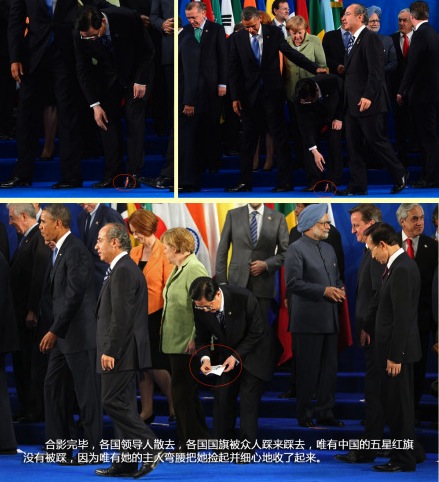
| Chinese State Media Gushes Over Piece Of Adhesive Hu Jintao Removes From His Shoe Posted: 20 Jun 2012 01:35 AM PDT Here is the perfect example of a Chinese state mouthpiece spinning cock out of bull. Attention: this piece, "President Hu picks up China's dignity," published on People's Daily at 1:05 pm today. Scene: G20 Summit in Los Cabos, Mexico; as leaders walk off after their photo op, Chinese president Hu Jintao bends over to pick up something…
Nothing in People's Daily's write-up is technically false. But what really happened? Why did Hu Jintao alone pick up that flag? Let's go to the video:
The flag was stuck to his shoe, and that's why he stopped — just long enough to pick the flag off his shoe, mind you. Wait, I got that wrong. The flag of the motherland flung herself on her beloved leader's noble wingtips and the leader was so moved as to carefully extricate her so that she may more comfortably be transported back to her country of origin, near his bosom. To People's Daily's credit, this story did not originate from some patriotic editor at its office. It came from Weibo — specifically, this post by Huaxin News, which has been forwarded 166,600 times as of this moment. According to Offbeat China, at first, "99% of the 200o comments left to this post are shouts of 'Bravo' or 'Love you. Brother Hu.' Many called it an 'epic moment' that is 'trivia' but has the power to 'move the entire nation.'" But after closer examination, netizens pulled an about-face: "Opposite to the overwhelming 'Bravo' comments to the earlier post, almost every single post with the image now is flooded with comments from cynical netizens who call Hu's action a show and the 'truth' a slap on the face of those 'stupid patriots.'" And here, People's Daily loses whatever credit I just gave it, because despite the truth, it proceeded with the editorial stating that Hu Jintao loves Chinese flags so much, he couldn't bear to leave one behind even after all the other leaders did just that. And because it's People's Daily out on the lead with this, I think it's safe to say we're going to see several similar editorials appear across state media. Sheep follow sheep, you know. But it's not slaughter they're being led to — it's laughter. Beautiful, mocking laughter. (H/T TAR Nation) |
| Africans protest in Guangzhou after Nigerian beaten to death Posted: 20 Jun 2012 12:43 AM PDT  African expatriates in Guangzhou hit the streets in protest in Sanyuanli district yesterday after an altercation between a Nigerian man and a moped driver led to a severe beating and the eventual death of the Nigerian while under police custody. [ more › ] African expatriates in Guangzhou hit the streets in protest in Sanyuanli district yesterday after an altercation between a Nigerian man and a moped driver led to a severe beating and the eventual death of the Nigerian while under police custody. [ more › ]  |
| Procrastinate Break: Hunger Games | Battle Royale | Django Unchained Posted: 20 Jun 2012 12:01 AM PDT Date: Jun 20th 2012 2:34p.m. Contributed by: andrewchin This week we: get hyped for The Hunger Games, look at its Japanese predecessor, preview the next Quentin Tarantino flick, examine how the violence of the LA Riots has changed some of its most affected neighbourhoods, pay tribute to a local band hanging it up, and jam out to a funky mashup mix.
|








 A meeting of two Nobel Peace Prize winners: Burmese democracy icon Aung San Suu Kyi with the Dalai Lama in a private meeting in London, England yesterday. [




| You are subscribed to email updates from Update » Blogs » Society To stop receiving these emails, you may unsubscribe now. | Email delivery powered by Google |
| Google Inc., 20 West Kinzie, Chicago IL USA 60610 | |

Comments