Blogs » Society » Sprout: A Healthy Hub Specializing in Super Foods
Blogs » Society » Sprout: A Healthy Hub Specializing in Super Foods |

- Sprout: A Healthy Hub Specializing in Super Foods
- Art Review: Sarah Tse's Whimsical Drawings
- Acid Dumplings [46]
- Guess who hated Obama’s inaugural address more than American Reaganists
- The Schmidts write about their North Korea trip
- Aside from Shanghai, Chinese market reluctant to accept champagne
- “Linsanity,” The Jeremy Lin Documentary, Had A Sundance Audience Standing And Cheering
- Climate change, not grazing, destroying the Tibetan Plateau
- What's wrong, Lassie?
- How to have a “convenient” Spring Festival transport rush
- Top-of-the-Week Links: Japan threatens to fire at Chinese aircraft, Southern Weekly honors censored stories, and Liao Yiwu’s book about prison
- Rotting dogs, assailed nostrils, withered roses… just a story about gutter oil here
- Health and Fitness Freebies
- Watch Furious Pete Take On Beijing Noodles, Rickshaws, And “Poo” In This Rib-Tickling Travel Video
- TripAdvisor Hotel Awards Are Out
- The Shanghai Scots Revive the Burns Supper
- Bookstore Buy: 11 Short Stories in "Fatty Goes to China"
- Media Markt Leaving China
- This year's must-have Chinese New Year travel accessories
- The Worst Basketball Refereeing Ever (And Of Course Tracy McGrady Happens To Be Involved)
| Sprout: A Healthy Hub Specializing in Super Foods Posted: 21 Jan 2013 08:06 PM PST |
| Art Review: Sarah Tse's Whimsical Drawings Posted: 21 Jan 2013 07:23 PM PST Date: Jan 21st 2013 5:09p.m. Contributed by: carlonseider We take a trip to M50 to check out this latest exhibition |
| Posted: 21 Jan 2013 07:30 PM PST
|
| Guess who hated Obama’s inaugural address more than American Reaganists Posted: 21 Jan 2013 06:49 PM PST President Barack Obama has drawn basically positive reviews for his second inaugural address yesterday, but at least one person was not impressed. (Note: probably tens of millions were not impressed, but you can read the comments section to Hot Air and other sites devoted to the corpse of Ronald Reagan if you're interested.) We're talking about the wizard behind the curtains of Global Times, who penned this:
<Rubs temples>
Last year Internet was not free, and this year it is a little less free. CHANGE YOU CAN BELIEVE IN.
No one even bats an eye at eight-figure corruption anymore.
How do we read the "almost" in this sentence? That there are ever social policies enacted to not improve people's livelihood? Or some social policies are so perfect that they don't need to be adjusted? Or are we saying "almost all" social policies are so flawed that they require adjustment? The above three blockquotes form one paragraph — just one dazzling whopper fused together by the upchuck of a propagandist force-fed on party-line millet. The author certainly has the right to allude to the failings of American politics, though to make a tortured comparison with the Chinese system and conclude that Obama has a governance lesson (the words are in the headline) for this country is patently absurd. In other words, it's so Global Times. Obama has governance lesson for China (Global Times) |
| The Schmidts write about their North Korea trip Posted: 21 Jan 2013 05:54 PM PST Like most visitors of North Korea, Sophie Schmidt, daughter of Google chairman Eric Schmidt, thought the country "weird." It's her that everyone is quoting today, specifically this write-up on Google Sites:
On the technology front:
They echo comments from her dad, who wrote on Google Plus:
I'm guessing, on the list of items North Koreans are clamoring for, Internet isn't No. 1. They don't know what they're missing: Pyongyang Racer, anyone? 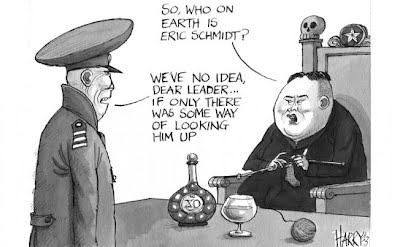 Via SCMP |
| Aside from Shanghai, Chinese market reluctant to accept champagne Posted: 21 Jan 2013 01:00 PM PST  You'd think with China's coveting of Western brands, there'd be enormous demand for champagne, the poster child for luxury foodstuffs, but not so. Despite the insatiable craving for Bourdeaux and other wines, champagne remains off Chinese consumer radar, with Shanghai boasting the only sizable market. [ more › ] You'd think with China's coveting of Western brands, there'd be enormous demand for champagne, the poster child for luxury foodstuffs, but not so. Despite the insatiable craving for Bourdeaux and other wines, champagne remains off Chinese consumer radar, with Shanghai boasting the only sizable market. [ more › ]        |
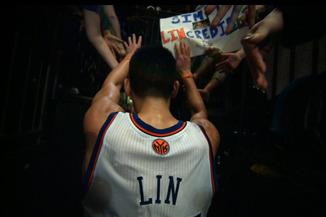
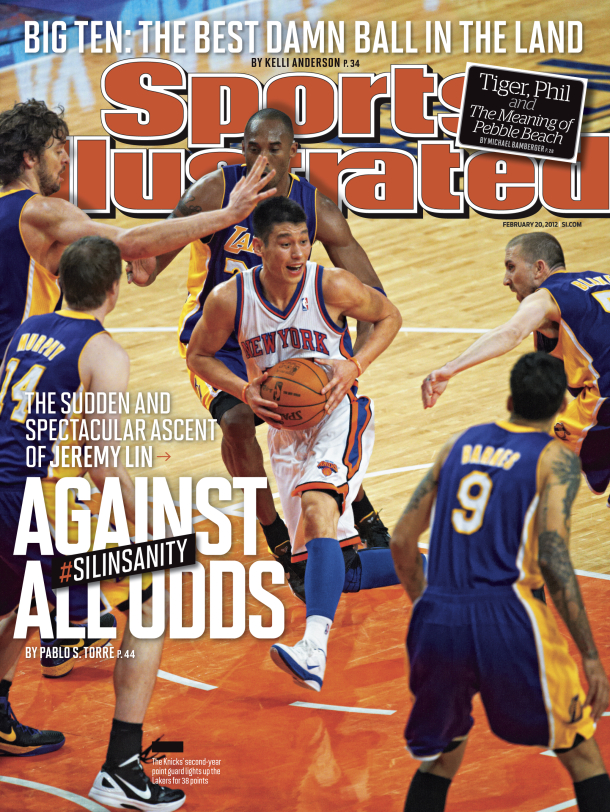
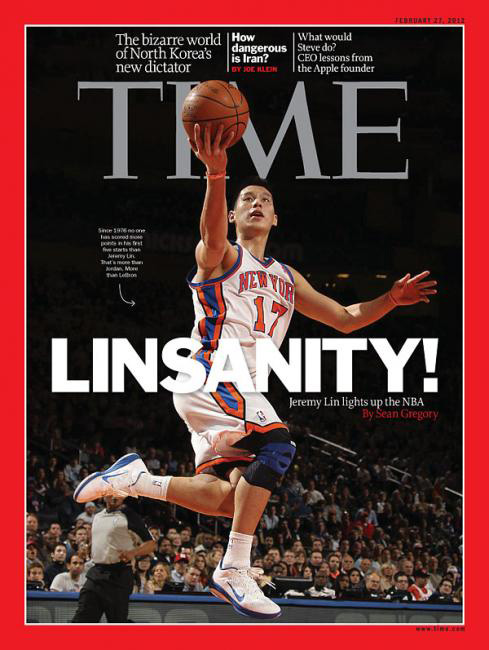
| “Linsanity,” The Jeremy Lin Documentary, Had A Sundance Audience Standing And Cheering Posted: 21 Jan 2013 09:57 AM PST Jeremy Lin caused us to launch prematurely. We had a date in mind for Beijing Cream's debut — February 21, for reasons that now elude me — but Lin began tearing it up in New York earlier in the month, and I just couldn't sit on Linsanity. Who could? Five of the first seven posts that appeared on BJC were about him. (All of them except this one completely sucked, but that's beside the point.) I bring this up because Lin, a year after setting the US media capital ablaze, finds himself back in the public conversation for something other than sports. The world premiere of a documentary about his rise, Linsanity, received a standing ovation from viewers at Sundance on Sunday, as Los Angeles Times reports:
Director Evan Jackson Leong had unprecedented access and the wonderful fortune to be following Lin during his senior year in college. Hit Fix has more commentary:
The Salt Lake City Tribune also gave the film three stars. We can't wait to see it. Unfortunately, no trailers are online yet, so you'll have to settle for the following work by DaysideTV. It definitely did not premiere at Sundance, but it's pretty good in its own right.
|
| Climate change, not grazing, destroying the Tibetan Plateau Posted: 21 Jan 2013 03:06 AM PST Forcing herders to abandon their nomadic way of life has failed to stop desertification near the source of the Yellow River, an investigation reveals. Sanjiangyuan – which literally translates as the 'three river source area' – feeds China's mightiest rivers. The 300,000-square kilometre region, high on western China's Qinghai-Tibetan plateau, provides a quarter of the Yangtze's water, almost half of the Yellow River's and 10% of the Mekong's. In the last 50 years, the region's average annual temperature has increased by 0.88℃. In the last 30 years, glacier coverage has decreased by 17%, and the average rate at which glaciers have been shrinking has been 10 times faster than it was 300 years ago. These herdsmen leave the grasslands which nurtured their ancestors and abandon their traditional way of life in order to move to town and city settlements. But they aren't always able to get a grip on the new way of doing things. Some struggle to make money, while state subsidies are too small to survive on. But they have no other options. |
| Posted: 20 Jan 2013 05:00 PM PST This posting includes an audio/video/photo media file: Download Now |
| How to have a “convenient” Spring Festival transport rush Posted: 21 Jan 2013 08:19 AM PST by Barry van Wyk on January 21, 2013  "It must be said, says Shenzhen Evening News today, "that going home for Spring Festival is a deeply ingrained desire of all Chinese people." That's to say, all of 1.3 billion Chinese people. Hence the annual Spring Festival rush is a migration of epic proportions characterized by pushing, waiting, queuing, standing for hours, and generally having your stamina severely tested. So why haven't more things been invented to make this difficult journey just a little more convenient? The front page of the Shenzhen Evening News today illustrates that some attempts have actually been made in this regard, and it showcases some odd contraptions such as the Hard Seat Helper and the Ostrich Pillow. There's even a new portable "convenience" tool to help you go when you can't go. So if you are going to do the Spring Festival rush this year, consider getting yourself one of the following (somewhat) helpful gadgets. Sleep whenever you want to: The Hard Seat Helper (硬座宝) Lying down in cramped spaces: The Ostrich Pillow (鸵鸟枕) Convenience in crowded spaces: The Portable Urine Collector (PUC) Others: Screaming Chicken (惨叫鸡) and Don't Step on My Shoes (拒踩柳丁鞋) The Don't Step on My Shoes are really very simple: shoes with lots of spikes on them, meant to discourage people from stepping on your toes in queues. Worth a try. See below for various Spring Festival transportation stories that Danwei has covered since 2005. Links and sources  |
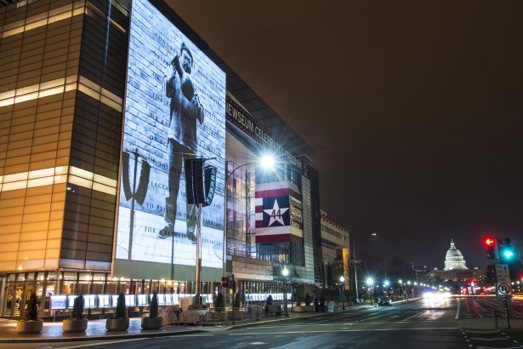
| Posted: 21 Jan 2013 04:00 AM PST President Barack Obama's public inauguration begins soon, and lookey who overlooks his parade route (above, via The Atlantic). If you're in Beijing and would like to watch, the place to go is Brussels (or so TimeOut tells us), which also showed live coverage of the US presidential election. For everyone else, links. Yi Junqing taken down by female's "fiction." "Mr. Yi, 54, an impish scholar who held the job of China's top guardian of Communist literature, is said to have provided the woman with a fellowship at his research institute in exchange for $1,600. The sex and jewelry came later. // The allegations came to light last month after the woman, Chang Yan, 34, posted online a self-indulgent and occasionally scintillating diary that recounted a yearlong affair between the two married scholars. A few days later, Ms. Chang tried to retract her sprawling tell-all, but the damage was done." (NY Times) Lovely. "Japan says it may fire warning shots and take other measures to keep foreign aircraft from violating its airspace in the latest verbal blast between Tokyo and Beijing that raises concerns that a dispute over hotly contested islands could spin out of control." (AP) There's that word again: transparency. "For years, many China observers have asserted that the party's authoritarian system endures because ordinary Chinese buy into a grand bargain: the party guarantees economic growth, and in exchange the people do not question the way the party rules. Now, many whose lives improved under the boom are reneging on their end of the deal, and in ways more vocal than ever before. Their ranks include billionaires and students, movie stars and homemakers. // Few are advocating an overthrow of the party. Many just want the system to provide a more secure life. But in doing so, they are demanding something that challenges the very nature of the party-controlled state: transparency." (Edward Wong, NY Times) Snark. "The outspoken Southern Weekly honoured the five 'best censored stories' of the past year at its annual meeting yesterday. They included a feature removed from the New Year edition which was at the centre of a rare censorship row between the newspaper's editorial staff and the provincial propaganda department." (SCMP) It's just what the kids are calling it these days. "Giving a chronic respiratory problem the name of China's capital city is an "extreme insult", the top doctor at Peking University's School of Public Health said. // Beijing has seen a recent surge in residents seeking medical help for what is being called the 'Beijing cough' – and it's not because of the flu." (SCMP) Liao Yiwu's latest book finally published in France. "Liao Yiwu clearly recalls the moment when he first stepped into a Chinese jail. He was stripped naked by inmates who then searched his anus with chopsticks — the beginning of a four-year prison ordeal. // 'I only stayed naked in front of everyone six to seven minutes, but I felt I had lost all dignity,' the author and poet said about the start of his 1990 imprisonment after the bloody crackdown on Tiananmen pro-democracy protests. // More than two decades on and despite intense police obstruction, the 650-page account of those four years — a rare depiction of life in a Chinese jail — has finally come out in France after first being published in Germany and Taiwan." (AFP) This guy doesn't seem to mind that censors snipped Skyfall. "On a basic level, the purpose of film censorship is simple: to prevent people from seeing content the government doesn't wish them to see. On another level, though, censorship perpetuates an image of the Communist Party as a benevolent organization that protects its citizens from a chaotic world. And while this doesn't mean that the Chinese population is particularly fond of censored films — most undoubtedly aren't — a large number do appreciate reminders that the government is still doing what it claims to be doing." (Matt Schiavenza, The Atlantic) All of Beijing's subways in one day? "As you're reading this there are two brave Australians trying to visit all of the stations on the Beijing Subway in a single day. Subway Saturday, the pair are calling it and it they began at International Exhibition Center station at 5.37am. The duo, Michael K. Sheridan and son Oscar, are planning to get out at each of the 202 stations on the numbered Beijing Subway lines (ie. not the Batong line), snap a picture for posterity and dash back on to a train." (the Beijinger) "Blessed" porridge. "Chaotic scenes of crowds pushing and shoving occurred for a short while on Saturday outside the largest temple in Hangzhou, Zhejiang Province, when thousands of people fought for free 'blessed' porridge handed out by the temple on the traditional Laba Festival, which falls on the eighth day of the twelfth month in the lunar calendar." (Global Times) Man U probably doesn't have 108 million Chinese fans. "I'm still waiting for confirmation from Man Utd on how it reached those numbers, but this report from Align Sport singles out Kantar Media as the culprit. They released a report last year commissioned by none other than Manchester United. Sample size: 54,000 people. Conclusion: Manchester United has 659 million fans." (The Li-Ning Tower) This might turn into a theme:
Crazy Chinese kids doing street tricks interlude (start at 1:03 mark): Finally… "iPhones given and taken away, iPads stolen in Round 25″: Jon Pastuszek weighs in on last night's Qingdao-Tianjin debacle. (NiuBBall) Sean Creamer's Hong Kong cinemagraphs, via Hong Wrong. (Hong Kong Cinemagraph) Gymnast turned beggar turned trainer… turned beggar. (Eric Fish, The Economic Observer) "Chinese professor says fake malaria drugs being sold in Africa are African, not Chinese." (The Chinafrica Project) "The Black Triangle": infographic on where Beijing's pollution comes from. (Mother Jones) Top leaders turn out for top science award ceremony. (CNTV) Finally, finally…
|
| Rotting dogs, assailed nostrils, withered roses… just a story about gutter oil here Posted: 21 Jan 2013 02:26 AM PST This is a frightening lede. It is frightening indeed. More so if you knew this frightening read is about the food you eat. It's from Caixin Online.
Um.
Gross? We're immediately introduced to a man named Liu Liguo, who reveals that the process of transforming the oil found in sewers into biodiesel includes melting, stewing, hydrolysis, filtration, and distillation, all so that one comes away with a product that is "clearer and smelled less." Yes, odorless gutter oil is indeed important. Described in frightening detail, the oil then "would enter the gas-fractionation plant and separated to form the final products. Fatty acids accounted for 30 to 40 percent, and 'red oil' accounted for 60 to 70 percent." What do these things mean? We're not really sure. But the byproduct sure seemed toxic:
Are we reading about the oil that cooks our food or the gates of Beelzebub's Pandemonium? Christ! Rotting dogs. Assailed nostrils. WITHERING ROSES. The blackened bodies of fallen fruit, surely symbolic of the corruption of youth and innocence. Liu was arrested, along with more than 50 others. At its peak, his company produced 60 tons of oil per day, which we're told "can contain carcinogenic compounds and hazardous chemicals." The Shandong Oilman (Caixin) |
| Posted: 21 Jan 2013 12:55 AM PST |
| Watch Furious Pete Take On Beijing Noodles, Rickshaws, And “Poo” In This Rib-Tickling Travel Video Posted: 21 Jan 2013 12:09 AM PST Sometimes it's useful to look at your home city with a fresh pair of eyes. When that new perspective comes courtesy of anorexic-turned-globetrotting-power-eater Furious Pete, the result can be very funny as well. In the latest episode of Furious World Tour, the adventurous Pete hits up Beijing's hotspots with his characteristic Canadian suave. Along the way, accompanied by the Beijinger's Marilyn Mai, he samples multiple bowls of hand-pulled noodles, applewood-roasted duck, "pizza," spiders, scorpions of different sizes, smelly starfish (he's not a fan), and curry chicken from the infamous House of Poo Poo… among other stuff. The production quality may not be the highest, but this is a travel video done right. Be sure to watch for the cameo of Joanna Wong and Beijing's kung fu school. |
| TripAdvisor Hotel Awards Are Out Posted: 20 Jan 2013 11:45 PM PST |
| The Shanghai Scots Revive the Burns Supper Posted: 20 Jan 2013 11:42 PM PST Date: Jan 21st 2013 2:37p.m. Contributed by: joho The Shanghai Scottish Club is back and celebrate this Friday night |
| Bookstore Buy: 11 Short Stories in "Fatty Goes to China" Posted: 20 Jan 2013 11:24 PM PST |
| Posted: 20 Jan 2013 11:14 PM PST |
| This year's must-have Chinese New Year travel accessories Posted: 20 Jan 2013 09:30 PM PST  The Chinese New Year travel period, often called Chunyun (春運) and sometimes 'the largest human migration in history', is fast approaching. With nearly two billion journeys criss-crossing the country, it is the antithesis of the state's desire for 'harmony'. Travel plans often go wrong: train, bus and plane tickets are always difficult to procure, the weather is usually at its worst, and accommodation is always over-booked. [ more › ] The Chinese New Year travel period, often called Chunyun (春運) and sometimes 'the largest human migration in history', is fast approaching. With nearly two billion journeys criss-crossing the country, it is the antithesis of the state's desire for 'harmony'. Travel plans often go wrong: train, bus and plane tickets are always difficult to procure, the weather is usually at its worst, and accommodation is always over-booked. [ more › ]  |
| The Worst Basketball Refereeing Ever (And Of Course Tracy McGrady Happens To Be Involved) Posted: 20 Jan 2013 10:19 PM PST I'm not sure how, but Tracy McGrady has a way of attracting refereeing debacles. (As a Beijing fan, I'm not just talking about Wednesday night's avian contest between the Ducks and Double Star Eagles in Qingdao, though that was massively craptacular too, with the home team benefitting from so many calls that I wondered aloud whether the CBA was publicly making amends with T-Mac for suspending him.) The worst — absolutely no doubt worst bar none — happened yesterday. Check out the above video if you're curious to see how bad basketball can look when entrusted to the wrong people. Warning to true fans: you might consider avoiding this if you prefer to think of the game as being able to rise above human-inflicted desecrations. The ghost of James Naismith is miming stabbing motions at his ethereal eye as we speak. The scenario: the game is tied at 99 with two and a half minutes to go when Qingdao brings the ball up the floor. Qingdao's big man, Chris Daniels, gets tangled up in the post with Tianjin's Zhang Ji, a youngster who collapses in a heap. Refs blow the whistle, one of them dashing forward waving his arms, and… there's no call. More hand-waving from the ref as if he was engaged in semaphore. Time passes, anger flares from both benches, no one understands the situation, and then the refs seem to decide that the best solution is to just issue stern warnings to both teams. Meanwhile, Tracy McGrady in China, everybody: Amused? Not amused. Play continues at the 1:30 mark in the video… almost. Daniels and Zhang Ji resume their places in the post, and Zhang Ji flops. Once again, the whistle blows. The refs try to talk to the two sides. One ref is literally grasping a Qingdao player's wrist like a mother. The commentators say, "No matter whether he was flopping or not, there was contact." Again, however, there is no call, only absurdity followed by comedy. Watch at the 2:30 mark as a ref tries to put separation between Daniels and Zhang as if they were middle school dancers at a fall ball. When the ball is finally inbounded 15 seconds later, Zhang Ji is whistled for touching Daniels. No, really. That's the call at the 2:45 mark. Touching. At this point, Tianjin's coach has gone beyond berserk and attempts to wave his players off the court. Everyone in the arena and watching at home knows what's happening. It was less than two weeks ago that Qingdao's coach pulled the same stunt on the road, at Bayi, electing not to play the final 21 seconds in a game that was already lost. Daniels takes his first free throw with no opponent in the lane while refs continue to try to talk Tianjin's coach out of doing something drastic. We want to point out that in these nearly five minutes, only four seconds has elapsed from the game clock. Fast forward to the 8:08-mark now. Again, Zhang Ji appears to flop — that's to say, he chooses to collapse when he feels Daniels touch him. To tell you the truth, I can't even blame him, considering the circumstances. Watching at home, at this point, I was openly rooting for the game to simply end without incident, because I thought there was a fair chance that this was the day the CBA simply implodes. The refs call the foul on Qingdao this time, and the commentators say, "There's absolutely no problem with this call." McGrady, rightfully pissed, flings the ball away and is whistled for a technical. Now… after all that, would you believe that the worst call of the night wouldn't happen until later? No? You don't believe it? How is that possible, you ask? Go to the 9:13 mark — we're in double overtime now, game tied at 138, ball in Qingdao's hands for one final possession. Just as the commentator is imploring, "Don't foul, don't foul," the ref signals an off-the-ball foul on Tianjin's Xu Lei, who was guarding Daniels in the post. There are 4.5 seconds left. Watch the replay starting at 9:30. Watch as Daniels tries to hump Xu Lei into getting a whistle blown. Watch as the ref complies. Even the announcer — and Chinese announcers will defend Chinese refs like a mother bird for their young — is incredulous: "How is this a foul?" Two free throws later, and Qingdao has a lead it will maintain. The Double Star Eagles have now won five games in a row since losing on the road at Bayi in that infamous game in which their coach pulled them off the floor. You think more teams will try that tactic in the future? As much as we'd hate to see it, it can't be worse than sitting through fiascos like this one. Full second half and overtime of the game here: |




| You are subscribed to email updates from Update » Blogs » Society To stop receiving these emails, you may unsubscribe now. | Email delivery powered by Google |
| Google Inc., 20 West Kinzie, Chicago IL USA 60610 | |

Comments