Blogs » Society » Hidden Chinese Eats
Blogs » Society » Hidden Chinese Eats |

- Hidden Chinese Eats
- Guidelines launched to 'civilise' mahjong
- Not a noob, flummoxed nevertheless — Chris’ frustration with China’s confusing holiday schedule
- “All Chinese Back to China”: Dutch Rage Over Infant Formula Shortage
- Migrant Workers Hold Managers Hostage, May Have Been Upset Over Chinese Acquisition Of This Japanese Company
- Tried and Tested Family Activity: The Little Urban Center
- CONFIRMED! Rumor of the Day: Psy to Shanghai
- Pencil This In: Jan 21-24 - Questlove in Shanghai
- Ebisu: Tasty Japanese Izakaya
- Import Car Tax Free?
- Doing Business In China. Do Not Pass Go. Do Not Go Directly To Jail.
- Picture Of The Day: Snow Sculpture
- China Publishes Gini Coefficient For First Time In 12 Years, But People Don’t Believe It
- The Situation Is Excellent: The Week That Was At Beijing Cream
- On China’s Illegal Wildlife Trade, Ethnocentrism, And Culture
- Watch: Viral 'ghost car' video
| Posted: 20 Jan 2013 08:47 PM PST Date: Jan 21st 2013 11:51a.m. Contributed by: shanghai_cw The best local restaurants you've never tried |
| Guidelines launched to 'civilise' mahjong Posted: 20 Jan 2013 08:20 PM PST  While the rest of the world distracted themselves with summit meetings on terrorism, major economic restructuring and climate-change, the really big issues of the day have been quietly debated in Chengdu. Yes, that's right, it's the news you have been continuously refreshing your feeds for: the Chengdu Board and Card-Game Association's convention is over and they have come to some interesting conclusions. [ more › ] While the rest of the world distracted themselves with summit meetings on terrorism, major economic restructuring and climate-change, the really big issues of the day have been quietly debated in Chengdu. Yes, that's right, it's the news you have been continuously refreshing your feeds for: the Chengdu Board and Card-Game Association's convention is over and they have come to some interesting conclusions. [ more › ]        |
| Not a noob, flummoxed nevertheless — Chris’ frustration with China’s confusing holiday schedule Posted: 20 Jan 2013 09:16 PM PST Chris Toepker is a contributor to Ministry of Tofu. He hails from the United States, has been living in greater China since 1990 and has recently relocated to Beijing. After so many years in greater China, I thought I had things straight. Sadly, my first-time, full-time working in Beijing apparently presents many new opportunities to learn. So, while I'm not shocked at the surprise, I can't seem to wrap my mind around the confounding New Year holiday schedule! Before getting started, let me just say this is not my first new year in China. I've been in greater China for a couple decades, living and working in the mainland, Taiwan and Hong Kong. Still, most of the living (and therefore paying attention to holiday arrangements) were not in the mainland. Nevertheless, I thought I new what time it was. Sadly, my calendar was off. It unfolds like this: On Dec. 29 (Saturday) we worked and were told we'd be given the following Monday (not an official holiday) off. That makes some sense. Trade a non-working weekend day for a working weekday and receive a three-day holiday. Terrific!  I thought I'd have a nice day off. Instead, I had a couple doubt filled days and then worked through a weekend. Huh?! Funny thing was, on the January 2, I went to the office. Walking over though, I couldn't help noticing how empty the streets were. Not many cars, no one honking endlessly, very few pedestrians. Seemed strange, but who knew? Maybe denizens of The Jing just party that much harder for the new year? Non-noobs see the mistake already. Still, when the whole office building was pretty much dark I had my first glimmer that I was the odd man out. When 10:00 o'clock rolled around and not a single other person came in, it seemed clear: I was the fool. So, I checked some websites in English and Chinese, which oddly reported a mix of either January 1 or January 1-3. Any way I cut it, I had the day off. So, after enjoying the day, but keeping my doubts, I came by the office on January 3 too. Still dark, and I had learned my lesson, so I skipped merrily by, all the while wondering "why the heck take these days off, return for one Friday (January 4) and then take a weekend?"  Despite expectations, this is what really happened. So, Friday morning I come in and finally there are my colleagues, and then things get stranger because I begin to hear them making plans for meetings on Saturday (January 5). I can hear you far-away readers wondering along with me, "What?!?!" Yes. Saturday. After being "given" January 2-3 off, we were required to come to work January 4-11. No matter how I look at it, I can't accept the "given." They were traded, as I'm sure you'll agree. I wish that were the end of it, but then I asked about Chinese New Year (CNY, in early February this year). Turns out we're getting the same gift then too! You see, the official holiday falls on February 9-11 (Saturday-Monday) and everyone will be "given" February 9-14 off. But then will have to work February 15 – 22 straight.  Here are the days published as "off," sadly they are on the weekend. Oh well, better a three day weekend than none. I've asked all my colleagues (I'm the only foreigner in the office) about it firstly because I wondered how'd I'd missed it. Certainly, there was no announcement. What I learned was, this is just the way things are. No one felt the need to explain it. Secondly, because I wondered if they'd thought the situation over, especially when a holiday falls on what is already a holiday (like CNY falling on a Saturday). The reactions came in increasing easier to understand flavors. Firstly, I can't understand the common "we strictly follow the national guidelines" because that just makes no sense. It's a Catch-22 because the national guidelines are *also* to take weekends off. Secondly, I can kind of understand the "that's just how we've always done it," but have little patience for things that are just habit. Thirdly, I can allow for the folks who told me, "well, everyone else is off and I was working when they were not or vice versa, it would be no fun. So, I just go with it." Finally and clearly, the response closest to my heart was "yeah, now we have to work eight straight days. Nice, huh?"
The far sadder thing was, based on my experience in other…dare I say "more civilized"?…China, my real expectations for the Chinese New Year holiday were much grander. Indeed, given the mass migration and the long factory closing and all the rest I've very familiar with, my tickets were already booked for the whole week off. That is to say, February 9 to 17. So, it looks like I'll be burning through my vacation days really early this year. What is the New Year equivalent to "bah! humbug!"????  This is an impossibility in the workers paradise. Bah! Humbug! |
| “All Chinese Back to China”: Dutch Rage Over Infant Formula Shortage Posted: 20 Jan 2013 09:03 PM PST Recently, Australia, Germany and the Netherlands complain that Chinese hoard their infant formulas and attribute to their infant formula shortages. Hong Kong netziens discuss the news passionately, as Mainland Chinese hoard infant formula as well as daily necessaries in Hong Kong. "All Chinese Back to China" Sina Finance reported that the infant formula shortage in the Netherlands has stirred up anti-Chinese sentiment.
The Dutch article from which Sina Finance quoted is "Chinezenprobleem: ze jatten ons babymelkpoeder", Chinese problem: They Steal Our Baby Milk Powder. The actual comment is even blunter.
 Chinese smugglers still hoard infant formulas inside Dutch supermarkets even after criticisms. Chinese Threat This slideshow requires JavaScript. On Jan 18th 2013, German tabloid Bild reported German infant formula shortage in a very harsh tone.  "CHINESE DRINK GERMAN BABIES' MILK POWDER AWAY!"
Even the URL of the report mentions the Chinese threat.
 Infant Formula Shelves of a German Supermarket Locust Plague: (Mainland) Chinese Threat in Hong Kong  "Chinese Go Back to China" A Sign in Last Year "Liberate Sheung Shui Station" Protest ****Netizens' comments later****  Illustration by LadyKylie |
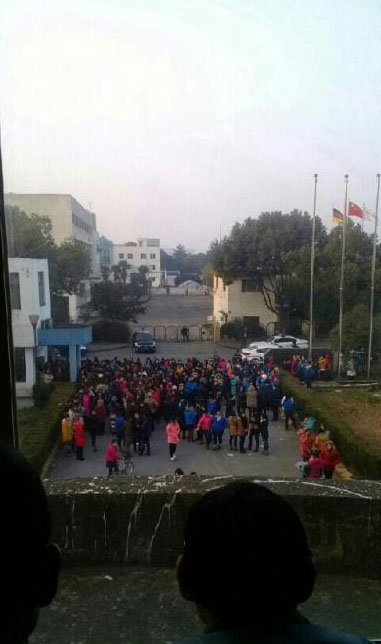
| Posted: 20 Jan 2013 07:24 PM PST It's good to see such a public account of the Chinese and Japanese standing in solidarity for once… against an angry horde of 1,000 migrant workers demanding equal regulations. Beginning early Friday morning, employees of Japanese electronic appliance maker Shanghai Shinmei Electric besieged a factory in Shanghai and held 18 Chinese and Japanese managers hostage, including company president Hideaki Tamura. The maneuver came "following the introduction of a new factory policy calling for heavy fines, demerits or immediate termination for workers who made a mistake, the Japan-based Asahi Shimbun reported yesterday." The standoff lasted until Saturday night, when 400 police officers — that's a lot of cops — finally freed the managers.
If you're looking for the juicy detail in the article, however, you'll find it in the form of a quote from an anonymous worker who claims that workers weren't happy to see their Japanese company get acquired by a Chinese one.
Nationalism has its limits, we see yet again. It's interesting to think that if it weren't for a few stubborn Japanese politicians who refuse to visit the Nanjing Massacre Memorial and those damn rocks in the South China Sea, this country and Japan might actually become pretty good friends. Oh well. Keep the hope alive for the children at least. 1,000 workers hold managers hostage in Shanghai labour row (SCMP, h/t Alicia; image via) |
| Tried and Tested Family Activity: The Little Urban Center Posted: 20 Jan 2013 06:45 PM PST |
| CONFIRMED! Rumor of the Day: Psy to Shanghai Posted: 18 Jan 2013 12:57 AM PST |
| Pencil This In: Jan 21-24 - Questlove in Shanghai Posted: 20 Jan 2013 06:00 PM PST  Pencil This In is all the things you'd want to do this Monday through Thursday. This week we have two brand new art exhibition openings for you, one is all about large-scale installations (ShanghART), and the other one's the latest LED art by island 6. Sub-Cinema brings you a good old HK Kung Fu movie, and Unico strikes back with a booking of DJ Questlove. Yup, THAT Questlove aka ?uestlove aka Ahmir Khalib Thompson from The Roots. Read on for all the details, or check out our calendar for more! [ more › ] Pencil This In is all the things you'd want to do this Monday through Thursday. This week we have two brand new art exhibition openings for you, one is all about large-scale installations (ShanghART), and the other one's the latest LED art by island 6. Sub-Cinema brings you a good old HK Kung Fu movie, and Unico strikes back with a booking of DJ Questlove. Yup, THAT Questlove aka ?uestlove aka Ahmir Khalib Thompson from The Roots. Read on for all the details, or check out our calendar for more! [ more › ]  |
| Posted: 20 Jan 2013 06:10 PM PST |
| Posted: 20 Jan 2013 05:46 PM PST |
| Doing Business In China. Do Not Pass Go. Do Not Go Directly To Jail. Posted: 20 Jan 2013 06:07 PM PST Got a call the other day from an American company wanting to sell its food products into China. And fast. The problem this company is facing is that one cannot "just" sell food into China immediately. To sell food legaly into China, Foreign companies must first pass certification before China's General Administration of Quality Supervision, Inspection and Quarantine, better known as AQSIQ (中华人民共和国国家质量监督检验检疫总局). The food company told me that its research had revealed that it typically takes around a year to secure this certification, but that someone in China was promising they could do it in "around six to eight weeks." The food company was calling me (based on a referral) to hire us to secure their certification in "six to eight weeks." My response was essentially as follows:
The American company thanked me and vehemently agreed. |
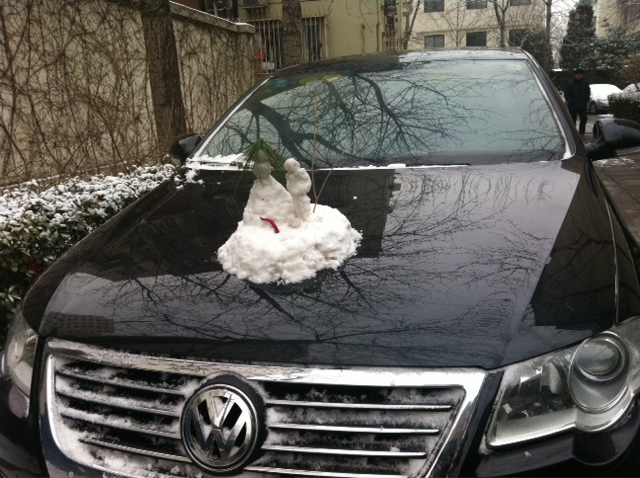
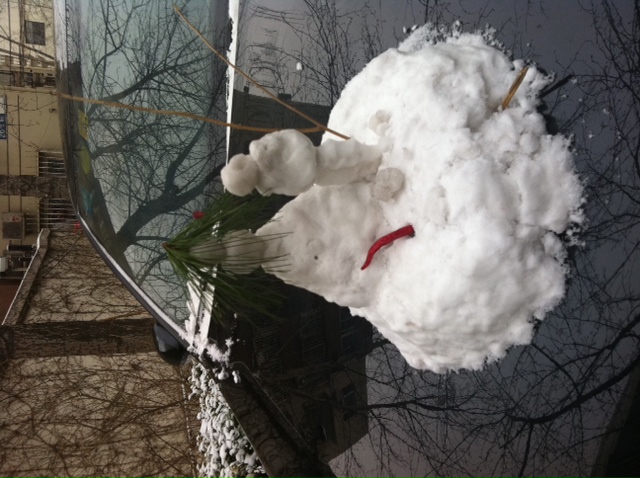
| Picture Of The Day: Snow Sculpture Posted: 20 Jan 2013 04:00 PM PST Found yesterday. What do you suppose that red thing is on that lovely snow sculpture? I mean, it's almost certain a pepper, but what does it represent? Guess away in the comments. (H/T Alicia) |
| China Publishes Gini Coefficient For First Time In 12 Years, But People Don’t Believe It Posted: 20 Jan 2013 10:37 AM PST The Gini coefficient, a measure of wealth disparity, is one of those socioeconomic tools that the general public normally wouldn't notice unless, oh, a country was publicizing its coefficient for the first time in 12 years. So it is in China, where officials on Friday announced that its index reached 0.474 in 2012 (with 0 representing complete equality and 1 representing one person with all the money). We understand that 0.4 is already alarmingly high — "viewed by analysts as the point at which social dissatisfaction may come to a head," according to Reuters — but some people in this country think 0.474 is actually a significant underestimation. Reports Didi Kirsten Tatlow for IHT Rendezvous:
But is it progress that China even released its coefficient this year? "I believe it is a first step that reflects the new leadership's more open approach and its desire to promote transparency," Ma Guoxian of Shanghai University of Finance and Economics told SCMP. It indeed fits into the new administration's plan (the skeptic would say "hopeful wish") for transparency, that promised panacea. Or could it be that the government believes the figure will continue to decrease, as it says it did last year? Correction: that it believes it can, if necessary, make the figure decrease. Data is notoriously unreliable in China, after all — and never underestimate the narrative a group of statisticians can cook up when given a stock of numbers. |
| The Situation Is Excellent: The Week That Was At Beijing Cream Posted: 20 Jan 2013 07:59 AM PST January 14 – January 20 Plainclothes cops nabbed an interviewee in broad daylight, which is pretty incredible. Also incredible: a drug mule trying to sneak into China by pretending he was a journalist. And also fitting somewhere on the incredible scale: a factory in Hangzhou burned nearly three hours before someone noticed through the "fog." A scene from Skyfall was censored for its China showing, so we will not be watching Skyfall in China. Changsha residents scramble to save hundreds of cats. Most of Shenzhen's crocodiles have died. Here's your first look at Shanghai's No-Pants Subway Day. Wendy Hale made the salient point that a silver lining to the pollution was Chinese media's coverage of it. Alexander Nasr wrote about a restaurant's team bonding exercise like you've never seen before. Seahorse Liu's piece on Jackie Chan sparked quite the conversation. RFH came by to talk about journalism in China. Alicia wrote about Man U's new China sponsorships. Han Jugen wrote about Wu Di, the first Chinese male at a tennis major in 54 years. Chris Clayman reminds us that good people exist in China, like this man in Luoyang. Sinopathic's terroir wrote about ethnocentrism and culture. And John Artman wrote about Chinese tech companies at CES and Apple's new payment plan for products in China, to say nothing of Nietzschean gang beatings. There was a suicide bombing in Guangzhou on Friday, injuring seven. A sexy chick pole danced on Wuhan's subway. A "ghost" scared off an attendant so she didn't have to pay a parking fee. Prominent social critic and writer Li Chengping was attacked at a Beijing book signing. Here's an incredible video of a driver running over two pedestrians multiple times. Finally: the Chinese knew their shit. Comment of the Week: Jesse, on the post about the live chickens being used as archery targets in Jilin:
|
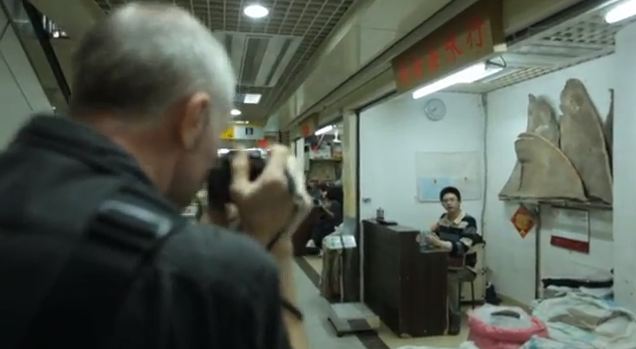
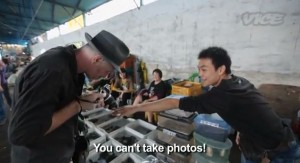
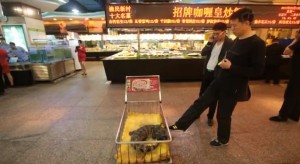
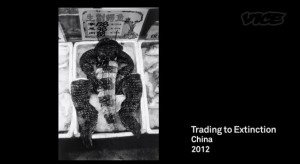
| On China’s Illegal Wildlife Trade, Ethnocentrism, And Culture Posted: 20 Jan 2013 02:41 AM PST Patrick Brown is a professional photojournalist who has spent the last twenty years of his life documenting all facets of the illegal sale of endangered animals in Asia. Driven by his life's passion, he has recorded all sorts of travesties committed upon animals for the sake of profit, and compiled a book of photographs called "Trading to Extinction." He is considered an expert in his field. When VICE chose to do a documentary on animal exploitation, Brown was a natural choice to be the on-camera lead. A crew followed him to Guangzhou, capital of Guangdong province, as he visited one of the largest illegal animal trade markets in the world… Like any other tourist. And as a tourist would, he explains the Chinese consumption of endangered animals in terms that are black and white:
Perhaps Brown — who lives in Thailand — doesn't understand Chinese culture very well, and he's entitled to his opinion, but labeling Chinese "naive" is to adopt a morally superior position in which the Chinese are "children" who must "grow up" and adopt the moral standard of the West. I wouldn't expect any journalist to be completely objective; furthermore, I agree that some Chinese's cavalier, wholesale attitude toward the environment is detrimental. What I don't agree with is the kind of foreign investigative journalism that encourages ethnocentrism while disparaging its subject, leaving viewers or readers no opportunity to confront related issues within their own society. To be fair to Brown, he has firmly said that he isn't an animal activist; he is a photojournalist who wants his pictures to do the talking for him. Other Western journalists, however, are much more direct in their accusations. There is another VICE documentary called "Prostitutes of God" regarding child prostitutes in India called devadasi, sanctioned sex workers ordained by a religious temple. Reporter Sarah Harris concludes in the middle of the film that "this religious ritual is just a justification for poor families to pimp out their daughters"; meanwhile, Harris' interviewees admit that they want to do this job rather than go to school because they want to feed their family the requisite two square meals a day. When explained the origin story of the goddess Yellamma numerous times, Harris flat out rejects it as "never being able to understand it" — you know, someone else's faith-based beliefs. In a recent Jezebel story about the immense popularity of plastic surgery in South Korea, writer Dodai Stewart describes the photos of women who have had the procedure as "show[ing] a burning desire to fit inside a very narrow scope of what's seen as beautiful. It's not about what's inside, it's not about character, it's about an artificial ideal." The old stereotype "you Asians all look the same," in Stewart's mind, is transformed into "you Asians actually all want to look the same." Outraged white middle class: while this news sounds outrageous to you, as offended as your sensibilities have become, they happen for a reason. At the risk of de-sensationalizing a story, a reader's deeper comprehension and understanding of these reasons is a gateway to accepting another culture — and thus coming off that high moral ground from which a smug, accusatory finger can be wagged. Animal cruelty has been all over Chinese news lately, but when people read about the atrocities, they don't want their indignation to be supplemented with understanding and therefore negated. Anger is visceral, and it's easy; taking a nuanced look at the values of another culture also makes it difficult for one to justify his or her own cultural shortcomings. Many Western readers don't want to hear about the Chinese worldview in which man occupies the balance between heaven and earth and of which everything has a rightful place in the universe – whereby animals of all kind are relegated to a secondary plane. Man's role in the universe is so established that it was a (god among) man, Houyi, who tamed the heavens by shooting down all but one of the seven suns that scorched the earth, thus making it suitable for humans to cultivate and thrive. Neither are Western readers treated to the perspective that the Chinese worldview is still by and large the same as when China was under feudalism hundreds of years ago; that the burgeoning middle class of the modern Chinese society did not exist back then, and so now strain the environment and its resources to the breaking point. To put it in a Chris Rock-style sound bite, there are at present too many rich people in China. (What's a brother got to do to make some money around here?) It's almost a shame that Patrick Brown made a great documentary to go along with his condescension. But while he was quick to judge the Chinese for being "naive" and "greedy," he also introduces a bit of cultural background to help viewers understand why Chinese consume shark fin soup:
And yet, he remains more critical of Chinese merchants in the illegal animal trade than of Burmese poachers, of whom he says, "This is a way of life for them." Listen, Patrick Brown: this is a way of life for some Chinese as well. It doesn't mean it's right – it just means that the culture here deserves to be equally acknowledged before it is so easily dismissed and condemned. Furthermore, this means that for real change to happen, the entire landscape of Chinese culture must change to allow for a worldview that can see past its current horizons. Thousands of years ago, the ongoing Chinese preoccupation with longevity led to an interest in attaining immortality; the upshot of this being kings would eat mercury that was erroneously thought of as "immorality pills"… and die. Well, that changed. Chinese culture does change, but it won't do so to appease the self-righteous criticism of everyone else. terroir lives in China and blogs at Sinopathic.
|
| Watch: Viral 'ghost car' video Posted: 19 Jan 2013 11:50 PM PST  Looking a bit like a scene from a scarier Herbie (if Herbie had been shot using one of today's ultra-boring car-designs), this video of a woman using her automated car to scare away a parking attendant has gone viral on the Chinese internet. Nearly four million had viewed the video on the Sina site after it was uploaded three days ago. [ more › ] Looking a bit like a scene from a scarier Herbie (if Herbie had been shot using one of today's ultra-boring car-designs), this video of a woman using her automated car to scare away a parking attendant has gone viral on the Chinese internet. Nearly four million had viewed the video on the Sina site after it was uploaded three days ago. [ more › ]  |




| You are subscribed to email updates from Update » Blogs » Society To stop receiving these emails, you may unsubscribe now. | Email delivery powered by Google |
| Google Inc., 20 West Kinzie, Chicago IL USA 60610 | |

Comments