Blogs » Society » Read the Latest Issue of City Weekend Online Now
Blogs » Society » Read the Latest Issue of City Weekend Online Now |

- Read the Latest Issue of City Weekend Online Now
- Photos: Chinese man protesting forced demolition crushed to death by backhoe
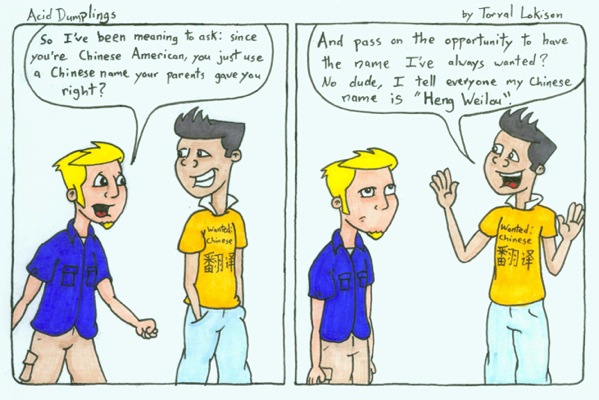
- Acid Dumplings [13]
- ‘In China, Fear at the Top’: Roderick MacFarquar
- New head coach Lippi shines in Guangzhou Evergrande debut
- On heels of Drogba signing, Anelka threatens to quit
- Financing China Movie Co-Productions. Australian Producer Offsets Can Work.
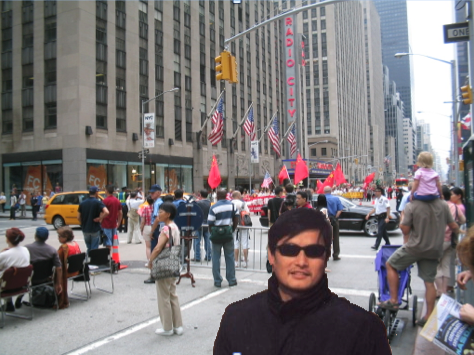
- Top-of-the-Week Links: Hu Xijin on CGC, James Fallows on Yang Rui, and the final piece in the Where Is Chen Guangcheng Right Now? series: New York
- Chinese fishermen drama reaches conclusion
- The Basics Of Driving In China: A Diagram
- The Anti-Foreign Crackdown
- Photo of the Day: Window cleaning
- The Mother Of All Traffic Jams (Warning: It’s Horrifying)
- China’s carbon market challenge
- Top Ten Search List (May 21)
- Tencent Rejigs To Improve Reach Beyond Online Games
- Mao Yushi on the ruling class
- Your opportunity to work with Yang Rui: CCTV's Dialogue now hiring!
- China’s Alarming Risk Of Financial Instability
- To Serve People: So… Yang Rui, huh?
| Read the Latest Issue of City Weekend Online Now Posted: 21 May 2012 08:01 PM PDT Date: May 22nd 2012 10:54a.m. Contributed by: clairebared Hey City Weekenders! The latest issue of City Weekend is now available to read online. In this issue we're helping you guys move house with our complete renter's guide to Shanghai. We've uploaded an extended version of the article over here, but check the mag out for more pictures and extra stats about housing prices in Shanghai. Want it now? Click on the cover below to jump straight to the magazine.  To see past issues of the mag, head over here to check out our library. |
| Photos: Chinese man protesting forced demolition crushed to death by backhoe Posted: 21 May 2012 07:47 PM PDT From NetEase A resident in northeast China was brutally killed on May 15 when he tried to stop his home from being razed by the government-employed demolition team. The operator of the heavy equipment also died a horrific death. Li Baolin and his wife Yu Shuyun had been pig farmers in Saertu District on the outskirts of the city of Daqing, Heilongjiang province. At 3 p.m. on May 15, several men came to their home and commanded a backhoe to demolish the walls in their backyard. They claimed that they were hired by Saertu District's city management bureau, commonly known as chengguan, to "tear down whatever is there by all means." Yu Shuyun knelt down to the group of people and begged. Soon after she heard the engine of the backhoe was started, Li Baolin, standing next to Yu Shuyun, was knock down by the dipper and crushed at the waist. When onlookers yelled at the driver to stop the machine, Liu Jifeng, the driver, poked his head out of the operating room to check around, and soon got his head stuck between the operating room and the slewing arm. He was also killed. According to Yu Shuyun, she and her husband have been living here for the past 15 years. Their home was a public property that they rented from a work unit under the local commune for industrial and commercial activities. After the commune went bankrupt a couple of years ago, no one bothered to come by and ask about their home, so their family did not move away. Lin Weiming, the deputy director of Saertu District's city management and administration bureau, said the entire Daqing city is the midst of an endeavor to bring down all structures that have no proprietors, and that the chengguan force did this "in strict accordance with the city's spirits." Staff at the chengguan bureau also said that they had already persuaded Li Baolin to sign an affidavit that they would demolish their home and relocate all by themselves to minimize their loss, given that they were pig farmers. Yu Shuyun said they did sign the agreement. But Li Baolin still resented it, so he called 12345, the mayor's hotline, to make the complaint. It just never occurred to the family that not long after Li hung up the phone, the tragedy befell. Yan Chuanliang, the director of Saertu District's city management bureau, said, "Whatever machinery accident it was, it took place after we left, it wasn't during the operation, and we did not employ that equipment." Caption: "Not hired by us." He said that the heavy equipment was employed by a middleman, and that by the time the accident took place, they had already finished demolition, so it had nothing to do with them. Selected comments from NetEase (8,017 comments)
From Sina Weibo (7,314 shares, 184 comments; the number of comments is suspiciously disproportionate to that of shares.)
|
| Posted: 21 May 2012 05:00 PM PDT |
| ‘In China, Fear at the Top’: Roderick MacFarquar Posted: 21 May 2012 03:55 PM PDT
He asks and answers two simple yet fundamental questions: Why has ownership of wealth become so important for the Chinese elite? And why have so many Chinese leaders sent their children abroad for education? One answer surely is that they lack confidence about China's future. …the acquisition of wealth is better understood not just as an economic cushion, or as pure greed, but as a political hedge.  Roderick MacFarquhar (I would add to the argument of lack of confidence, the recent surge of wealthy Chinese seeking bolt holes outside China.) Insider trading on a massive scale. These guys know something we don't, and they're selling out before everyone else finds out. I question this a bit. Officials have amassed wealth through misuse of their office or connections throughout Chinese history (and western nations' history as well). In recent times, corrupt Kuomintang officials in China are blamed, in part, for the Nationalist defeat in 1949. Certainly a cautionary story for the CCP leadership. But, official corruption in the current era goes back at least to Deng's reign. My first encounter was in Taiwan in 1988. There was a worldwide shortage of naptha, and a close Taiwanese friend asked me if I had any sources. He told that he could sell all I could find in China. When pressed, he said that had an arrangement with a Chinese official for the sale. Then, he showed me the figures calculating the potential profit. Included was a substantial sum for each ton marked 'rebate.' I asked if this was a 'rebate' we could show to Deng Xiaoping. He smiled and said that particular rebate was going straight into a Swiss bank account. This was one instance, and I have no doubt that as the Chinese economy boomed so has official corruption. But, when I first encountered such corruption, the economy was on the upswing and the Party secure. It was pure greed. What Professor MacFarquar suggests is quite different: China's Communist leaders cling to Deng Xiaoping's belief that their continuance in power will depend on economic progress. But even in China, a mandate based on competence can crumble in hard times. So globalizing one's assets — transferring money and educating one's children overseas — makes sense as a hedge against risk. (At least $120 billion has been illegally transferred abroad since the mid-1990s, according to one official estimate.) Still, as he notes, this money transfer began in earnest in the mid-1990s, again a time of relatively secure CCP power and little incentive to hedge. And, as fine as Chinese universities are, they cannot, at least not yet, confer upon their graduates the cachet that a top western university can. Chinese officials, like parents everywhere, want the best educational launch pads for their kids. (How they pay for top-tier education is another story–see corruption, above.) While these may indeed be additional factors behind corruption and foreign education, it cannot be denied that China and the leadership are in their most precarious positions since the Cultural Revolution. And, motives may well have shifted from just greed and hopes for children's advancement to a real desire for some security in an increasingly insecure Chinese environment. In that case, Professor MacFarquar may be seen one day soon as identifying 'canaries in the China mine' before any one else. |
| New head coach Lippi shines in Guangzhou Evergrande debut Posted: 21 May 2012 01:01 PM PDT  Just days after signing former Italian national team head coach Marcello Lippi, Guangzhou Evergrande, who currently sit atop the CSL standings, kept their hot streak alive by defeating Qingdao Jonoon last night 1-0. Lippi, who led Italy to a World Cup victory in 2006, signed a 2 1/2 year contract with the club last Thursday. [ more › ] Just days after signing former Italian national team head coach Marcello Lippi, Guangzhou Evergrande, who currently sit atop the CSL standings, kept their hot streak alive by defeating Qingdao Jonoon last night 1-0. Lippi, who led Italy to a World Cup victory in 2006, signed a 2 1/2 year contract with the club last Thursday. [ more › ]        |
| On heels of Drogba signing, Anelka threatens to quit Posted: 21 May 2012 12:00 PM PDT  So much for a warm welcome. Just hours after the Daily Mail reported that Didier Drogba was set to leave Chelsea and finally sign a £250,000-a-week (RMB 2.5 million-a-week!) contract with Shanghai Shenhua, Nicolas Anelka — Drogba's former teammate/entire reason for coming to Shanghai — threatened to quit the team all together. [ more › ] So much for a warm welcome. Just hours after the Daily Mail reported that Didier Drogba was set to leave Chelsea and finally sign a £250,000-a-week (RMB 2.5 million-a-week!) contract with Shanghai Shenhua, Nicolas Anelka — Drogba's former teammate/entire reason for coming to Shanghai — threatened to quit the team all together. [ more › ]  |
| Financing China Movie Co-Productions. Australian Producer Offsets Can Work. Posted: 21 May 2012 10:57 AM PDT By: Mathew Alderson In my previous post, Aussiewood Film Finance And China Co-Productions. Ever The Twain Shall Meet? I explained how a cash rebate equivalent to 40% of feature film production costs is available from the Australian government for films with "significant Australian content" if the producer incurred a "qualifying Australian production expenditure" when making the film. This rebate is known as the "Australian producer offset." In this post, I explain how "official" co-productions between Australia and China, and between Australia and certain other nations, are exempt from some of these requirements, making it easier to access this offset. But first, what is an "official" co-production? For purposes of the Australian producer offset, an official co-production is one made under formal arrangements between Australia and the governments of various countries. These formal arrangements are treaties or memoranda of understanding. Australia has a co-production treaty with China and also with other countries, including Singapore, Canada and Germany. Note that Hong Kong is not considered part of China for treaty purposes, so a China-Hong Kong-Australia co-production does not qualify as an "official" co-production. For purposes of the Australian producer offset, the main advantage of an official Chinese co-production is that it does not need to have "significant Australian content." To qualify for the offset, it is only necessary for the producer to have incurred a "qualifying Australian production expenditure" when producing the film. Another advantage is that it is not necessary for the Australian production company to be the only production company. Still, the film needs to comply with Screen Australia's "International Co-Production Program Guidelines" promulgated by Screen Australia. The guidelines are subject to modification under various formal arrangements, but here are some of the basic elements:
The bottom line is that the Australian producer offset is an attractive investment incentive for co-productions between China and Australia and between Australia and the other nations with which Australia has made formal co-production arrangements.         |
| Posted: 21 May 2012 11:00 AM PDT Usually these come on Monday, of course. Sometimes the top of the week gets delayed. Links. Hu Xijin and other state media bid Chen Guangcheng adieu. "Hu Xijin, the Global Times' editor, offered a slightly warmer message for Chen via Sina Weibo, China's Twitter-like microblog service, where he wrote that he wished Chen well. He added darkly that he hopes that in the U.S., Chen 'truly "studies abroad," in a place so far from the motherland calmly considers what has happened, and understands why he has had so many "lucky encounters."' He also expressed his 'Hope that in a place where it is so easy to be controlled, [Chen] can stand out.'" [Time] James Fallows weighs in on Yang Rui: "On his Sina Weibo account, Dialogue host Yang Rui let loose with an anti-foreigner rant so extreme that on first reading I was sure it had to be a parody. Only it wasn't. It's as if you heard a Stephen Colbert "in character" riff on his show — and then suddenly realized he wasn't kidding. To put it further in context, it's as if a well-known figure whose trademark was urbane earnestness — again let's say Ted Koppel, or Charlie Rose — let rip with a David Duke-style diatribe and evidently meant it." [The Atlantic] The economy. "Premier Wen Jiabao seems worried about the economy. Yesterday he urged efforts to maintain growth – Xinhua and his comments made the front page of Monday's People's Daily–把稳增长放在更加重要的位置. Some bears are skeptical of the government's ability to reinvigorate growth, believing that the government gas pedal may be connected through a fuel line with so much leakage that the gas will barely get to the engine now." [Sinocism] Wang Lijun to face charges of treason. "If the trial goes ahead as reported, it will serve as a good indication that the outcome of two other connected cases, those of Bo and of his wife Gu Kailai, a murder suspect in the mysterious death of a British businessman, will also be known shortly. // Analysts say the central leadership intends to wrap up the political scandal before an important party congress slated for later this year, as Bo's downfall has given rise to endless speculation on a split in the top echelon of the Communist Party." [SCMP via China Digital Times] What does Chen Guangcheng and Daoism founder Mo Tzu have in common? "As to Daoism, it is easy to see how Chen would be drawn to Zhuangzi and the Daodejing. Both texts value individuals at the margins of society: the weak, the poor, the disabled. They also put forth powerful critiques of the powerful and the rich." [The Useless Tree] Boyce's intro to his "Beijing Bar Hall of Fame" goes on like this for a while. "What if Frank Siegel never changed jobs and opened Frank's Place? What if Henry Li had never moved to Beijing and started spots such as Vogue and Neo Lounge? What if George Zhou and Echo Sun had not left First Cafe and stuck to quality cocktails, in a town then largely focused on quantity, when they opened Midnight Cafe and then Q Bar? What if Kris Ryan, Nick Ma and company had…" [Beijing Boyce] Edison Chen, who enjoys making sex tapes, involved in Sanlitun fight. "Hong Kong-based Canadian actor Edison Chen was involved in a confrontation Sunday morning in Sanlitun where his entourage allegedly assaulted a paparazzo, the Legal Mirror reported. // Chen, who has returned to show business after a sex scandal in 2008, was dining in a bar around midnight when his companions became embroiled with a photographer from tabloid agency FX. // Police questioned the assailants but did not detain Chen, who did not join the fight. Chen apologized later and paid the photographer 5,000 yuan ($790) in damages." [Global Times] Two Korean men beat up Chinese woman? Finally… Cops nab two suspects for USC shooting deaths. [AP via NYT] Forgers get death penalty. [China Whisper] Death sentence reprieve for Wu Ying. [WSJ] A job ad to be a censor? [WSJ] Yahoo to unload its 40 percent stake in Alibaba. [Forbes] Finally, finally…  The Beijinger's caption for this picture reads: "Special celebrity appearance by Bez of the Happy Mondays" |
| Chinese fishermen drama reaches conclusion Posted: 21 May 2012 10:41 AM PDT  29 Chinese fishermen kidnapped by North Koreans have finally been freed and are now home in China. [ more › ] 29 Chinese fishermen kidnapped by North Koreans have finally been freed and are now home in China. [ more › ]  |
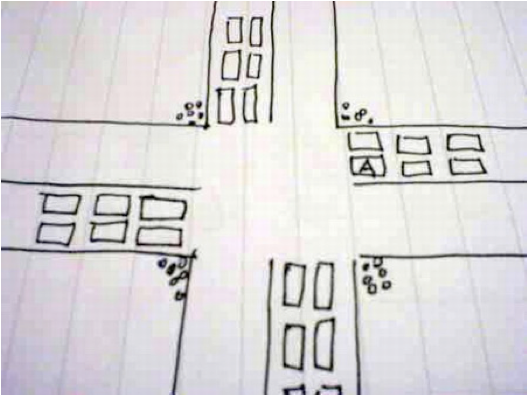
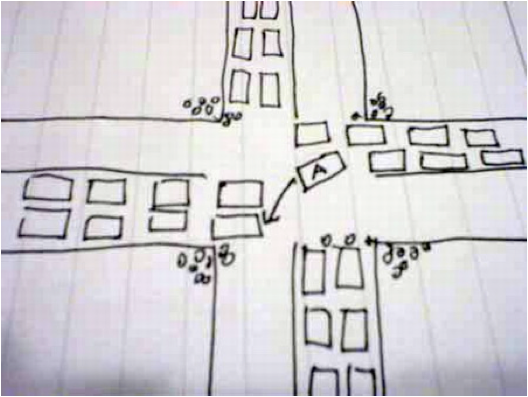
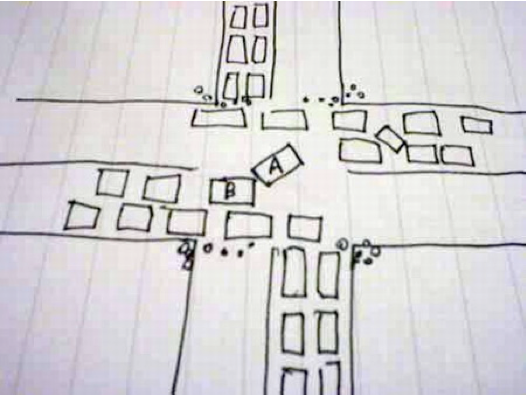
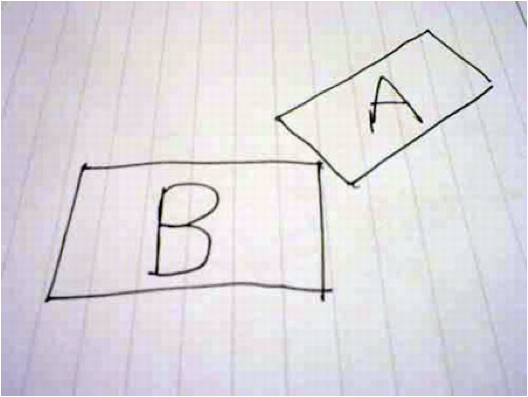
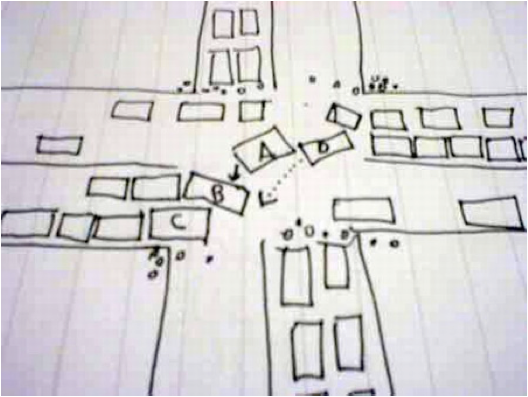
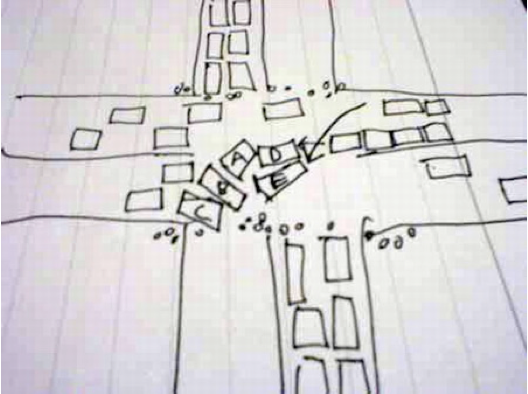
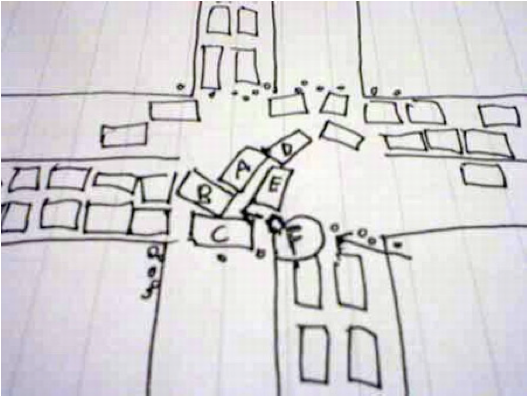
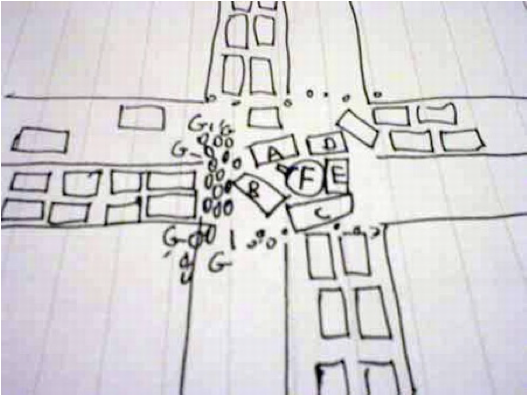
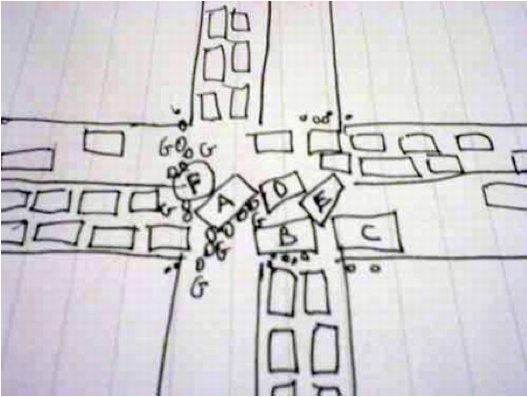
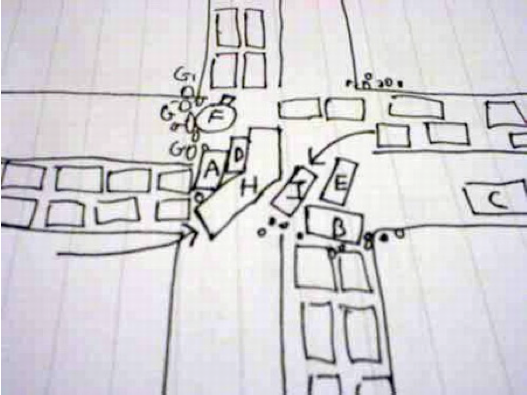
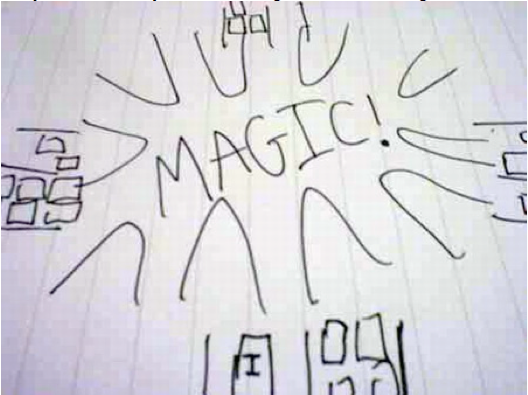
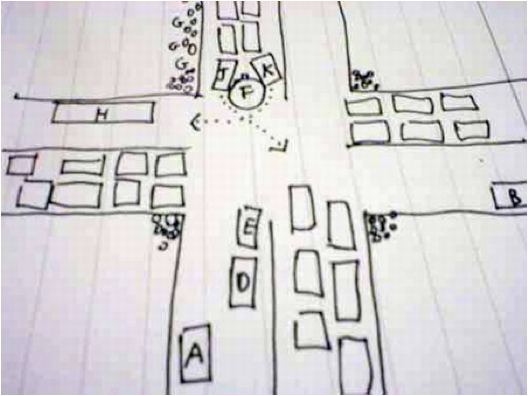
| The Basics Of Driving In China: A Diagram Posted: 21 May 2012 10:30 AM PDT I first encountered the following diagram — origins unknown — two or three years ago, but considering it was revived as recently as a month ago — I noticed a bunch of friends passing it around on Facebook — it's possible it's been around even longer. And why not? Everything depicted is true, more or less: there is nothing more crucial to master on the roads here than the left turn, especially if there's a traffic jam. Keep turning left. Ignore that voice in your head telling you to commit ax murder on the driver leaning on his horn. Just keep turning toward the magic. If you're the person responsible for creating the below, please step forward to claim your prize. The basics of Driving in China…Here is the explanation of a simple concept: the left turn. STEP 1: We see here a typical intersection. The light has just turned green for the east-west streets, and car [A], an enormous black Audi with pitch black windows, wants to make a left turn into the southbound lanes. Pedestrians wait on each corner. (For purposes of this demonstration, we'll assume no one is running the north-south red light, and no one is jaywalking – a rather large assumption.) STEP 2: To make a left turn, it is VITAL that [A] cut off all eastbound traffic as soon as possible. The first few brave or foolish legitimate pedestrians step off the curb; this is of no concern. [A] makes his move. STEP 3: NO! Too slow! [A] has managed to partially block [B], a brand new purple and yellow Hyundai taxi, but [A] has only achieved whatBeijing drivers would consider a 'weak' blocking position. STEP 4: In this detail, we can see why: [A] has only inserted his left bumper and cannot move forward without contact. [B], on the other hand, is in the dominant position – by putting his wheel hard to the right and flooring it, he can fully block [A]. STEP 5: [B] proceeds to swerve right, cutting off [C], a tiny red Peugeot with a gold plastic dragon hood ornament, spoiler and assorted knobs glued on. Since [B] is just accelerating, and [C] is now decelerating, this has created a low-density 'dead space' in the intersection. [D], a strange blue tricycle dumptruck carrying what appear to be 40 of the world's oldest propane tanks, sees this and makes a move. STEP 6: DENIED! [E], an old red taxi with its name sloppily stenciled in white on its doors, has boldly cut across two lanes of traffic, behind [D], and then swerved right, driving [D] into an extremely weak position behind [A]. Meanwhile, [B] and [C] are still fighting for position, with [C] muscling his way into the crosswalk. The only thing between [E] and a successful left turn is a few lawful pedestrians. [E] steps on the gas… STEP 7: …and is cut off by [F], an elderly man pedaling his tricycle verrrryyy slooooowwwly with a 15-foot-diameter sphere of empty plastic cooking oil bottles bungee-corded haphazardly to the cargo area. He was part of the lawful pedestrians, but seeing the stalled traffic, decided to cut diagonally across the intersection. Not only has [F] blocked [E], he is headed straight at [B], giving [C] the edge he needs. STEP 8: [B] concedes to [C], who drives in the crosswalk behind [F] and blocks [E]. Meanwhile, [G], a herd of about 20 bicycles, mopeds, pedestrians and wheelbarrows, sensing weakness in the eastbound lane and seeing that much of the westbound traffic is blocked behind [D], breaks north against the light. [F] pedals doggedly onward at about 2 miles per hour, his face like chiseled marble. STEP 9: Now things get interesting. [C] has broken free and, as the first vehicle to get where he was going, wins. [E] makes a move to block [B] but, like [A] at the start of the left turn, only gains a 'weak' block. [A] has cleverly let [F] pass and guns into a crowd of [G], which both moves [A] forward and drives some [G] stragglers into the path of [D], clearing [A]'s flanks. Little now stands between [A] and a strong second-place finish. STEP 10: Except for public bus [H], one of those double buses with the accordion-thing connector. [H] has been screaming unnoticed along the eastbound sidewalk and now careens dangerously into a U-turn. This doesn't appear to concern the 112 people packed inside and pressed against the windows (although that could be due to a lack of oxygen.) [H] completely blocks both [A] and [D]. On the other side of the intersection, [B] has swerved into the lawful pedestrians (who aren't important enough to warrant a letter) and has gained position on [E]. [E] has forgotten the face of his father: He was so focused on his battle with [B] that he lost sight of the ultimate goal and is now hopelessly out of position. This clears the path for dark horse [I], a blue Buick Lacrosse, to cut all the way across behind [H] and become the second vehicle to get where he was going (and the first to complete a left turn), since [F] has changed his mind again and is now gradually drifting north into the southbound lanes. But everyone better hurry, because the light is about to change… STEP 12: And we're ready to start over… |
| Posted: 21 May 2012 10:05 AM PDT This posting includes an audio/video/photo media file: Download Now |
| Photo of the Day: Window cleaning Posted: 21 May 2012 09:24 AM PDT  Want to see your picture here? Share your photos with us on Flickr and Instagram using the tag #shanghaiist! [ more › ] Want to see your picture here? Share your photos with us on Flickr and Instagram using the tag #shanghaiist! [ more › ]  |
| The Mother Of All Traffic Jams (Warning: It’s Horrifying) Posted: 21 May 2012 06:41 AM PDT A confluence of factors led to what appears to be at least a two-mile traffic jam in northwest Beijing on Saturday night. (Prepare to gape in horror around the 30-second mark as the camera pans out.) It was raining. It was a long block. It was in Zhongguancun, an incredibly busy part of town known for its electronics stores and colleges. And, most crucially, a traffic light had broken. This is my every nightmare about the city, frightening precisely because I — and any Beijinger, really — could easily find myself stuck in that paralyzing morass of postmodernity, equipped with no salve for a spiking blood pressure except heinous imaginings of unspeakable acts to perform on sentient, suffering beings. The abyss gazes back indeed. The most amazing part of that jam? For a while, it seems like the only cars going anywhere were the ones turning left. That's not how it should be. Youku video for those in China after the jump, if your heart can stand it. |
| China’s carbon market challenge Posted: 21 May 2012 03:50 AM PDT The decision to set up seven emissions-trading pilots sent media into a tizzy about Chinese climate policy. But Wang Tao has other concerns: from accurate data to a stable carbon price, there are tests ahead. China's three main carbon markets – the Beijing Environment Exchange, Shanghai Environment Energy Exchange and Tianjin Climate Exchange – were all formed within two months of each other, towards the end of 2008. At that point, the European Union's Emissions Trading System (EU-ETS) was still struggling to recover from a crash a year previously, which had seen the price of carbon allowance plummet from 30 euros to just a few cents. |
| Posted: 21 May 2012 03:23 AM PDT
1. 孟非 摔落舞台 Mèng Fēi shuāiluò wǔtái – In an unlikely slip-up, Meng Fei, host of the popular dating show "You Are The One" (非诚勿扰), fractured his left hand this past weekend when he fell off of the stage during the recording of a new episode. The news first hit Sina Weibo in a flurry of re-tweets, after one fan seated at the filming posted "Urgent!…Papa Meng has fallen from the stage during recording…sent to the hospital…injury serious!" The news was later confirmed by the host's colleague, who explained that Meng fell backwards when he backed up to make way for the camera, which was zooming in for close-ups of the show's 24 female contestants. In spite of the injury, the beloved "Papa Meng" heroically persevered through the remainder of recording, before being rushed to the emergency room. Here's the story in Chinese. 2. 刘翔12秒97 Liú Xiáng 12 miǎo 97 - Yesterday in Shanghai at the 2012 Diamond League men's 110 meter hurdle event, Chinese Olympic gold medalist and world champion Liu Xiang clocked 12.97 seconds, his season's best. Liu has stated in interviews that he doesn't like the phrase "He's back!" in reference to his return to the track after the heart-breaking foot injury that forced him to withdraw from the 2008 Olympic 110 meter hurdles. So, journalists are now proudly brandishing the slogan "He never left!" Here's the story in Chinese. 3. 公积金贷款放宽 gōngjījīndàikuǎn fàngkuān – Recently in cities across Anhui, Jiangxi, and Hubei provinces, local governments have begun to implement new policies with regard to municipal housing provident funds, extending housing loans and raising loan price ceilings by tens of thousands of RMB. Netizens and experts alike are opining that the change may be a disguised form of de-regulation, with the potentially dangerous outcome of more rising house prices. Here's the story in Chinese. 4. 意大利地震 Yìdàlì dìzhèn – Search volume is high for news of the 6.0-magnitude earthquake that struck northern Italy yesterday morning, killing at least seven people and injuring fifty. Here's the story in Chinese. 5. 抗强拆被拦腰砸死 kàng qiángchāi bèi lányāo zásǐ - On May 15th in Daqing, Heilongjiang province, an elderly pig farmer by the name of Li Baolin was crushed to death by the digging claw of an excavator as he attempted to put a stop to the forced demolition of his home, ordered by the city's "urban management" (城管). In the confusion of the accident, the driver of the excavator was also tragically killed when, leaning out of the front of machine to see what was going on, he was crushed to death between the rocker arm and the cab. Here's the story in Chinese. 6. 9岁女孩堕胎 9 suì nǚhái duòtāi – This weekend news broke that a nine year-old girl in Guangxi province, pregnant with the child of a thirteen year-old boy, recently underwent an abortion. The story has prompted widespread discussion among netizens regarding the need for sex ed in schools and the scary side-effects of change at breakneck speed. Here's the story in Chinese. 7. 李娜 决赛 Lǐ Nà juésài – Maria Sharapova defended her Italian Open title in Rome, beating China's Li Na in a close match on Sunday. After Li's loss, reports in the Chinese news media are still bullish about her performance in the upcoming French Open, highlighting her optimism as displayed by the knowing smiles she exchanged with Sharapova as they shook hands at the match's end. Here's the story in Chinese. 8. 吴思凡 Wú Sīfán – Netizens seem to be very protective when it comes to big-eyed, budding Beijing celebrity Wu Sifan. The twenty-year old rising star, known for her dance moves on a variety of variety shows, has apparently been receiving lascivious text messages from Hong Kong film actor, musician, and designer Edison Chen since the two met on the set of a micro-movie. Reports are now circulating that he has been "harassing" Wu via text, though his own spokesperson has vouched for him, saying that no legal action has been necessary and it is all already old news. Here's the story in Chinese. 9. 日环食 5月21日 rìhuánshí 5 yuè 21 rì – As a rare "ring of fire" eclipse crossed skies worldwide, a partial annular solar eclipse was seen over Beijing this morning. Here's the story in Chinese. 10. 国家发改委邹司长 Guójiā Fāgǎiwěi Zōu Sīzhǎng – It has recently come to light that Zou Binyong, a "deputy" from China's National Development and Reform Commission (NDRC) who came to Hunan to "inspect" state-owned Hunan Grain Group in December of 2011, was actually an impostor with no real official ties. Zou, who arrived at Hunan Grain's factory by the introduction of a Changsha official, lavished the company's leaders with praise at a banquet held on his behalf and, after drinking excessive amounts of Moutai (a famous, top-tier Chinese liquor), began to dispense outlandish advice to his increasingly dumbfounded audience, blurting out doofus recommendations like, "You guys should definitely do an IPO, but you need to get ballsier first! And then you should do, like, three IPO'S!" and "I think you should sell your grain for more money!" After receiving a tip-off from an inside source, a reporter contacted Hunan Grain to ask whether or not anyone realized that the "inspection" had been a farce. Though several people at the company had indeed suspected that the man was a faker at the time, they did not want to risk opening their mouths (other than dropping their jaws), either because they feared that the emperor might in fact be wearing clothes or because saving face is imperative, at any cost. Here's the story in Chinese.        |
| Tencent Rejigs To Improve Reach Beyond Online Games Posted: 21 May 2012 03:00 AM PDT  Tencent's Chairman and CEO Pony Ma By Alan Shen Tencent Holdings announced on Friday that it was embarking on a restructuring plan that'll enable the company to expand beyond its core strength in online games, which generates more than half the company's revenue. The Chinese Internet juggernaut said it would divide its business into six groups, including corporate development, interactive entertainment, mobile Internet, online media, social networking and technology and engineering. Tencent also plans to set up a wholly-owned subsidiary for its e-commerce business. In a letter distributed to staff, Tencent's Chairman and CEO Pony Ma said the number of employees had septupled to more than 20,000 since its last reorganization in 2005, and when the company became big, it was likely to create many problems. Ma was ranked No. 223 on the World Billionaire List, with a net worth of $4.7 billion, while Tencent has appeared on the Forbes Fab 50 list of Asia Pacific's best big companies for the past three years. Tencent reported on Wednesday that its first-quarter profit grew 2.8% to 2.95 billion yuan ($467 million), just above the 2.92 billion yuan average estimate of nine analysts polled by Thomson Reuters. Revenue surged 52.2% to 9.65 billion yuan in the same period. In a conference call with analysts on the same day, Tencent's Chief Strategy Officer James Mitchell said the company's recent shift toward e-commerce had been one of the reasons behind last year's net profit margin slumping to 30.7% from 45.5% the previous period. Although Tencent has been investing into e-commerce since 2005, the Shenzhen-based company has been struggling to make headway. The company's eBay-like site, paipai.com, has managed to grab only a fraction of the market dominated by Alibaba-owned Taobao. Last year, Tencent generated 5.3 billion yuan from its online games, accounting for 55% of its total revenue. With highly popular titles, such as Cross Fire, QQ Dancer, Dungeon and Fighter, League of Legends and QQ Speed, Tencent continues to easily outsell NetEase and Shanda Games. |
| Posted: 21 May 2012 02:30 AM PDT  "There is a group of people who make their living from politics, who along the way evolve into rulers. Their interests are not the same as the interests of the people. But to achieve their own goals, and to further their own interests, they will deceive the people and get them to make sacrifices for the nation. The truth is that they're getting people to sacrifice for their own interests. Most wars in our world were started this way." [ more › ] "There is a group of people who make their living from politics, who along the way evolve into rulers. Their interests are not the same as the interests of the people. But to achieve their own goals, and to further their own interests, they will deceive the people and get them to make sacrifices for the nation. The truth is that they're getting people to sacrifice for their own interests. Most wars in our world were started this way." [ more › ]  |
| Your opportunity to work with Yang Rui: CCTV's Dialogue now hiring! Posted: 21 May 2012 01:11 AM PDT  Are you a native English speaker with 10 years of media experience and desperate for a job? If so, you might want to consider joining the international arm of CCTV News because they're hiring news editors for Dialogue, now the favourite talkshow of China's expatriate community. [ more › ] Are you a native English speaker with 10 years of media experience and desperate for a job? If so, you might want to consider joining the international arm of CCTV News because they're hiring news editors for Dialogue, now the favourite talkshow of China's expatriate community. [ more › ] |
| China’s Alarming Risk Of Financial Instability Posted: 21 May 2012 01:05 AM PDT In my debate with Andrew Batson in The Guardian in March, I noted that:
In my last several posts, I've focused on the former — the slowdown in China's GDP growth. I want to switch gears here for a moment and call attention to a rather alarming story involving the latter — the risk of financial instability — which somehow slipped under most people's radar screens. In early April, Caixin magazine ran an article titled "Fool's Gold Behind Beijing Loan Guarantees", which documented the silent implosion of Zhongdan Investment Credit Guarantee Co. Ltd., based in China's capital. "What's a credit guarantee company?" you might ask — and ask you should, because these companies and the risks they potentially pose are one of the least understood aspects of China's "shadow banking" system. If the risky trust products and wealth funds that Caixin documented last July are China's equivalent to CDOs, then credit guarantee companies are China's version of AIG. As I understand it, credit guarantee companies were originally created to help Small and Medium Enterprises (SMEs) get access to bank loans. State-run banks are often reluctant to lend to private companies that do not have the hard assets (such as land) or implicit government backing that State-Owned Enterprises (SOEs) enjoy. Local governments encouraged the formation of a new kind of financial entity, which would charge prospective borrowers a fee and, in exchange, serve as a guarantor to the bank, pledging to pay for any losses in the event of a default. Having transferred the risk onto someone else's shoulders, the bank could rest easy and issue the loan (which it otherwise would have been reluctant to make). In effect, the "credit guarantee" company had sold insurance — otherwise known as a credit default swap (CDS) — to the bank for a risky loan, with the borrower forking over the premium. Now putting aside what happened at Zhongdan for a moment, let's just consider what this means. Like any insurance scheme, this arrangement only "works" if the risks are not correlated. If you insure 100 people in 100 different towns against a tornado striking, you collect premiums and then, when a tornado strikes one of those towns, you make the payout to one claimant and the premiums from the rest cover it. If you insure 100 people in the same town against a tornado, you collect premiums for a while at no cost — it looks like a fantastic business. But if a tornado finally does strike that one town, you have to pay everybody at once and you're wiped out. That's exactly what happened to AIG when it sold credit default swaps on mortgage-backed CDOs. As long as the housing market didn't collapse, all they did was collect premiums. When it did collapse, they went under. Or rather, they had to be bailed out so that all the banks and other customers who had bought insurance from them — who thought they were insured — wouldn't go bust when AIG couldn't pay up. The concern in China is that — like that tornado — a drop in the local property market, or a decline in exports, could hit all borrowers at once, overwhelming the local credit guarantee company and leaving the banks high and dry. The risk is exacerbated by the fact that many credit guarantee companies were capitalized with loans from the same banks whose other loans they are guaranteeing. In effect, banks are insuring themselves, or each other, and would still end up holding the bag on loan losses that are supposedly insured. (It would be interesting to know how such "guaranteed" loans are treated when regulators perform their much-vaunted stress tests on Chinese banks. I suspect these loans are considered loss-proof, because they are "insured.") Zhongdan, the company in the Caixin article, took these risks one step further. It persuaded borrowers to take out bank loans based on guarantees from Zhongdan, and then hand some or all of that money back to Zhongdan to invest in Zhongdan's own "wealth management" products:
Since this use of funds completely violated banking rules, Zhongdan forged documents indicating the money was being borrowed to pay fictitious suppliers:
The whole thing started to unravel in January when banks "reacted to rumors of a liquidity crunch" at Zhongdan:
At that point, regulators stepped in and told everybody to freeze — and to keep all the assets as "good" on everyone's balance sheets while they figured out what to do next. Zhongdan had over 300 clients, and guaranteed RMB 3.3 billion (US$ 521 million) in loans from at least 18 banks. The only liquid assets that the guarantee company appears to have available to pay banks is RMB 210 million (US$ 33 million) in margin accounts deposited with the banks themselves. Good luck finding the rest:
Lest you think Zhongdan was just a colorful outlier, think again:
Read that last quote again. The implication is that Zhongdan's modus operandi (forging documents to channel loan proceeds into risky investment schemes) is common practice among China's credit guarantee companies, and that Chinese banks have been willing co-conspirators. I wish I could tell you the size of the problem, on a systemic level, but that's part of the problem — it's too opaque. Nobody I've talked to knows. One of the reasons banks may have been willing to go along with the charade was the need to fulfill their quotas when it came to boosting SME lending. If so, it reinforces what I said years ago, that state-mandated set-asides are not the way to improve entrepreneurs' access to bank lending, that banks need to revise their whole approach to lending:
More importantly, the Zhongdan episode — which I'm amazed hasn't attracted more attention and concern — illustrates the kind of hidden risks that have developed in China's financial system, to which bank and regulators have been willing to turn a blind eye in order to meet the insatiable credit demands of investment-led GDP growth. In a recent report debunking "myths" about China's economy (which could have been titled "China: Don't Worry, Be Happy"), CLSA's Andy Rothman maintains (in Myth #13, p. 46) that there are "no shadow banks" in China. "Anything in the shadows sounds scary," he says, but never fear because all of China's financial institutions, banks and non-banks, are under the firm control of the Party. "They are," he quips, "Party animals." Indeed. Zhongdan and other credit guarantee companies certainly seem to have been partying it up. Only now is what they have done beginning to emerge from the shadows. It looks pretty scary to me. |
| To Serve People: So… Yang Rui, huh? Posted: 21 May 2012 01:31 AM PDT
By TAR Nation What a cunt. This is Yang Rui. You can't really see it, but I have it on good authority that his tie is the foreskin for his head. You may have glimpsed him on TV. I haven't. Because if I ever did see him on TV, I would own a TV with a shoe in it. This was strictly out of my sphere of awareness… that is, until the Global Times covered it. The Global Times, as one might suspect, was pretty liberal with their translation of his Weibo rant, making him sound a little less like a mad person in a special room of an insane asylum where patients vote to put the maddest person, with "Caution: Crazy Bastard" smeared in human waste on the door. Let's get this out of the way and jump to the WSJ translation in case anyone forgot:
One of the most glaring differences was the Global Times referring to Melissa Chan as "crazy" rather than "foreign bitch." The Global Times also opted for the "and target those who frequent the areas and its event organizers" rather than "cut off the foreign snake heads." The rest is pretty similar. Let's learn a little more about Yang Rui. He worked at China National Radio and then moved on to CCTV, where he was on Focus, which no one watched because it was rubbish. However, while there, he played host to very influential people with funny names like Bhotros Bhotros Ghali and Hou-Hou Hua. To continue, the CCTV site brags that "They also devote many profound and interesting discussions to sensitive issues such as human rights, religious freedom, the death penalty, political reform, the rise of critical journalism in China." They didn't. The issues weren't anywhere near sensitive, and CCTV is using a version of the word "interesting" with which I am not altogether familiar. In 2001, Yang won an award for an interview with a Falun Gong practitioner, and in 1939 he invaded Poland. I tried. But his life is a boring jaunt through party-line fields of rubbish. I give up. Let's get into the meat of his madness. Yang Rui has a Bachelor's degree in English literature, so let's deconstruct his work.
Well, he doesn't really mean "foreign trash," does he? No, he means not-Asian trash. He didn't suggest going after the Koreans in Wangjing. The ones that will be stopped and asked to show their passport and housing registration, speaking very broadly, will be people who don't look Asian.
Thugs? I have never seen a foreign thug in Sanlitun. I see rude douchebags. I see self-righteous hipster tweed-wearers. I see older sunglasses-wearing men trying to be cool. I see cute girls putting on the Ritz for the gawking Sanlitun Chinese tourists. I see fathers holding Angry Birds balloons, and I see girls-nights-out and business meetings held over Tsingtao. I don't see thugs. Not one thug. As for the "innocent girls" part, the entire world needs to take better care of abused women, without exception. The Chinese authorities have, so far, been pretty shit at this, seeing as how I remember covering a story on a domestic violence law in China in 2008 before the Olympics and read a similar editorial recently. Also, these photos were all the rage last year. So, maybe, before protecting Chinese women from their foreign husbands, pass that damn law already. Next:
Apparently the mad bastard suffers under the cruel delusion that foreigners report to a… I don't know… Foreign Surgeon General? Foreigner High Council? Foreigner Mafioso? I'm not sure really. Oh, I've got it. The Foreign Helmsman: The next bit:
Encourage emigration? Seriously? This is a hate-filled angry post about how unbelievably deplorable foreigners are, calling them thugs, filth and all manner of garbage, but now they're witty ambassadors encouraging emigration like smarmy travel agents? As to the human trafficking bit, well, readers can get information here. China is what is termed a Tier 2 Watch List country in terms of human trafficking and have shown no significant movement in that area in four years. China does face problems of women being tricked abroad to places like Taiwan (which is totally part of China), Japan and Malaysia. But it should also be noticed that domestic human trafficking is a massive concern. According to the World Development Indicators database, "women and children are trafficked to China from Mongolia, Burma, North Korea, Russia, and Vietnam for forced labor, marriage, and prostitution." This is one of the most deplorable crimes that can ever be committed by anyone, and to put that on the shoulders of the foreigners in Beijing is shameful scapegoating. The next bit is pure fiction, the product of a severely diseased mind:
What he has done here is confuse reading maps with making them. I would shout at him, but he's probably wearing an aluminum foil hat by now. Also, I think foreigners in China, especially those in Sanlitun and Wudaokou, would be the worst spies ever. I went to the Beijinger Bar and Club Awards this weekend, where I was annoyed by the constant beach balls hitting my face and the sight of drunken expats dancing in the summer heat. It was almost enough to make me vomit in their inconveniently placed trash bins. Not exactly the espionage types. And the last bit, concerning Mellissa Chan and kicking out all the foreigners, well, good luck with that. You see, I, like many other foreigners, have made a life here; not a great life, but a good one. And it will take a hell of a lot more than Chinese lynch mob politics and dimwitted cops to "send me packing." I always hate how people try to use their own fear in arguments like these. Yang, apparently, is scared of foreigners. Well, yeah. He should be. They're not scary because they're scary. They're scary because he's a dick to them. Ever since I read that post of his, I have been having wet dreams about smashing his skull open with a wrench, something I would never do in real life. And I certainly don't advocate violence of any kind towards anyone for their political opinions, however poorly informed. The heart wants what the heart wants, but the brain knows best. Still, the dreams are nice. One important thing to point out is that it is not right to condemn one man for his moment of nationalistic bigotry. People are all too quick to say that this single move is important enough to condemn him, but that's not right. People should condemn him because he is a genuinely horrible person. One of the greatest days of my life was the day I typed "people walking into glass doors" into YouTube. Typing Yang's name into YouTube was the opposite of that. Every interview is coated in CPC smarm. He either invites someone on the show to agree about how wonderful everything is or how Westerners ruin everything, or he simply talks over them in a condescending fashion. Basically, he's like Bill O'Reilly with slightly more class. But beyond that, there was a wonderful blog post at Rectified.name where Brendan O'Kane highlights Yang's madness since his hate-filled ejaculation. Yang has not moved one step back. If anything, he's gotten worse. Here are some highlights: On May 18, two days after his initial paroxysm of crazy: "I first came across Americans who were foul-mouthed in Chinese ten years ago. It's important to sweep away all the foreign trash, but we must be cautious of xenophobia and new variations on the Boxer Uprising… [Chinese people] bow and scrape before white people while being more than a little dismissive of colored peoples." The same day, he basically urged China to go to war with… everyone: "So far as the 'peaceful rise' of China and how China will be similar to the United States in terms of overall power in another 20 years: the more I think about it, the more I feel like the word 'peaceful' is just being f-ing exploited by people. We keep quiet and swallow our anger; we keep our heads down and build our country; we do everything we can to treat our neighbors well, and our malicious neighbors encroach on our islands and reefs one nibble and bite at a time. We choose to hide our capabilities and bide our time, and they take that as a sign that we're afraid to start things and as license for them to run rampant! Peaceful rise or not, we must make a statement: don't try to break our peace; don't try to mess with us; or it'll be no more Mr. Nice Guy!" Later that day, he railed against the WSJ for calling him xenophobic. Then he masterfully proved their point: "Why does the Wall Street Journal care so much about cleaning up foreign trash? Implying that I'm xenophobic? Bullshit! There's no shortage of foreign scum in China, and there are also plenty of outstanding, friendly foreigners who respect Chinese law. So filter them out, clean things up, and let's coexist rationally. Chinese people are extremely hospitable — sometimes so hospitable that they worship foreigners to the detriment of their own personal and national nature. Have a good weekend, buddies, have fun on weekend." On May 19 he woke up with a vision of himself as some sort of heroic journalist rather than the douche-nipple he truly is: "Philippine soldiers forced Chinese fishermen at gunpoint to take off their shirts under the baking sun. If the [Chinese] maritime patrol boat hadn't gotten there in time to stop their humiliation of China, these Chinese people who had been fishing near their own country's territorial waters might have been arrested, fined everything they owned — some of them might even have been killed and thrown into the ocean to hide the evidence. Western media doesn't report that. I tell the truth, and they accuse me of engaging in monologue, not 'Dialogue.'" Then he got onto Vietnam: "Our navy isn't there, so our brothers in CNOOC have no choice but to pull out! To leave in defeat! Vietnam has also deliberately encouraged fishermen to provoke Chinese [vessels]; if they get arrested, Vietnam will fan the flames of anti-Chinese and racist sentiment." Later that same day, he was still in a maritime mood: "Philippine Foreign Affairs Secretary Albert del Rosario may hold a US passport and US nationalist. For the past month he's been delivering impassioned speeches like a wannabe martyr — doubtlessly because he thinks his motherland the US will unconditionally protect his right to live abroad in the Philippines? In 2008, using the same reasoning, the Georgian president Mikheil Saakashvili ordered his troops to suppress the nearby Russian autonomous regions of Abkhazia and South Ossetia. He graduated from Harvard and worked as a lawyer in the US. In the end, he lost badly: Russia paid no attention and America ignored him!" (Many thanks to Rectified.name for the grueling and accurate translations and collection of this rubbish.) After this, things run headlong into Charlie Custer, and I'll leave Tao to report on that. So, remember: don't attack people for an instant fervor. Remember to take into account their entire life and then judge them to be useless, half-witted, opportunist dick holes bringing nothing but pain and strife into the world. That's all this week. Stay tuned for what I hope will be a scathing indictment of Jonathan Kos-Read's entire life. Yang was business, but Kos-Read will be personal. |


![[蜡烛]](https://lh3.googleusercontent.com/blogger_img_proxy/AEn0k_vu97VZyWQMhhUJ4xdQVy04NKtQvSdQoarLwpjxgJHUqnuGfRr7qYylKkBg74nZwkqwrEN53Sy-JEN_v0Emzxxd4bAMxqYVoTlLUekPFzGuKpNoBXbdWzt4NzFSHTcKhVyhy1iAixt049xqEUyqG6YERQ=s0-d "[蜡烛]")



 A weekly column in which Chinese media is taken to the stocks.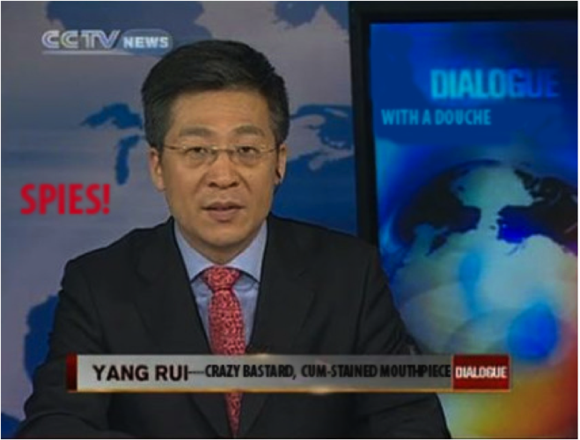

Comments