Blogs » Society » 5 reasons why you should join us for the Shanghaiist Hairy Crab & Sex Museum Tour!
Blogs » Society » 5 reasons why you should join us for the Shanghaiist Hairy Crab & Sex Museum Tour! |

- 5 reasons why you should join us for the Shanghaiist Hairy Crab & Sex Museum Tour!
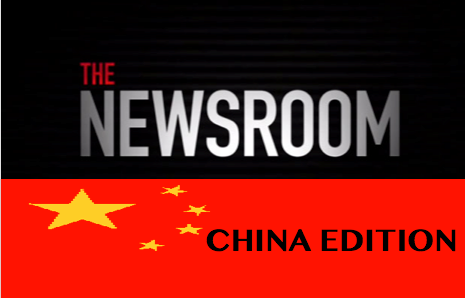
- What If Aaron Sorkin’s “The Newsroom” Were Set In China?
- Ai Weiwei: I don't know why they arrested me, and why they released me
- Concerns rise over China's farming output
- ‘Putting Candidates’ Assertions of ”Getting Tough with China” in Context’: Ken Lieberthal Versus Gordon Chang
- Protecting Your IP In China With An Injunction. Yeah, That’s The Ticket.
- How a multibillion dollar rail project in London is building a wetland
- Sign up for the Shanghaiist Hairy Crab & Sex Museum Tour!
- Saturday Night Musical Outro: Notorious MSG – Chinatown Hustler
- Boao Review: The Realities of Renminbi Internationalization
- Stench of durian on bus mistaken for gas leak
- Nationalists ruin everything, Spring Airlines cancels free tickets to Japan offer
- Are these the next members of the Politburo Standing Committee?
- Watch: Girl in a ballerina costume hangs upside down on the Metro to use her iPad
- Which Is The Worser Gangnam Style Parody, China Style Or Laowai Style?
- A New Gang Of Seven To Rule China
| 5 reasons why you should join us for the Shanghaiist Hairy Crab & Sex Museum Tour! Posted: 20 Oct 2012 07:30 PM PDT  As you may have heard, Shanghaiist is organizing a Hairy Crab & Sex Museum Tour on Nov 3-4. Here are five reasons why you should join us on our little excursion to the Yangcheng Lake and Tongli Watertown: [ more › ] As you may have heard, Shanghaiist is organizing a Hairy Crab & Sex Museum Tour on Nov 3-4. Here are five reasons why you should join us on our little excursion to the Yangcheng Lake and Tongli Watertown: [ more › ]        |
| What If Aaron Sorkin’s “The Newsroom” Were Set In China? Posted: 20 Oct 2012 07:00 PM PDT By TAR Nation and RFH Ed's note: TAR and RFH have diametrically opposed opinions about Aaron Sorkin's The Newsroom, starring Jeff Daniels as a news anchor who, in one lapse of honesty, sees his world turned upside-down. Characters sing "arias of facts," as the New Yorker's review put it, which sounds a lot like what news organizations closer to home — in China — do. So, TAR and RFH set aside their disagreements about The Newsroom to write a pitch for a show called Chinese Newsroom. TV producers out there: pick this up! Episode 1: A Yang, a Wang, a Prang The series begins with its star, Yang, a completely sober and non-medicated popular CCTV host, blowing up at a university forum with a racist tirade about all foreigners. He later proudly boasts of this incident on Weibo. Nothing happens.Yang later crashes his car and is found with his cock hanging out. The episode ends on a cliffhanger, as producers decide whether to ignore the incident or simply pretend it never happened. Episode 2: Cop-out News surfaces that a senior Chongqing policeman has defected to the US Embassy – and one of the producers has an inside source at the consulate with Wang ready to go on the record. With one of the most important scandals in China breaking, the station bravely decides to go with a single-sourced expose about how Chinese food is even better than previously thought. Episode 3: Games on! The London Olympics are on, and it's clearly one of the most interesting things that has ever happened – but it's still nothing like as good as the 2008 Games. The files of Olympic tales from 2008 are dusted off and the names replaced. At the editorial pitch meeting, the team gathers round to watch archive footage of the 2008 pitch meeting. Episode 4: Face first Yang presents a solemn face to the world as he attends his mother's funeral, his expressionless features concealing an inner maelstrom of despair over where she hid her jewelry. But the mask drops when news reaches Yang that the charade involving hurdler Liu Xiang's fall at the Olympics has come to pass, and the handsome host falls to the ground in patriotic grief. Back at the newsroom, a debate ensues as to the ethics of broadcasting locker-room footage of Liu curled up naked inside a Chinese flag, sobbing like a schoolgirl. It's agreed that it's fine, so long as they show it "a lot." Episode 5: Freedom ain't free Something horrible happens in a democratic country, and the CPC's official line is that it is because of free speech. However, events take an unexpected turn when the filing cabinet containing the canned responses gets stuck. A brilliant young journalist, sidelined for reporting on the heroic story of an Olympics silver medalist, suggests writing a fair and balanced story on the incident. But in this emergency, the station has no choice but to read the previous day's Global Times on air. Episode 6: Btw, your vagina is now my ancient sovereign territory In protest of the Japanese maritime claim, the Chinese take to the streets to beat each other up and burn their belongings. Back in the office, newscaster Yang promptly threatens to fire a reporter, Wei Wang, for visiting Kyoto in 2007. She writes a Maoist apology letter to him that so moves Yang emotionally that he decides to instead seduce her. As a reward, she is sent to cover traditional grass-growing in Xinjiang. Episode 7: Diaoyu and me The Chinese Newsroom canteen discusses exactly how much the Diaoyu Islands are part of China. (SPOILER ALERT: It's a lot.) Oh yeah, and it's live on air. Episode 8: Being sensitive doesn't mean I have feelings While digging through an old filing cabinet looking for more ways to shit on the US, Yang is handed a list of sensitive subjects that he is NOT allowed to discuss on their air. The list is 7,896 pages long. He laughs with nationalistic zeal – until he sees his name on the list! Rushing up to the head office, he bursts through the door to complain, only to realize that no one in the newsroom will talk to him, with him, in front of him – or about him. He is, simply, too sensitive. Yang knows this is a public death sentence, worse even than the time he fell dead-drunk asleep at a banquet in honor of Deng Xiaoping and insouciantly shat his pants. Once someone is "sensitive," it means no one can talk about him, her or it until the generation who decided it is dead and their precious hurt feelings can be spared. Who is responsible? Who knows – the show gets cancelled mid-season. |
| Ai Weiwei: I don't know why they arrested me, and why they released me Posted: 20 Oct 2012 06:00 PM PDT  Evan Osnos of The New Yorker speaks to Ai Weiwei about the Chinese government's ban on his travel outside the country, his art and his future. [ more › ] Evan Osnos of The New Yorker speaks to Ai Weiwei about the Chinese government's ban on his travel outside the country, his art and his future. [ more › ]  |
| Concerns rise over China's farming output Posted: 20 Oct 2012 04:47 PM PDT China is the most populous country in the world, with a population of over 1.3 billion people. It also leads in agricultural output, having nine per cent of the world's fertile land. But its 700 million farmers may not be able to sustain this for much longer. [Al Jazeera English] [ more › ]  |
| Posted: 20 Oct 2012 03:51 PM PDT If you thought it's just Obama-Romney and Biden-Ryan who disagree about everything this election season, have a look at the debate between Ken Lieberthal of Brookings and Gordon Chang of The Coming Collapse of China fame. They faced off on PBS NewsHour, in a segment called 'Putting Candidates' Assertions of "Getting Tough with China" in Context.' Here's the summary: During the presidential debate at Hofstra University, Mitt Romney called President Obama's trade policy weak and China 'a currency manipulator.' Kenneth Lieberthal of the Brookings Institution and Forbes.com's Gordon Chang talk with Jeffrey Brown about contrasting approaches to U.S.-China geopolitical issues and trade relations. And, here's the 7 1/2 minute video:
Watch Putting Candidates' China Assertions in Context on PBS. |
| Protecting Your IP In China With An Injunction. Yeah, That’s The Ticket. Posted: 20 Oct 2012 12:23 PM PDT I am always getting emails from people seeking free advice on what jurisdiction/law they should put in their China contract. My answer is always the same: I have no idea. The reason I never have any idea of what to put in someone else's contract is because the answer always varies based on multiple facts. But one of the most important facts we look to when considering the dispute resolution jurisdiction for our contracts is that which would most harm our client. Let me explain. If a large company, let's call it company ZZZZ is buying $100,000 worth of widgets each month from a Chinese manufacturer, ZZZZ is at risk for the following, among others:
In many instances the last two examples, particularly the last one, are going to be a foreign company's biggest risk. Most companies can recover from one bad shipment. Having to fight off massive quantities of low priced product clones is usually more problematic. So let's say ZZZZ faces the last situation. Its former manufacturer in China has all of ZZZZ's molds and is refusing to return them. Instead, the Chinese manufacturer is using those molds to make ZZZZ widgets and then is selling those widgets around the world for half of what ZZZZ ordinarily sells them. ZZZZ clearly has a massive problem on its hands. What can it do? Well if ZZZZ's contract with the Chinese manufacturer called for litigation in the United States, ZZZZ could sue the Chinese manufacturer in the United States and presumably prevail. At that point, ZZZZ would have a United States judgment against the Chinese manufacturer but there would be little ZZZZ could do with that judgment. ZZZZ could use that U.S. judgment to try to seize U.S. assets that belong to the Chinese manufacturer, but since most Chinese manufacturers have no U.S. assets, that is not likely to help much. And since Chinese courts do not enforce U.S. judgments, the U.S. judgment would be of pretty much zero value in trying to stop the Chinese manufacturer from continuing to produce ZZZZ's widgets. For more suing Chinese companies in the United States, check out Suing Chinese Companies In US Courts. The Pros And The Cons. If ZZZZ's contract with the Chinese manufacturer called for arbitration in Hong Kong or Singapore, ZZZZ would be facing somewhat similar issues in that arbitral bodies in neither place have any authority to issue orders requiring a company in China to cease from manufacturing. But if ZZZZ's contract with its former Chinese manufacturer provided for litigation before a Chinese court, ZZZZ would have a decent chance of securing a court injunction against the Chinese manufacturer, stopping it from producing ZZZZ's widgets. In "Shanghai Courts Adopt New Methods to Compel Compliance of Preliminary Injunctions in Intellectual Property Infringement Disputes, Denning Jin of China mega-firm King & Wood Mallesons, explains how this all works. Mr. Jin's post is on how the Shanghai No. 1 People's Intermediate Court recently took strong measures to ensure that its patent infringement injunction would be enforced. After the injunction was issued, the judges in charge of executing the injunction went to the exhibition to serve the order on the Guangdong company. As part of execution of the preliminary injunction, the judges also ordered the company to remove displays of the allegedly infringing products. The judges gave the Guangdong Company 24 hours to comply with the orders. Several days later, the Court responsible for executing the order discovered that the Guangdong Company had not ceased the sale and display of the allegedly infringement products. The Court quickly assembled a group of more than ten judges and bailiffs to go to the Expo Center and enforce the order. At the Expo Center, enforcement was obstructed by employees of the Guangdong company. In response, the judges took the employees to court and punished the Guangdong company and certain individuals through fines and detention. The post notes how in China preliminary injunctions are only available in intellectual property disputes. It then sets out the criteria for such injunctive relief, which criteria is very similar to that in the United States: 1. The applicant must hold stable and valid intellectual property right. The party seeking the preliminary injunction must own the intellectual property at issue and it must be able to prove that its rights to the intellectual property are "legitimate, valid and stable." 2. A preliminary review has determined that the respondent is infringing. This requires that the respondent is the party infringing, that the respondent is highly likely to have been committing the alleged infringement, that the alleged infringement has been committed or is about to be committed, and that the alleged act is highly likely to be deemed an infringement after a full trial. 3. The applicant will be irreparably harmed if the infringement is not stopped. Irreparable harm generally means that monetary damages will not be enough to make the applicant whole. China's courts may presume irreparable harm in the following circumstances:
In addition, when evaluating "irreparable harm", the court also considers the respondent's creditworthiness and solvency. The worse a respondent's creditworthiness, the more likely that a preliminary injunction will be issued against him. In the United States, parties seldom fail to abide by a court ordered injunction and those that do generally face major consequences as that failure will usually be held to be a contempt of court. See China Tooling/China Consulting — I Told You So. The problem with injunctions in China, however, has been its courts do not always have or employ the tools to make sure their injunctive orders are obeyed. This makes protecting your IP in China all that more difficult: In China respondents may refuse to obey a preliminary injunction even after it has been served to them by a court. Such disobedience severely diminishes the value of the preliminary injunction system and may seriously injure the applicants' interests. The issue of determining how to enforce a preliminary injunction has not yet been effectively resolved. A recent case involving the application of a preliminary injunction by an entertainment company against a singer and another entertainment company demonstrates the typical difficulties that arise when preliminary injunctions are issued. In that case, the first in which a preliminary injunction targeted which songs could be performed at a concert, the court demanded the singer not sing the allegedly infringing songs at a concert due to alleged copyright infringement. However, the signer ignored the injunction and sang the allegedly infringing songs. The court subsequently fined the infringing parties a total amount of RMB210,000, an amount considered grossly inadequate compared to the harm suffered by the applicant for the alleged infringement. Mr. Jin sees this Shanghai court's aggressive enforcement of its injunction as indicating an "increasing willingness" to enforce injunction and I agree. If you want to protect your IP in China and protect it fast, a preliminary injunction from a Chinese court will likely be your best bet. Think about that when you are trying to decide what to put in your contract's jurisdictional clause. What do you think?
        |
| How a multibillion dollar rail project in London is building a wetland Posted: 20 Oct 2012 11:34 AM PDT As China loses its coastal wetlands, the UK is attempting to revive an ancient salt marsh with the help of London's US$26 billion Crossrail project. Jeff Kew has got a lot of dirt on his hands: seven million cubic metres of it to be precise. |
| Sign up for the Shanghaiist Hairy Crab & Sex Museum Tour! Posted: 20 Oct 2012 12:30 AM PDT  Hairy crab season is rapidly approaching its zenith! And because Shanghaiist knows not all hairy crabs are created equal, we've decided to take it upon ourselves to take you to that one place in China that ensures you get the REAL DEAL -- Yangcheng Lake. Join Shanghaiist editors Kenneth Tan and Benjamin Cost on an oralgasmic getaway with Shanghai's most famous staple right at the source, happening on the weekend of Nov 3-4. FIND OUT MORE & SIGN UP HERE. [ more › ] Hairy crab season is rapidly approaching its zenith! And because Shanghaiist knows not all hairy crabs are created equal, we've decided to take it upon ourselves to take you to that one place in China that ensures you get the REAL DEAL -- Yangcheng Lake. Join Shanghaiist editors Kenneth Tan and Benjamin Cost on an oralgasmic getaway with Shanghai's most famous staple right at the source, happening on the weekend of Nov 3-4. FIND OUT MORE & SIGN UP HERE. [ more › ]  |
| Saturday Night Musical Outro: Notorious MSG – Chinatown Hustler Posted: 20 Oct 2012 06:30 AM PDT Night gathers, and now my watch begins. Enjoy The Notorious MSG. |
| Boao Review: The Realities of Renminbi Internationalization Posted: 20 Oct 2012 03:45 AM PDT I have an article in the October 2012 issue of Boao Review, the new journal published by the Boao Forum, on what the future may hold for China's currency, the Renminbi. I am told the article will be posted on the magazine's website this week, and I will post a link when one is available. The Rise of the Renminbi as an International Currency: Challenges and Solutions By Patrick Chovanec The rise of the Renminbi as an international currency is looked up with an almost breathless anticipation from London to Tokyo to Sydney. All this excitement has tended to eclipse a more sober assessment of the opportunities and obstacles the Chinese yuan realistically faces, as well as the benefits and burdens a larger international role for the Renminbi would pose for China. Rarely are the questions asked: Does China really want or need to manage a global currency? And if so, what price is it willing to pay? The growing role of the Renminbi in China The Renminbi has already come a long way. Not that long ago, the Renminbi wasn't a fully functional currency even within China's own borders. All imported goods, as well as services provided to foreign visitors, had to be paid for with Foreign Exchange Certificates (FEC), in exchange for hard currencies. While FEC were ostensibly denominated in the same yuan as the Renminbi used for domestic purposes, their buying power was obviously quite different, giving rise to a vibrant black market on the doorstep of every international hotel across the country. Gradually, the yuan's exchange rate was allowed to depreciate nearly sixfold, from 1.5 CNY/USD to 8.2, closing the trading gap and allowing China to phase out the FEC in 1995. This opened the door for China to make the Renminbi convertible for current account (i.e., trade) transactions the following year. The flow of investment funds both into and out of China via the capital account, however, continued to be strictly regulated. When China set up its two domestic stock exchanges in the early 1990s, it went so far as to create an entirely separate market in so-called "B shares," denominated in US dollars and HK dollars respectively, in which foreigners (and until 2001, only foreigners) were allowed to invest. In effect, the inability to freely buy and sell Renminbi was used as a firewall to insulate China's financial markets from the outside world. In practice, convertibility on the current account meant that Chinese companies, or foreign companies operating in China, could exchange Renminbi for foreign currencies to purchase imports, as long as they presented a valid invoice. Trade itself, both imports and exports, was conducted almost entirely in foreign currencies, mainly in US dollars. The role of the US dollar in international settlement and its effect on international trade It's worth pausing for a moment and asking, why US dollars? After the US de-linked the dollar from gold in 1971, demolishing the post-war Bretton Woods system, there has been no institutional framework enshrining the US dollar as the world's preeminent currency. The dollar retains its role because market participants prefer to use it, for three main reasons:
The same is true of other international currencies, such as the Euro, the British pound, and the Japanese Yen, but to a lesser degree. In contrast, someone who accepts a Chinese yuan as payment – or a Nigerian naira, a Honduran lempira, or a Laotian kip – may find it a lot harder to invest or find another trader who will accept it in turn. Many of these countries find it easier – or even essential – to conduct trade in a currency that is far more widely accepted. Using the dollar as an intermediary, however, does have costs. Take, for instance, an Argentinian exporter selling soybeans to China. Since the seller can't use yuan, and the buyer doesn't want pesos, they both must pay a bank commission to change their money into dollars and then back again. They may have no choice but to use a U.S. bank that has sufficient dollars available. Thus both sides run the risk that their currencies will fluctuate in value against the US dollar before the transaction is completed, creating undesired gains and losses. The drawbacks of relying on the US dollar were driven home by the immediate aftermath of the Lehman Brothers collapse in September 2008. For several terrifying days, credit markets seized up. Exporters and importers all over the world who needed US dollars to conduct business couldn't secure financing, and trade threatened to grind to a halt. The Federal Reserve stepped in to provide dollars via "swaps" with other central banks, but not every country found itself first in line to obtain relief. It was this crisis that provided the impetus for China to negotiate bilateral currency swap agreements with several of its largest trading partners, including Indonesia, Argentina, Australia, and Brazil. The RMB's increasing role in trade between China and other countries Because few people understand what central bank currency swaps actually are, or how they function, the signing of these agreements has given rise to the misapprehension that the Renminbi has already taken on a more prominent international role that includes being held as a reserve currency. In fact, no currency reserves have been exchanged. The "swaps" are simply an emergency back-up in the event of another crisis. It is unclear how such swaps, if implemented, could be unwound except through careful stage management, since there is no global market for banks to replenish their Renminbi balances, once deployed. For now, that is a bridge nobody is too worried about having to cross. In any event, the much-touted currency swaps that China has entered into are a tailored response to a specific set of concerns, and in no way herald the Renminbi's arrival as a fully functional global currency. Of course, China is not Honduras, Laos, or even Argentina. China now has the second largest economy in the world, and is the world's largest exporter. There are plenty of people around the world who want to buy Chinese goods, or make investments in China, and would be willing to acquire Renminbi to do so. Thus, the Renminbi fulfills at least the first criteria that made the US dollar a globally accepted currency: it represents a claim that many people wish to possess. In response, China has begun to allow companies to invoice and pay for import and export transactions in Renminbi, rather than a foreign currency. Starting with a pilot program in 2009, settlement in Renminbi grew four-fold in 2011 to 2 trillion yuan ($330 billion), or 9% of China's foreign trade, and in March 2012 was made available to all firms nationwide. The growth in yuan-denominated settlement, and in offshore holdings of Renminbi in Hong Kong, have been hailed as a sign of the currency's inexorable rise to global dominance. But critics, including Chinese economist Yu Yongding, have pointed out that Renminbi settlement has been heavily lopsided towards imports, resulting in a net outflow of the yuan. They argue that this currency outflow has been driven more by speculative anticipation of Renminbi appreciation, and by opportunities for exchange rate arbitrage, than by any desire to hold Renminbi as a genuinely useful currency. Beyond these immediate concerns, however, the imbalance in yuan settlement raises a more fundamental challenge to China's long-term vision for the Renminbi. Two undesirable scenarios in RMB's internationalization and the solutions In the 1960s, the economist Robert Triffin observed an interesting dilemma involving the dollar's role as the dominant global currency. In order for the dollar to be a desirable currency to possess, it has to buy things that everyone all over the world wants. But in order to meet that need, the dollar has to be readily obtainable, which means the U.S. must run a balance of payments deficit – in other words, it has to export currency either by running a trade deficit or by channeling a very large amount of investment abroad. For the dollar to be a global currency, there has to be some way for people around the world to get their hands on dollars. Up until very recently, China has been running surpluses on both the current and capital accounts. The result is that, far from Renminbi accumulating abroad, China has accumulated a massive stockpile of $3 trillion in foreign currency reserves. Foreign buyers can't pay for Chinese exports in Renminbi because, in net terms at least, they've had little chance to earn Renminbi. And unless China starts running a trade deficit, or opens its capital account and allows a lot more investment to flow overseas, any yuan the Chinese use to pay for imports only adds to the sum of foreign currency left in China's official reserves – heightening, rather than reducing, China's dependence on dollars. For the Renminbi to take on a more prominent international role, much less emerge as the world's chief reserve currency, would require a dramatic change in China's relationship to the global economy – a change it is far from clear China either anticipates or desires. Opening China's capital account is the key to another obstacle facing the Renminbi: where, if investors do hold yuan, they are supposed to put them? According to McKinsey, 40% of global capital markets are denominated in US dollars, giving investors, including central banks, deep and liquid markets in which to maintain large dollar balances. China, including Hong Kong, accounts for just 4% — mostly in equities, and a large part of it barred to foreign investors. China has tried to fill the void by issuing so-called "dim sum" bonds, yuan-denominated securities sold in Hong Kong: 35.7 billion yuan's worth in 2010, and 131 billion in 2011. But as long as the offshore market in "dim sum" bonds remains set apart in quarantined isolation from Mainland capital markets, it risks sharing the same fate as the stunted and illiquid B share market. The only viable solution is for China to finish the process it began in the 1980s and make the Renminbi fully convertible on the capital account. Allowing free flows of capital is really the only way China can – in time – develop into the kind of global financing hub that could support a truly international currency. The problem, for China's leaders, is that achieving that goal requires giving up a substantial amount of control over the economy. Economists call it the "trilemma," or the "impossible trinity": no country can allow free flows of capital, support a fixed exchange rate, and manage an independent monetary policy at the same time. One of them has to go. And as the Japanese discovered with their "big bang" in the mid-1990s, opening China's financial system to outside market forces would make it a lot harder to hide and quietly manage any bad debt problems lurking in Chinese banks. So the question is not just whether the Renminbi has the potential to become a truly international currency, but whether China wants to go down the path that could make it one. That path involves risks and rewards, obstacles and opportunities, but wherever it leads, it will not leave the Chinese economy unchanged.   |
| Stench of durian on bus mistaken for gas leak Posted: 20 Oct 2012 01:00 AM PDT  On October 17, Li Na, who was driving the double-decker bus service No. 117 in Jinan, Shandong Province, detected a pungent odour which smelt worrying like a gas leak. To ensure the safety of passengers, she stopped the bus and checked the entire vehicle for any sign of a leak. Li eventually decided the smell must be coming from nearby trash bags blown into the bus by the wind, but long after she'd driven away from the bags, the pungent smell remained. [ more › ] On October 17, Li Na, who was driving the double-decker bus service No. 117 in Jinan, Shandong Province, detected a pungent odour which smelt worrying like a gas leak. To ensure the safety of passengers, she stopped the bus and checked the entire vehicle for any sign of a leak. Li eventually decided the smell must be coming from nearby trash bags blown into the bus by the wind, but long after she'd driven away from the bags, the pungent smell remained. [ more › ]  |
| Nationalists ruin everything, Spring Airlines cancels free tickets to Japan offer Posted: 20 Oct 2012 12:00 AM PDT  In what will come as a blow to many expats and other neutral observers of the Diaoyu furore, Spring Airlines has cancelled their free tickets to Japan giveaway after being labelled traitors and accused of hurting the feelings of the Chinese people. [ more › ] In what will come as a blow to many expats and other neutral observers of the Diaoyu furore, Spring Airlines has cancelled their free tickets to Japan giveaway after being labelled traitors and accused of hurting the feelings of the Chinese people. [ more › ]  |
| Are these the next members of the Politburo Standing Committee? Posted: 19 Oct 2012 11:00 PM PDT  Reuters have published their (historically very accurate) picks for the 2012 Politburo Standing Committee, which will see the committee reduced from nine to seven members. The list is said to have been agreed upon by former President Jiang Zemin, current President Hu Jintao, and "Next Leader of the Unfree World" Xi Jinping. [ more › ] Reuters have published their (historically very accurate) picks for the 2012 Politburo Standing Committee, which will see the committee reduced from nine to seven members. The list is said to have been agreed upon by former President Jiang Zemin, current President Hu Jintao, and "Next Leader of the Unfree World" Xi Jinping. [ more › ]  |
| Watch: Girl in a ballerina costume hangs upside down on the Metro to use her iPad Posted: 19 Oct 2012 10:00 PM PDT As Fan Huang wrote on this site way back in March, "being on the subway everyday and seeing ashen faces frittering away on cell phones and e-readers can weigh on people, and can make some people become a tad exhibitionistic in response." We've had the pantsless girls of the Taipei subway, stripping pole dancers in both Shanghai and Nanjing, a terrifying phantom; and now this Shanghainese ballerina hanging upside down to use her iPad with her knickers showing. At least the morning commute isn't boring anymore. [ more › ]  |
| Which Is The Worser Gangnam Style Parody, China Style Or Laowai Style? Posted: 19 Oct 2012 10:00 PM PDT Take Our Poll You might have missed this, but Gangnam Style is pretty popular worldwide, including China. It is also unpopular worldwide, including China. That makes it an online sensation, and as such, it has spawned countless parodies, and at least one incredibly epic rant. Some parodies are better than others — and some are parodies of themselves. Here are two of the worse. CHINA STYLE: Published more than three weeks ago, China Style is bad in all the worst ways. Here are the lyrics to start:
Simple. Lame. Cinge inducing. Not only are the creators ignorant about the original song's meaning, they insult us by trying to explain Gangnam Style's popularity. Where they lack in originality, they also lack in self-awareness. These are the type who, at a party, stand stone-faced through your jokes and then say, "So what you're saying is…" On YouTube, the video has been viewed more than 150,000 times, and has six times more dislikes than likes. That's way worse than Justin Bieber's videos. Here's the original on Youku, where it's been viewed 13 million times (several pirated copies also have view counts in the quintuple digits): Moving on… LAOWAI STYLE: Possessing about a fourth of the production quality as China Style, Laowai Style nonetheless wins some points because it features foreigners doing things in Chinese. Ahem. Wait for it… BWAHAHAHAHA Sorry, foreigners doing things in Chinese actually is cliched, and not just because of Dashan and Mike Sui. Okay, mostly because of Dashan and Mike Sui. We give these foreign-language students credit where it's due, for the effort, but at this point in the Gangnam Style lifespan, if you're not pushing the conversation and conventions, you're just that glum dude at the arcade endlessly feeding quarters into the whack-a-mole machine. The most disappointing aspect about Laowai Style is that it lives down its potential: how easy would it have been to parody foreigner lifestyle in Beijing? Instead, we get:
Um… good for you? Here's how one BJC contributor assessed it:
Maybe he meant that as a compliment. I don't know. Here it is on Youku, where it's been watched 298,000 times vs. YouTube's 18,000. Of course, reasonable people can differ. Maybe you have poor taste. Maybe you're a kindergarten teacher who has the compulsive need to find the good in everything. Maybe you would like to take this opportunity to tell us to fuck ourselves. Whatever the case, get to voting. The poll is up top. UPDATE, 7:52 pm: Just saw the Beijinger's post from last night that features the newest Beijing-related Gangnam Style parody, called — wait for it — Beijing Style. Sigh. |
| A New Gang Of Seven To Rule China Posted: 19 Oct 2012 09:57 PM PDT A list of the seven men who will comprise China's new inner ruling elite is emerging. Only two of the nine current members of the Politburo standing committee are not retiring in this once in a decade leadership transition. They … Continue reading →  |

| You are subscribed to email updates from Update » Blogs » Society To stop receiving these emails, you may unsubscribe now. | Email delivery powered by Google |
| Google Inc., 20 West Kinzie, Chicago IL USA 60610 | |

Comments