Blogs » Society » Got Kung Fu? Check Out Soul of Shaolin
Blogs » Society » Got Kung Fu? Check Out Soul of Shaolin |

- Got Kung Fu? Check Out Soul of Shaolin
- ‘The Key to Bringing Democracy to China’: Yasheng Huang
- Chengguan officer taking huge bribes says he was too afraid to turn them down
- Find of the Week: The Miso Black Cod at M1NT Restaurant & Grill
- Find of the Week: The Miso Black Cod at M1NT Restaurant & Grill
- India, Australia back calls for South China Sea code of conduct
- This Might Be A Picture Of The Five Urchins Who Died In A Dumpster
- Passengers smash windows to escape fire on Guangzhou metro
- Midweek Music Preview: Nov 21-27; Jennifer Lopez, Blue and Elton John
- Using Letters Of Credit With China Suppliers
- Another Incident On Guangzhou Subway, This Time Involving Fire
- Officials punished after five boys found dead in dumpster (Update)
- Watch: Gorgeous video love letter to Hong Kong
- Chinese sex toy market to be worth 40bn RMB by 2014
- Weibo loves the new Princess of China
- Chillax With Images Of Hong Kong’s Teeming Alleys, Glistening Skyscrapers And Shimmering Bays
- The psychology of climate change: it's in my backyard now
- South Korea fights poverty with the power of kimchi
- Two Wee-Hour Beatings This Past Week Prove There’s Both Strength And Cowardice In Numbers
- Top 10 Search List (November 20, 2012)
| Got Kung Fu? Check Out Soul of Shaolin Posted: 20 Nov 2012 08:03 PM PST |
| ‘The Key to Bringing Democracy to China’: Yasheng Huang Posted: 20 Nov 2012 07:57 PM PST  Yasheng Huang Anything that Yasheng Huang has to say about China is worth paying attention. In 'The Key to Bringing Democracy to China,' he makes and backs up a as sweeping argument that might be summarized as: For China to open up politically, however its elites have to believe that it is in their interest to do so (which, indeed, it is). How? It's time for the United States to pivot to a new approach toward influencing China's political future: explaining that democracy produces concrete benefits such as balanced growth, stability, and personal security — even for top Communist Party officials. This performance-based argument will resonate with many of China's economic and intellectual elites and may have a chance to influence the thinking of Xi Jinping and his fellow top officials. Certainly a new and even radical view. And, after you read the rest of the essay, you might find it a persuasive one. |
| Chengguan officer taking huge bribes says he was too afraid to turn them down Posted: 20 Nov 2012 07:45 PM PST Source: Southern Weekend The head of a local urban management team in the southern city of Guangzhou has been detained on allegations of accepting multimillion-yuan bribes. At court on November 15, he said that he did not dare turn down the bribes for fear of offending some people. He also blamed the system for nourishing corruption. Wang Baolin, former head of the urban management brigade in the city's Baiyun district, is charged with taking 4.32 million yuan ($692,000) in bribes and 500 grams of gold products during the past two years when he was overseeing demolition of unauthorized and illegal structures. Another 6.89 million yuan (US$1.1 m) in his bank account cannot be explained with his 16,000-yuan (US$2,500) monthly salary. Wang Baolin, an urban management (chengguan) officer, is escorted in handcuffs to court. Urban management officers, known as chengguan, are in charge of enforcing city ordinances and regulating street facilities. The wide-range of day-to-day duties chengguan are entrusted with, small and mundane as they may seem, have empowered them to use brutality against street vendors and extort protection money from violators. At court, Wang compared the chengguan forces to a Buddhist temple where Buddhist gods are enshrined, "And I am definitely not the biggest god." He also said he was, in a certain sense, forced to take bribes. "People who really bribe me do not see me in person. They bribe through middlemen. These middlemen are some big potatoes that I can never afford to offend," Wang said, "I took their money because I didn't want to be their enemy. I didn't want them to think I was going to deliberately make things difficult for them." "It (Chengguan system) is like a temple, and I am one bodhisattva/deity in the temple. I am neither the highest-ranking deity, nor the smallest goblin. They come with money just to make offerings, and I am definitely definitely not the only one they make offerings to." Wang Baolin went on with his all-too-honest confession, "I did not really want to do it (the job), but I can't really quit, and no one is willing to take my seat, because whoever comes cannot possibly survive." "Then I was thinking, being a chengguan is like making the journey up the mountain during Qingming (Tomb-sweeping Festival): some people are doomed to fall. I am always thinking, is it the problem with the specific person, or the problem with the system." Screen grabs of a TV news report on Wang Baolin's corruption case, which highlight some of Wang's remarks at court. From September 9 to August 2012, 27 urban management officials at all levels within Guangzhou's urban management system were disciplined for corruption. The graft money involved in the 27 cases totaled up to 10 million Chinese yuan (US$1.5 m). That count does not include cases that may have been stifled and not reported by the news media. Teng Biao, a lecturer at University of Politics and Law, was once quoted by Yangcheng Evening News as saying, the series of corruption cases exposed in the chengguan system has much to do with lack of supervision of its power. "But the most important of all, it is because they have too much power." According to Caixin magazine, urban management officials in Guangzhou have the power to impose penalties for more than 200 types of city ordinance violations. |
| Find of the Week: The Miso Black Cod at M1NT Restaurant & Grill Posted: 20 Nov 2012 07:23 PM PST |
| Find of the Week: The Miso Black Cod at M1NT Restaurant & Grill Posted: 20 Nov 2012 07:04 PM PST |
| India, Australia back calls for South China Sea code of conduct Posted: 20 Nov 2012 07:00 PM PST  India's Foreign Secretary Ranjan Mathai has said his country supports efforts to establish a Code of Conduct between ASEAN and China to govern the South China Sea. Australian Prime Minister Julia Gillard also voiced support for the plan ahead of the East Asia Summit in Cambodia this week. [ more › ] India's Foreign Secretary Ranjan Mathai has said his country supports efforts to establish a Code of Conduct between ASEAN and China to govern the South China Sea. Australian Prime Minister Julia Gillard also voiced support for the plan ahead of the East Asia Summit in Cambodia this week. [ more › ]        |
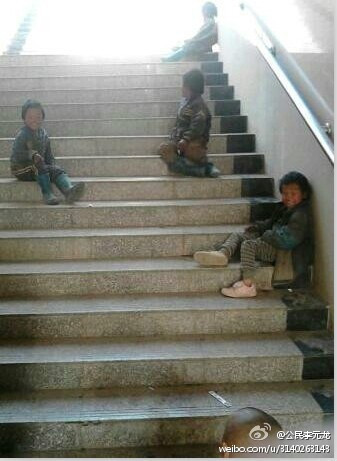
| This Might Be A Picture Of The Five Urchins Who Died In A Dumpster Posted: 20 Nov 2012 07:09 PM PST Sina Weibo user @公民李元龙 may have posted the first photo of those five Bijie children who died of carbon monoxide poisoning in a trash bin last week, and it's perfect. Look at that light. In a post that was published yesterday at 9:18 pm (884 forwards, 322 comments so far), @公民李元龙 writes:
News of the children's deaths continue to circulate, with Xinhua writing an editorial yesterday calling the incident "a wound in society." Many netizens have compared the story to Hans Christian Andersen's "The Little Match Girl," about a poor Danish girl who sells matches on the street. The Bijie boys — so-called because they lived in the poverty-stricken coal-town of Bijie, Guizhou province — died of carbon monoxide poisoning from the matches they lit while trying to stay warm inside their dumpster. Notes Wall Street Journal:
And of course, people are wondering how bureaucrats can strut their wealth when so many people have so little. Via Tea Leaf Nation:
But poverty simply has a way of being, in any society. It's always a tragedy; what can any of us do? Perhaps let the story be a reminder for all of us to be a little better.
|
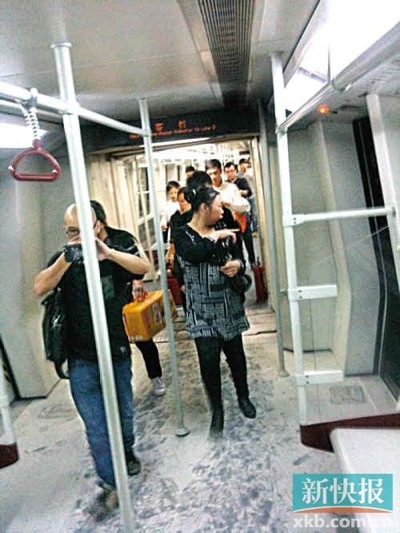
| Passengers smash windows to escape fire on Guangzhou metro Posted: 20 Nov 2012 06:00 PM PST  While the Shanghai Metro has certainly had its share of accidents and general craziness, it seems to be the Guangzhou subway that is always in the news these days. Passengers on Guangzhou's Line 8 had to smash windows and escape into the tunnel after the train they were riding caught on fire on Monday night. [ more › ] While the Shanghai Metro has certainly had its share of accidents and general craziness, it seems to be the Guangzhou subway that is always in the news these days. Passengers on Guangzhou's Line 8 had to smash windows and escape into the tunnel after the train they were riding caught on fire on Monday night. [ more › ]  |
| Midweek Music Preview: Nov 21-27; Jennifer Lopez, Blue and Elton John Posted: 20 Nov 2012 05:00 PM PST  Midweek Music Preview is a rundown of all the events happening on stages across Shanghai. On the docket this week: International superstars Jennifer Lopez, Blue, and Elton John do Shanghai, and they're joined by several interesting local and non-local bands of smaller fame. Get ready for My Little Airport from Hong Kong, the Rocksgiving Thanksgiving charity concert at YYT, Kun opera at SOAC, the Bigger Bang and more. Check the details to learn what we have to say about the bands and for links to music streams. And if that's still not enough, head over to our calendar for more. [ more › ] Midweek Music Preview is a rundown of all the events happening on stages across Shanghai. On the docket this week: International superstars Jennifer Lopez, Blue, and Elton John do Shanghai, and they're joined by several interesting local and non-local bands of smaller fame. Get ready for My Little Airport from Hong Kong, the Rocksgiving Thanksgiving charity concert at YYT, Kun opera at SOAC, the Bigger Bang and more. Check the details to learn what we have to say about the bands and for links to music streams. And if that's still not enough, head over to our calendar for more. [ more › ]  |
| Using Letters Of Credit With China Suppliers Posted: 20 Nov 2012 05:15 PM PST This is a guest post from Renaud Anjoran. Renaud runs a product quality inspection business in Shenzhen and he also writes the truly excellent and perinially helpful Quality Inspection Tips. My firm has worked with Renaud on a number of China product matters and we have consistently found him to be highly knowledgeable about China product sourcing. This post arose from a long email "conversation" between co-blogger Steve Dickinson and Renaud, which ended as so many of those do: with me suggesting that it be turned into a blog post. So here's the blog post, written by Renaud Anjoran.
Most transactions with Chinese suppliers are done through bank transfers. This payment method was described in a previous China Law Blog post, China Manufacturing Payment Terms. Limit Your Risks. Many importers/foreign manufacturers are not familiar with Letters of Credit (LC) as an alternative to bank transfers. Letters of Credit were designed to protect both product buyers and product supplier in international trade. In practice, they are usually more favorable to the buyer. How a letter of credit protects the buyer An importer that pays by LC does not have to wire a deposit before production and it usually has the option to cancel the payment in the following cases:
Why letters of credit can be cancelled by the buyer in most cases Even something as small as a typo in the LC, or the fact that a quantity is written in dozens rather than in pieces in the invoice is usually enough to cause a discrepancy in the LC, which in turn allows the buyer to cancel payment. In practice, a small minority of LCs are "clean," i.e., without any discrepancy. In all other cases, the buyer has the option to refuse payment and cancel the transaction, even if the goods are already on a boat (in which case the buyer will not get the documents to get the products out of custom). CLB Note: We are aware of a Seattle buyer company that refused goods that had already arrived in Seattle because the street address (which was irrelevant) of one of the parties in the letter of credit was off by a single letter. Tips for negotiating payment by letter of credit For the reasons mentioned above, Chinese suppliers typically refuse to accept Letters of Credit. Here is how you can increase your chances of finding a Chinese company that accepts this payment method:
In summary, Letter of Credit are a payment tool that makes it unnecessary to transfer a 30% (or more) deposit to your Chinese manufacturer. They are usually more favorable to the buyer's side, and for that reason, many Chinese companies refuse to accept them. But some Chinese product suppliers have been paid via Letters of Credit from some of their foreign customers for years, and sometimes Chinese manufacturers will accept your Letter of Credit if they really want your orders.
What do you think? |
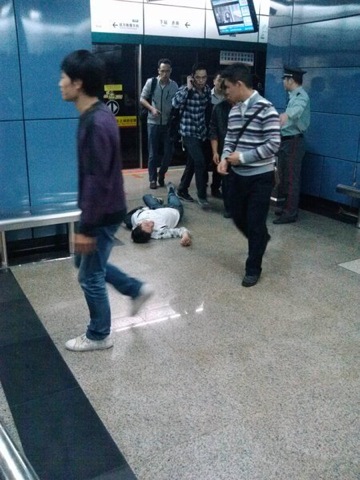
| Another Incident On Guangzhou Subway, This Time Involving Fire Posted: 20 Nov 2012 02:00 PM PST Guangzhou subway, what's up? Last month, there was a bloody, bloody fight on Line 4. Last week, a boy pooped inside a crowded carriage on Line 3. And two days ago, a train caught on fire on Line 8, forcing passengers to evacuate through a tunnel. No injuries were reported. The problem was apparently caused by a short circuit in the AC, according to Guangzhou Security Bureau's microblog. The Nanfang has more details:
Some panicked people — in what appear to be crowded carriages — resorted to smashing windows. The Nanfang again:
We'd also like to point out that in August, a man jumped onto the tracks on Guangzhou Subway Line 5, causing a 30-minute delay, and last year, a man from Hunan started a fire on a Guangzhou subway train because he was in a "bad mood." It must be the water. More pictures via Sina: Just before the evacuation, someone whipped out a camera and began filming. Warning: the fire alarm is really annoying in this video:
|
| Officials punished after five boys found dead in dumpster (Update) Posted: 20 Nov 2012 07:00 AM PST |
| Watch: Gorgeous video love letter to Hong Kong Posted: 20 Nov 2012 06:00 AM PST |
| Chinese sex toy market to be worth 40bn RMB by 2014 Posted: 20 Nov 2012 04:00 AM PST |
| Weibo loves the new Princess of China Posted: 20 Nov 2012 03:00 AM PST  Meet the new Princess of China. A photograph from this week's Mail on Sunday has been making the rounds on Weibo, but has just been blocked by the censors (as of 8:54am today). [ more › ] Meet the new Princess of China. A photograph from this week's Mail on Sunday has been making the rounds on Weibo, but has just been blocked by the censors (as of 8:54am today). [ more › ]  |
| Chillax With Images Of Hong Kong’s Teeming Alleys, Glistening Skyscrapers And Shimmering Bays Posted: 20 Nov 2012 04:30 AM PST This video by Gregory Lane, "So Long, My Hong Kong," presents dozens of beautifully rendered shots of the true Pearl of the Orient. I've said it before but it bears repeating: Hong Kong does not seem like a city built by men of this world, such is the ambition of its design and overwhelming beauty. You get a glimpse of that here. The music is Nino Rota's "La Dolce Vita." (H/T Marshall Wang) |
| The psychology of climate change: it's in my backyard now Posted: 20 Nov 2012 02:14 AM PST Direct personal experience of global warming is on the rise in the US, according to a new study. Could it push more people into seeing it as a risk they want to solve? We have been bombarded with warnings about climate change and global warming over the past decade. So much so that you'd be hard-pressed to find anyone in Europe or the US unaware of the term. Likewise in China, where studies by Pew and the BBC suggest awareness, at least in urban areas, is also high. |
| South Korea fights poverty with the power of kimchi Posted: 20 Nov 2012 02:00 AM PST  Over 2,000 women volunteered in Seoul last Thursday to combine garlic, ginger, salt, fish sauce, and cabbage into 140-tons of poverty and hunger-fighting kimchi. The annual event involved more than 60,000 heads of cabbage and resulted in enough fermented goodness to feed 25,000 families. [ more › ] Over 2,000 women volunteered in Seoul last Thursday to combine garlic, ginger, salt, fish sauce, and cabbage into 140-tons of poverty and hunger-fighting kimchi. The annual event involved more than 60,000 heads of cabbage and resulted in enough fermented goodness to feed 25,000 families. [ more › ]  |
| Two Wee-Hour Beatings This Past Week Prove There’s Both Strength And Cowardice In Numbers Posted: 20 Nov 2012 02:30 AM PST In the top video, a security guard on nightshift is beaten to within an inch of his life, reasons unknown. "Fight, fight," notes one wry commenter. "Fighting is good for the health." In the video after the jump, a Wanda Plaza staffer tries to prevent a group of non-employees from passing, and he suffers a terrible fate. Clocked over the head several times by plastic Coke bottles, if I'm seeing it right. Youku videos after the jump for those in China.
Security guard beatdown on Youku: |
| Top 10 Search List (November 20, 2012) Posted: 20 Nov 2012 01:35 AM PST
2) 主播撕裙(zhúbō sīqún, anchor woman tore her skirt) – This story made our list last week. While appearing in an entertainment show, a South Korean anchor woman tore her skirt shorter and poured bottled water on her white shirt to win a "sexiness battle" with another guest of the show. For more crazy things anchor man and woman have done, see the story here. 3) 俏江南 张兰(qiàojiāngnán Zhānglán, Zhanglan of South Beauty) – Zhang Lan is the president of a high-end restaurant chain, South beauty. A formal employee of the company filed a lawsuit again Zhang over the ownership of an apartment. The court was unable to reach Zhang and her son said on his weibo that she has been in the hospital. Chinese story here. 4) 黄晓明 受伤(Huáng Xiáomíng injured) – Huang Xiaoming, the actor/singer, got injured during the shooting of his new movie. Huang fell from three meters above the ground and injured his left foot and arm. Chinese story here. 5) 女生 老师 吃饭 坠亡(nǘshēng láoshī chīfàn zhuìwáng, female student taken to dinner by her teachers died after falling from a building) – This tragedy made our list yesterday. A reporter who tried to find out what really happened to the girl was told off by the principle of the college and this has triggered much criticism online. Chinese story here. 6) 真实版睡美人(zhēnshíbán shuìméirén, sleeping beauty in real life) –Sleeping Beauty Syndrome is a rare condition also known as Kleine-Levin Syndrome, which makes 17-year-old Nicole Delien from the U.S. sleep 18 to 19 hours a day. The life of the sleeping beauty is not like that of a fairy tale. When Nicole wakes up from her long sleep, she is often in a sleepwalking state and forgetting to do simple things such as eating. English story here. 7) 吴亚军(Wú Yájūn, Wu Yajun) – Longfor Properties co-founder and chairwoman Wu Yajun is no longer China's richest woman after divorcing and transferring part of the jointly-owned stakes to her ex-husband Cai Kui, with whom she co-founded the company. Wu's net worth is estimated at $4.2 billion, down from $7.3 billion. Chinese story here. 8)任建宇(Rén Jiànyú, Ren Jianyu) – Ren Jianyu is a village official who was sentenced to two years in a labour camp in September last year for "incitement to subvert state power", without a court process. Ren forwarded many messages criticizing the government. He was released yesterday after serving only about half his term following a public outcry. Ren filed a lawsuit against the Chongqing Re-education through Labor Committee, which is part of the much-maligned labor camp system Beijing said was in need of reform. Chinese story here. 9) 昂山素季(ángshān sùjì, Aung San Suu Kyi) Aung San Suu Kyi is a democracy activist in Myanmar who became a lawmaker after eight years of house arrest. U.S. President Barack Obama hugged her and kissed her on the face when he paid her a visit at her house. English story here. 10) 邓超考驾照(Dèng Chāo káojiázhào, Deng Chao driver's license test) – Actor Deng Chao was seen taking a test for renewing his driver's license in his hometown in Jiangxi. In the photo posted online, he seemed quite unmoved by the fuss made by the celebrity-chasing crowd and focused on his test. Chinese story here.        |




 Several government officials have been

 The Chinese market for sex toys is expected to
.jpg&type=image%2Fjpeg&width=417&height=550 "14619406_125536 (1)")
| You are subscribed to email updates from Update » Blogs » Society To stop receiving these emails, you may unsubscribe now. | Email delivery powered by Google |
| Google Inc., 20 West Kinzie, Chicago IL USA 60610 | |

Comments