News » Society » State Council appoints new officials
News » Society » State Council appoints new officials |

- State Council appoints new officials
- Judges decide to pass on gay marriage case
- A court in Taiwan has shrunk away from ruling on a gay couple's wish to have their marriage registered, saying it is passing on the controversial case to the island's top judicial body.
- New bullets set to fly
- Africa thinks Mike Tyson has had a sex-change (extreme female rape empathy)
- Mekong River gang in court
- Slowdown in growth of nation's wealthiest
- Low-budget comedy sets records in China
- Former police chief accused of selling jobs
- Prison for 2 in poisoning that sickened 84, killed 1
- No changes to HK, Macao policies: Xi
- Chinese Port Operators Acquire Stake in Taiwan Terminal
- Chinese Buyout Brings Problems to Focus
- KFC Criticized Over Suppliers in China
- Have You Heard…
- In China’s shadow, ASEAN leaders look to India for maritime security
- UFO watchers mass at Pic de Bugarach mountain in the town of Bugarach (photos)
- Woman pays a dear price for being naive
- Toy handcuffs turn lovers' romance into pain
- Beijing-Zhengzhou high-speed railway to start service on Dec 26
| State Council appoints new officials Posted: 20 Dec 2012 07:40 PM PST THE State Council, China's Cabinet, today announced the appointment of several new officials of institutions. Li Wufeng, Wang Xiujun and Peng Bo were appointed full-time deputy directors of the State Internet Information Office; Shen Haixiong was appointed deputy chief editor of Xinhua News Agency; Xu Yongsheng was appointed deputy director of the National Energy Administration. Zhao Xiaoguang and Liu Jun were named deputy directors of the State Post Bureau. Xu Jianzhou was removed from his post as deputy director of the bureau. Meanwhile, the State Council decided that Pei Gang will continue to serve as president of the Shanghai-based Tongji University. Li Zhiyong was removed from the post of vice minister of the Ministry of Human Resources and Social Security. |
| Judges decide to pass on gay marriage case Posted: 20 Dec 2012 05:19 PM PST Ad: Work From No Home - Quality Product Taking The CB Marketplace By Storm From Peng Joon And John Chow. Insane Sales Video Conversion With Epcs Of $1.15 To $3.82. Get Your Swipes And Banners Over At Http://www.workfromnohome.com/affiliatetools |
| Posted: 20 Dec 2012 05:19 PM PST Ad: Work From No Home - Quality Product Taking The CB Marketplace By Storm From Peng Joon And John Chow. Insane Sales Video Conversion With Epcs Of $1.15 To $3.82. Get Your Swipes And Banners Over At Http://www.workfromnohome.com/affiliatetools |
| Posted: 20 Dec 2012 05:19 PM PST Ad: Get Cash For Surveys - Mind Blowing Conversions, 75% Commissions + Earn Up To $148.50 Per Sale! Geotargeting, 1 Click Upsells, Downsells, And More! Followup Emails With Your CB Id To Make Sure You Get Credit! $50 Bonus To New Affiliates! Getcashforsurveys.com/affiliates.php |
| Africa thinks Mike Tyson has had a sex-change (extreme female rape empathy) Posted: 20 Dec 2012 12:36 PM PST
And now, online outlets in Africa have falsely reported that Mike Tyson has had a sex change after they read and believed a daft piece by NewsBiscuit. The report said that the boxer would now be known as Michelle and was feeling fine after undergoing a 16-hour operation, turning him from a tiny, stocky man into a… well… tiny, stocky woman. Zimbabwe's Standard on Sunday published it and it was also picked up by the SpyGhana news website on Tuesday. Gleefully, UK site NewsBiscuit stated that their site kept crashing because of the influx of hits from Africa. John O'Farrell from NewsBiscuit explained: "We've had half as many visitors from Africa in the last few days as we'd expect generally in a whole month." He went on to say that the story had been viewed more than 50,000 times in the last few days, which is around 20 times more than usual levels of traffic. Anyhow, got for it Mike. You are no longer the man who was sent down for rape… |
| Posted: 20 Dec 2012 09:37 AM PST Officers put headphones on Nam Kham (left) and five others during the second instance trial in a court in Kunming in southwest China's Yunnan Province. Nam Kham and three others were sentenced to death in November for an attack on the Mekong River last year that resulted in the deaths of 13 Chinese sailors. The chief judge announced an adjournment yesterday, saying the court would pronounce sentence later following the collegiate bench panel's appraisal. This posting includes an audio/video/photo media file: Download Now |
| Slowdown in growth of nation's wealthiest Posted: 20 Dec 2012 08:58 AM PST THE scale of China's private wealth and the number of its rich people grew at a slower pace this year amid the nation's economic downturn, especially in traditionally affluent areas, according to a survey released yesterday. The 2012 China Wealth Market Survey of nearly 2,000 millionaires, in terms of US dollar, across China found that the total value of private investable assets in the country is estimated to reach 73 trillion yuan (US$11.7 trillion) this year with a 14 percent annual increase. The average growth rate from 2009 to 2011 was 24 percent. Meanwhile, the number of China's high-net-worth households with investable assets worth more than 6 million yuan rose 17 percent to 1.74 million, a dramatic slowdown from the average 38 percent increase over the past three years. With a high density of high-net-worth households already, rich provinces and cities along the eastern coasts, such as Shanghai and Guangzhou, are underperforming the national average growth "due to a contraction of business owners' wealth as a result of the economic downside," the survey by Boston Consulting Group and China Construction Bank Corp said. In contrast, underdeveloped inland provinces, such as Anhui and Hunan, report a 30 percent increase in wealthy families. The "economic growth engine in China will shift to central-western inland regions," the report said. "Provinces with large populations and sizable private wealth will represent significant growth potential, such as Anhui, Hunan, Hubei, Sichuan, Shandong and Shaanxi." Household savings in wealthy families have slowed, accounting for only 51 percent of their investable asset portfolio this year, which is the lowest proportion so far and a 4 percent decrease from last year. Instead, the wealth is flowing to high-yielding finance programs. The amount of money held in wealth management products by banks has almost doubled each year to make up a fifth of the investable asset pool. Wealthy Chinese are steadily moving their money abroad, the report said. A quarter of respondents yet to establish overseas businesses said they "would definitely or probably use offshore financial services in the upcoming three years." |
| Low-budget comedy sets records in China Posted: 20 Dec 2012 08:19 AM PST A LOW-BUDGET comedy has set new box office records on China's mainland, attracting moviegoers with its simple style and hilarious performances. "Lost in Thailand," which was made with a budget of less than US$5 million, earned US$50 million in its first five days after debuting on December 12. Its first day saw earnings of US$5.9 million, the biggest opening in the history of Chinese film, according to statistics from entertainment research group EntGroup Inc. Its weekly box office is estimated to have reached US$72 million as of Wednesday, also the highest for a Chinese film. The film, a sequel to the 2010 movie "Lost on Journey," is expected to gross more than US$100 million during its run, a feat achieved by few Chinese movies. Lead actor and director Xu Zheng said he did not expect such a great market response. Wang Changtian, head of Enlight Media, which distributed the film, attributed the film's success to Xu and the performances of his fellow stars, Wang Baoqiang, Huang Bo and Tao Hong. Huang first became known to Chinese audiences with his 2006 film "Crazy Stone," a film that helped clear the way for other low-budget films to achieve market success. The strong performance of "Lost in Thailand" also pulled up domestic films' share of 2012's total ticket sales. Domestic films accounted for about 54 percent of total ticket sales last year, but accounted for only 35 percent in the first six months of this year, as the government allowed an extra 14 US films to enter cinemas. Noted playwright Ning Caishen said the film's plot, cast and publicity have made it the year's greatest "dark horse." "Simple funny comedies are really too rare in the film market. Audiences are too hungry," said Zhengban Xiaodong, head of public relations at Sohu Video. He thought that the film is not so good as it is advertised. "Lost in Thailand" tells the story of two company managers scrambling to obtain contract authorization from the company's biggest shareholder. Hilarity ensues when the duo travels to Thailand to search for the secluded shareholder. "I want to watch the movie again. I'd rather laugh to death than wait to die on the so-called doomsday," an Internet user named "Ranx" joked on Weibo. The Chinese film market is entering its busiest season, with dozens of competitive films heading to big screen, including "The Flying Guillotines," "The Last Tycoon" and Jackie Chan starring in "Chinese Zodiac 12." |
| Former police chief accused of selling jobs Posted: 20 Dec 2012 08:19 AM PST A FORMER police official under investigation in north China's Shanxi Province has been accused of selling police jobs in cooperation with his son and abused his power in promoting officers dozens of times during his time in office, local media have reported. Li Yali has been removed from both of his positions as the Taiyuan City police chief and the provincial deputy police chief. The action comes amid allegations of a cover-up after his son was filmed in a confrontation with police when stopped for drunk driving, according to media reports. Video posted online showed Li Yali's son assaulting police. Li, head of Taiyuan police less than a year, awarded jobs and promotions to over 100 people during that time without following required procedures in most cases, Xinmin Weekly reported. It was the son, Li Zhengyuan, who asked his father to reserve places for his close friends, the magazine reported. Liu Bo, head of Yingze police station, and one of Li Zhengyuan's buddies, told Xinmin Weekly he paid the father and son millions of yuan for his job. Liu, a former hooligan who said he considered the price a bargain, also said he was a middleman who helped more than 20 people buy their police jobs, the magazine reported. The magazine said the father, then deputy police chief in Jinzhong City, abused his power to give his son a job in police in 2008. Li Yali has been placed under "double designation," a procedure in which Party members are asked to confess or explain wrongdoings at a designated time and in a designated place. Officials are investigating. |
| Prison for 2 in poisoning that sickened 84, killed 1 Posted: 20 Dec 2012 08:19 AM PST TWO people who used the wrong additive in a popular snack in May, poisoning 85 diners, one of whom died, received prison terms in a court in central China's Hunan Province, Xiao Xiang Morning Herald reported yesterday. Zhang Lumiao mistook a pack of sodium nitrite - used in small amounts to preserve meat - as MSG or monosodium glutamate, a common flavor enhancer, officials said. She passed it to her boyfriend, Fan Zhizhen, who didn't check it and added it to liangpi, a noodle-like snack, the Longhui County People's Court heard. Of the 85 poisoned, 80 were students of the Longhui No. 2 High School, including the one who died. Sodium nitrite can be toxic in larger amounts and is banned in most foods. Zhang was sentenced to eight months behind bars and Fan was sentenced to four years. The pair was also ordered to pay 580,000 yuan (US$93,548) as compensation, the paper said. Fan, a street vender, had sodium nitrite on hand because he had been adding small amounts, illegally, to milk tea, thinking it would act as a preservative. While there were no known acute poisoning cases from the milk tea, the additive became deadly when used in larger amounts on the liangpi, officials said. The pair said they accepted the judgment and would not appeal. Hu Minyu, a nutrition and food hygiene professor with Central South University, said sodium nitrite cannot make milk tea fresh, and it will only cause harm if used that way. |
| No changes to HK, Macao policies: Xi Posted: 20 Dec 2012 08:49 AM PST  Source: Xinhua The central authorities' adherence to the "one country, two systems" principle and the two Basic Laws will not change, said Xi, also vice president of China. Xi also reiterated "unchanged support" for the chief executives and governments of the two SARs in carrying out their legal duties, as well as support for the SARs' policies on promoting economic growth, social welfare, democracy and harmony. The policies adopted last month at the 18th National Congress of the CPC are continuations of the long-term policy that focuses on the precise understanding and implementation of the "one country, two systems" principle and genuine respect for, and maintenance of, the authority of the Basic Laws, said Xi. Xi recognized the work of Leung and the SAR government and pledged firm, continued support. Xi recalled his notion that realizing the great rejuvenation of the Chinese nation is the Chinese nation's greatest dream in modern history, adding that he believes compatriots in Hong Kong share this dream. "I believe Hong Kong compatriots will contribute to the great rejuvenation," said Xi. Also on Thursday, Xi met with Chui Sai On, chief executive of the Macao SAR. Xi extended greetings to Chui and compatriots in Macao, as Thursday marked the 13th anniversary of the establishment of the Macao SAR. Moreover, Xi acknowledged that the overall situation in Macao is good and Chui's team deserves recognition for their work to unite people from all walks of life in Macao and maintain prosperity and development there. The central authorities will continue to implement the Basic Law and the principle of "one country, two systems," under which the people of Macao govern Macao and the SAR enjoys a high degree of autonomy, said Xi. "We have full confidence in Macao's prospects," Xi added. Vice Premier Zhang Dejiang, a member of the Standing Committee of the Political Bureau of the CPC Central Committee, participated in both meetings. |
| Chinese Port Operators Acquire Stake in Taiwan Terminal Posted: 20 Dec 2012 08:46 AM PST  Source: Bloomberg News By Jasmine Wang Chinese port operators agreed to buy a $135 million stake in a Taiwanese container terminal, the second-biggest mainland acquisition on the island, as closer cross-strait ties spur trade volumes. Talks on the deal began at least three years ago as Taiwan eased restrictions on mainland investments amid warmer ties. China Mobile Ltd. (941) bought a NT$17.8 billion ($613 million) stake in mobile phone operator Far EasTone Telecommunications Co. two years ago in the largest mainland-Taiwan acquisition, according to data compiled by Bloomberg. The first phase of the Kao Ming terminal opened January, 2011, according to the statement. The facility handled 1.08 million containers in its first year, compared with a 1.4 million design capacity. Two more berths, which will double the terminal's capacity, are due to open in 2014. The terminal is the only facility at Kaohsiung able to handle vessels with a capacity of more than 14,000 containers. |
| Chinese Buyout Brings Problems to Focus Posted: 20 Dec 2012 08:42 AM PST  Source: Wall Street Journal By Isabella Steger For Chinese companies listed on U.S. exchanges and hit by short sellers and negative sentiment, going private has seemed like the logical solution. If only it were that easy. A large group of backers includes six international lenders and three Chinese banks as well as five private-equity firms. Corralling them has been tough. One of the equity backers, CDH Investments, canceled its $200 million stake in the bid earlier this month. The buyout consortium—led by the company's founder, Jason Nanchun Jiang—drafted in another insider, Chinese investment group Fosun. Mr. Jiang and Fosun between them already own more than a third of Focus Media's stock. The lending side's been restructured too. About a third of the approximately $1.5 billion debt tranche was to consist of a high-yield bond. But that bond was scrapped recently in favor of bank loans that the Chinese lenders preferred. The banks involved also have had to persuade their credit committees to accept a complex onshore-offshore structure that means access to cash flows is more limited than it would be otherwise. And though the offer price has been sweetened, from $27 a share to $27.50, the bid is still almost certain to face drawn-out—and costly—litigation from minority investors. Helping to get the deal across the line, meanwhile, is the Chinese government—in the form of state policy bank China Development Bank, a late addition to the roster of lenders. For CDB, the benefits of the transaction may be more than purely economic. The policy bank has extended loans to other take-private candidates this year, including food and meat processor Zhongpin Inc. and copper products firm Fushi Copperweld Inc. By getting troubled companies off foreign exchanges and back in private hands in China, CDB may be helping to rebuild the reputation of corporate China overseas. The fact the government is involved, meanwhile, may be a sign of how difficult it is for troubled Chinese companies to return home. |
| KFC Criticized Over Suppliers in China Posted: 20 Dec 2012 08:40 AM PST  Source: Wall Street Journal By Colum Murphy SHANGHAI—Yum Brands Inc. is facing increasing challenges in China after the Beijing-controlled national television broadcaster criticized the company's KFC chain over alleged improper use of antibiotics in chickens supplied by Chinese companies. KFC, in a prepared statement, spelled out the steps it takes to ensure food safety in its supplies, and said it was "actively cooperating" with safety authorities in the city of Shanghai and added that it would deal seriously with any supplier found violating the rules. A company spokesman said the statement represents its response. On Tuesday, CCTV broadcast a report examining the use of antibiotics in the coops of two processing plants in the eastern province of Shandong. In some cases, CCTV said, farmers gave the birds they sold to the suppliers excess amounts of antibiotics in violation of Chinese regulations. CCTV didn't detail any potential health impact. According to the World Health Organization, use of antibiotics in food animals can lead to antimicrobial resistance, affecting humans. In the U.S., the Food and Drug Administration announced new rules in April to reduce the use of antibiotics. The FDA estimates farm animals consumed 29.1 million pounds of antibiotics in 2010, up from 28.7 million pounds a year earlier. Ron Phillips, a spokesman for the Animal Health Institute in the U.S., said antibiotics use in the American poultry and livestock industry, when administered properly, are key in keeping the animals disease free and an important part of meat production. He also said its important to maintain withdrawal times to make sure there are no left over antibiotic residues of antibiotics in meat. The USDA tests for antibiotic residues in meat in the U.S. On Wednesday, after Yum said it was cooperating with authorities, CCTV criticized its response in the noon national news broadcast. "KFC's control and management over food safety cannot be trusted completely by customers," CCTV said. In the wake of the CCTV allegations, Shanghai officials said they would investigate whether the chicken suppliers complied with Chinese regulations. In a statement on its website, the Shanghai Food and Drug Administration said it had taken 32 samples of raw chicken meat from eight different product types from a Yum facility in Shanghai. A person at the agency wouldn't respond to detailed questions, saying test results would be made available as soon as possible. The two suppliers, Shandong Liuhe Group and Yingtai Co., didn't respond to requests for comment. The Shanghai agency said preliminary findings indicate that Yum last bought supplies from Liuhe Group in May. In its statement, KFC said it had stopped buying chicken products from Liuhe in August. Yingtai is listed as a supplier to KFC on the municipal website of the city of Tengzhou, in eastern Shandong province where Yingtai is based. China's Ministry of Agriculture said it is dispatching a group to Shandong to investigate. Rumors of the toxins, which have circulated on Chinese websites for the past several weeks, may have already had an impact on sales. "This chatter is a plausible explanation for the sudden sales collapse at KFC China," said Bryan Elliott, a Raymond James restaurant analyst. "But we are confident that Yum's deep roots in China" will allow it to regain the confidence of the Chinese consumer. Consumer backlash on Sina Corp.'s Twitter-like Weibo microblogging service was swift. Said one user: "Kick KFC out of China! Otherwise their fast-grown chicken would continue to poison the Chinese people." The CCTV report touches on an issue of China's diffuse food supply chain, a factor in a 2008 tainted-dairy scandal that resulted in the deaths of six infants and illnesses in 300,000 others. Some industry observers say maintaining uniformly high standards of food safety in China is impossible given the highly fragmented nature of the country's agricultural system and a confusing set of regulations that make it easier for regulators to pursue large companies rather than address the root causes of low food-safety standards. "The agricultural system in China makes food safety impossible to manage," said Group Chief Executive Officer Edward Zhu of supply chain management services company Chic Group, citing the prevalence of vast numbers of farmers whose average holdings are less than one acre. He said most reputable fast-food chains are supplied by large farms that are easier to monitor for food-safety concerns. "Small farmers can produce at lower costs," adding it is difficult to stop chickens from such farms from "leaking" into the bigger farms that supply major restaurant chains. Wu Yongning, chief scientist of the China National Center for Food Safety Risk Assessment, said the use of antibiotics in China's chickens is more common than in developed countries. "Antibiotics are needed to prevent them from getting ill and spreading [disease] to other animals," he said. Mr. Wu also cited lack of supervision from the relevant government departments as another reason for the proliferation of antibiotics. |
| Posted: 20 Dec 2012 08:36 AM PST Have You Heard…   |
| In China’s shadow, ASEAN leaders look to India for maritime security Posted: 20 Dec 2012 08:52 AM PST  Source: Reuters By Ross Colvin (Reuters) – Southeast Asian nations and India vowed on Thursday to step up cooperation on maritime security, a move that comes amid tension with China in the potentially oil- and gas-rich South China Sea. Significantly, they underlined the need for freedom of navigation, a contentious issue because of competing claims with Beijing over parts of the South China Sea, though there was no mention of China in their statement. In speeches, the Philippines and Vietnam referred to tensions in their region, but India's foreign minister sought to distance New Delhi from the wrangling over the South China Sea. "There are fundamental issues there that do not require India's intervention," External Affairs Minister Salman Kurshid told a news conference, adding that issues of sovereignty "need to be resolved between the countries concerned". An ASEAN summit ended in acrimony last month over China's assertiveness in the South China Sea, with its leaders failing to agree on a concluding joint statement. The South China Sea has become Asia's biggest potential military flashpoint as Beijing's sovereignty claim over a huge, looping area has set it against Vietnam and the Philippines as the three countries race to tap possibly huge oil reserves. Malaysia and Brunei, also members of ASEAN, as well as Taiwan also claim parts of the sea. Other members of ASEAN include Myanmar, Thailand, Cambodia, Singapore, Indonesia and Laos. Last month, China announced a plan to board and search ships that illegally enter what it considers its territory in the South China Sea, prompting ASEAN's secretary-general to warn that the move could spark naval clashes. "At this time of rising concerns about maritime issues, the need to maintain a high level of maritime security and freedom of navigation offers us … an opportunity for enhanced cooperation," Philippines Vice President Jejomar Binay said. INDIAN OCEAN ROUTES Although India has no territorial claim in the region, it is hungry for energy and is exploring for oil and gas with Vietnam in an area contested by China. In future, it is expected to ship liquefied natural gas from Russia through the Malacca Straits. This month, India's navy chief said he was ready to deploy vessels to the South China Sea to protect exploration interests there if needed. Last year, an Indian navy ship was challenged for entering 'Chinese waters' off the coast of Vietnam. Indonesian President Susilo Bambang Yudhoyono told the summit that closer maritime cooperation with India was needed because 70 percent of the world's traffic in petroleum products passes through the Indian Ocean from the Middle East to East Asia. "While the center of the global economy is shifting eastward, the Indian and Pacific Oceans have been and will become even more important in providing the vital sea routes for trade and commerce," Yudhoyono said. The New Delhi summit underscored India's growing role in one of the world's fastest-growing regions. Twenty years after India launched a 'Look East' diplomatic push to promote trade with a neglected neighboring region, the relationship is finally beginning to gain traction. Annual trade has nearly doubled in four years and India's growing economic clout make it appealing as a balance to other Asian powers. However, China's trade relations and links with ASEAN are far deeper than India's. Ian Storey, senior fellow of the Institute of Southeast Asian Studies in Singapore, said many ASEAN nations want to see all major powers playing a role in their region so it is not dominated by one or two players, in particular China. "So that presence by India in Southeast Asia would provide them additional hedging options," he said.   |
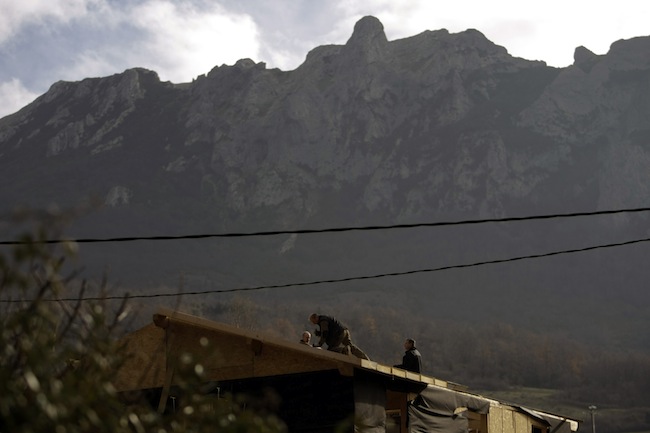
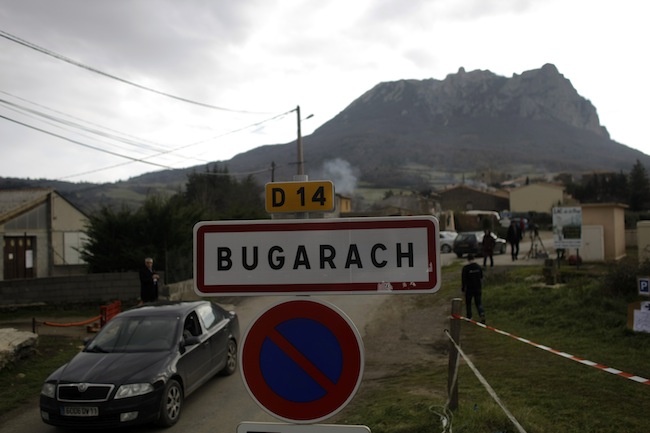
| UFO watchers mass at Pic de Bugarach mountain in the town of Bugarach (photos) Posted: 20 Dec 2012 05:31 AM PST MORE fool you who waited for the January sales to buy a treat. You're all going to die. Tomorrow. OK, not all of you. You lot in and by Serbia's Pyramid-shaped Mount Rtanj. And not you lot camped by Pic de Bugarach mountain in the town of Bugarach, France. The clock is ticking down to Dec. 21, the supposed end of the Mayan calendar, and from China to California to Mexico, thousands are getting ready for what they think is going to be a fateful day. The sleepy town of Bugarach, nestled in the French Pyrenees mountains, is bracing for the arrival of hundreds of New Age enthusiasts and UFO believers that want to witness the end of the Mayan Long Count calendar. Stefano Ariu, a Dutch artist, puts the finishing touches to his painting depicting the Pic de Bugarach mountain. People walk past a model meant to represent a UFO hanging outside a window in the town of Bugarach, France. People work on a roof backdropped by the Pic de Bugarach mountain. A car passes by a road sign in the town of Bugarach… |
| Woman pays a dear price for being naive Posted: 20 Dec 2012 01:56 AM PST A woman was so gullible that she believed a man who switched between an army colonel and a 300-year-old fortune teller in disguise, not only bearing him a daughter but also giving him 335,000 yuan, a Beijing newspaper said today. Wang Xiaohui, 30, founded a security company in Beijing in 2010 and recruited Yang Wenchen and his friend Niu Jie. Both men just quitted their back-breaking, low-paying jobs in a construction site. Seeing their boss was an innocent and pretty woman, Yang decided to date her. He and Niu invited her out to dinner and wore army uniforms on purpose. Niu told Wang that Yang was actually a colonel and the son of a central government leader. He took her job offer to "experience the life of ordinary people," the Procuratorial Daily said. Wang then fell in love with Yang and had sex with him in September 2010. To convince her, Yang spent 200 yuan on a fabricated officer certificate. He also spent 200 yuan to buy a fake marriage certificate for them. In September 2010, Wang closed her company and followed the two men to Henan Province. To persuade her to open a restaurant, Yang downloaded a voice changing application to his mobile phone and called Wang as a 300-year-old fortune teller in disguise. Wang believed his "advice." But the restaurant lost money and the trio went back to Beijing in March 2011. Yang played the same trick again and pretended to be the colonel's mother in a phone call to comfort Wang, the paper said. Wang went to her hometown in Henan five months later to deliver the baby. Her sister came to help and suspected Yang was lying. After Wang gave birth to a girl in September 2011, her sister checked Yang's identity in the public security bureau and found he was a cheater. The sisters reported to police one month later, the paper said. Police found Yang had cheated several women before and was jailed four times on charges of fraud, from 18 months to six years and a half. Last month Yang was sentenced to nine years in prison for fraud, the paper said. |
| Toy handcuffs turn lovers' romance into pain Posted: 20 Dec 2012 01:45 AM PST TWO lovers locked their wrists with toy handcuffs as they intended to make a vow at the top of a hill but their romantic trip turned bitter because they lost the key halfway, a newspaper reported today. The couple showed up in a fire brigade in Zaozhuang, Shandong Province to seek help on Tuesday afternoon, saying they had been locked by the imitation handcuffs for 20 minutes. "Their hands were swollen and had turned blue when they came," a firefighter said. The man's hand was freed after 10 minutes but the woman's hand was unlocked after another 10 minutes, the Qilu Evening News reported. The couple said they bought the toy handcuffs from an online store and decided to use it to show devotion to each other on the hilltop. |
| Beijing-Zhengzhou high-speed railway to start service on Dec 26 Posted: 20 Dec 2012 01:28 AM PST A woman buys the first ticket of a high-speed train from Zhengzhou to China's capital Beijing sold at the Zhengzhou East Railway Station in Zhengzhou, capital of central China's Henan Province, today. The Beijing-Zhengzhou high-speed railway will start service on December 26, connecting the functioning Zhengzhou-Wuhan and Wuhan-Guangzhou high-speed railway to become the world's longest high-speed railway. It will take only seven hours and 59 minutes to travel from Beijing to Guangzhou, capital of south China's Guangdong Province, in the fastest train on the Beijing-Guangzhou high-speed railway. This posting includes an audio/video/photo media file: Download Now |



| You are subscribed to email updates from Update » News » Society To stop receiving these emails, you may unsubscribe now. | Email delivery powered by Google |
| Google Inc., 20 West Kinzie, Chicago IL USA 60610 | |


Comments